Week of March 29 - April 4, 2026
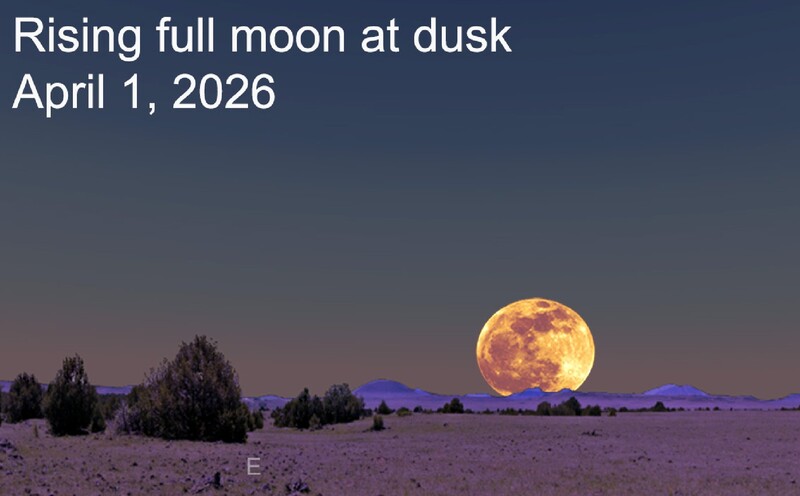
Step outside at dusk on Wednesday, April 1, and you'll see the full pink moon rising over the eastern horizon. Many think this is so named because it has a pink hue, but folks, if you ever see a pink moon ... well ... I don't know what to tell you!
No, it won't appear pink (or even a shade of red), but it can often appear quite orange as it rises over the horizon. This distinctive orange color originates from the thicker atmosphere near the horizon, where more particulate matter in the air (such as dust, smog or volcanic ash) tints the moon (or sun) orange.
So why then did I call it a pink moon? Is this some kind of April Fool's gag?
Not at all.
North American cultures long before us noticed that the moon reached its full phase just about every four weeks, so they gave it names to reflect seasonal activities on Earth.
For example, the full moon of April was known as the pink moon because, at this time of year, wild ground phlox was the most common flower around. Coastal tribes knew it as the fish moon, since shad were now coming upstream to spawn.
Similarly, they had named other full moons to reflect seasonal activities.
The January full moon was known as the wolf moon because, among the frigid cold and deep snow of mid-winter, the wolf packs howled hungrily outside villages. And the full moon of February was called the snow moon, since snowfall is often heaviest during this month.
Indian tribes in the northeast called the March full moon the worm moon because this was the time when the ground softened and earthworm casts reappeared, while that of May was coined the flower moon, since flowers were abundant everywhere.
Summertime full moons have always had names that conjure up images of sultry weather. Every Algonquin tribe knew the full moon of June, when strawberries reached their peak, as the strawberry moon. Some called the July moon the buck moon because this was when new antlers of buck deer pushed out from their foreheads. The full moon of August was named the sturgeon moon, to mark the time when this large fish was commonly caught.
In September, the weather begins to change in many places, and the moon names take on a more autumnal nature. The full moon of this month — perhaps the most famous of all — has been known for ages as the harvest moon because it occurs nearest the autumnal equinox when corn, pumpkins, squash, beans and wild rice were traditionally ready for gathering.
The full moon of October, when all were hunting and stocking up for the cold winter months ahead, was named the hunter's moon. November marked the time to set beaver traps before the waters froze, so this month's full moon became known as the beaver moon.
And finally, the full moon of December was called by some Native American tribes the cold moon because in this month the winter cold fastens its grip and, with the nights becoming longest and darkest during, some tribes even knew it as the long nights moon.
Visit Dennis Mammana at dennismammana.com. To read features by other Creators Syndicate writers and cartoonists, visit the Creators Syndicate website at www.creators.com.
Though often called the "pink moon," the full moon of April doesn't literally appear pink.







View Comments