By Jim Farber
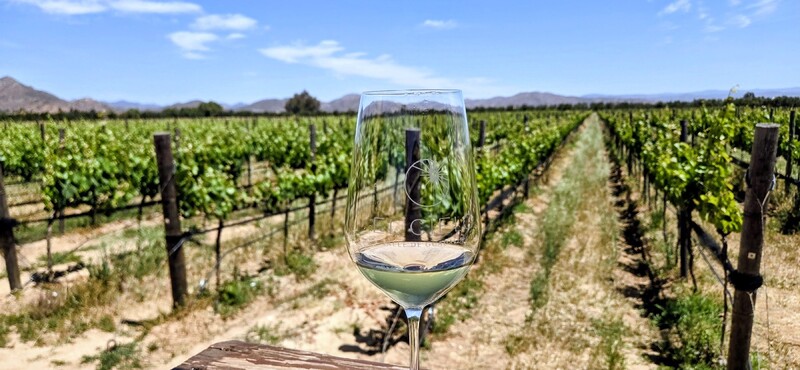
The sun is beginning to set over northern Baja California's Valle de Guadalupe — the Napa Valley of Mexico. Long shadows are spreading across the vineyards of the El Cielo Resort and Winery, setting its terra-cotta villas aglow.
High above the long rows of grapevines a large hawk with red-tinged feathers is making lazy circles in the sky. Then her keen eyes spot one of the endemic rodents that pose a constant threat to a rich harvest. Wings folded, she drives and rises with her dying prey clutched firmly in her razor-sharp talons.
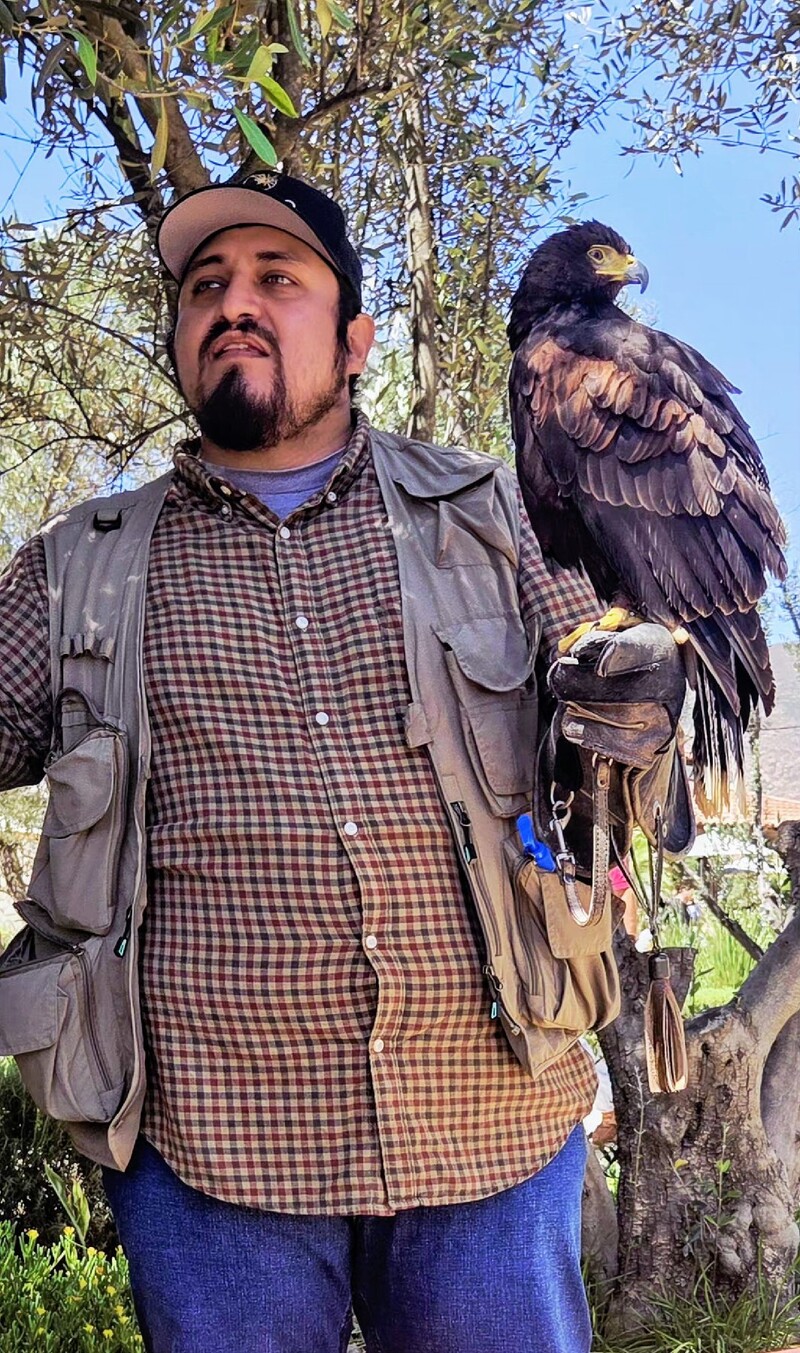
It's all in a day's work for Cassiopea. She's a fully mature Harris's Hawk (Parabuteo unicinctus), a species native to the Americas and widely recognized for its intelligence, social behavior and effectiveness in biological pest control.
Under the tutelage of master falconer Carlos Laorrabaquio, Cassiopea is one member of a raptor air force that operates at El Cielo around the clock. When the sun goes down and Cassiopea and her wing-mates — Lida and Andromeda — call it a day, the night shift — a cadre of resident barn owls — takes to the sky.
Cassiopea was perched comfortably on his gauntlet-covered wrist when I asked Laorrabaquio whether this uniquely symbiotic, eco-friendly form of pest control was common. I had not heard of similar programs designed to soar over the great wine-growing regions of California.
"The use of biological pest control is not yet more common in wineries — or in agriculture in general," Laorrabaquio observed. "El Cielo is the first winery in Valle de Guadalupe to develop a raptor program. It's mainly because of limited awareness that such programs are possible and an understanding of the importance of sustainability these activities offer.
"Additionally," he added, "this type of work requires specialized training and expertise, which can represent a greater operational investment for wineries. However, it is an environmentally responsible approach that contributes positively to the balance of the ecosystem, opposed to the most commonly employed alternative, which is the use of pesticides.
"I have been working at El Cielo for two and a half years," he said. "Prior to that, I spent about a year working with a red-tailed hawk at a zoo that I ran. Altogether, I have approximately three years of experience working directly with raptors and around 10 years working with wildlife and animals in general.
"The training process for this position," he said, "focused primarily on the practical aspects of falconry, as I already had the theoretical foundation. It involved applying falconry principles in the field and developing routines tailored to each bird's behavior and personality."
Referring to Cassiopea, he said, "I've been working with her she was very young. Different birds have different temperaments. She's totally comfortable with people."
As is always the case working with wild animals, Laorrabaquio said, the process is based on slowly building a bond of trust.
"The bond between hawks and handlers," he said, "is years in the making."
No such relationship (or administrative costs) is necessary with owls. They hunt instinctually at night. The trick is to attract them. To that end, El Cielo has incorporated architectural components into their vineyard buildings that provide ideal conditions. Once the owls are established, they will nest and raise their young, feeding them from the plentiful rodent population the vineyards offer.
For Laorrabaquio, the raptor program at El Cielo has transformed the princely sport of falconry into a full-time working profession. At the same time, he is currently training a next generation of raptor specialists who, in turn, can train more and more master handlers.
Another advantage a raptor program offers is its appeal as a tourist attraction. We discovered that when Cassiopea was in full flight and about to perform. After I was fitted with a thick leather gauntlet and a small chunk of raw chicken, Laorrabaquio walked about 20 feet into a nearby field and called out, "Show her the chicken and call her!"
A moment later Cassiopea was perched on my wrist and enjoying her lunch.
WHEN YOU GO
El Cielo Resort and Winery: elcielovalledeguadalupe.com/eng/home
Jim Farber is a freelance writer. To read features by other Creators Syndicate writers and cartoonists, visit the Creators Syndicate website at www.creators.com.
Master falconer Carlos Laorrabaquio, here shown with Cassiopea, trains birds to keep rodents away from the vineyards at El Cielo Resort and Winery in northern Baja California, Mexico. Photo courtesy of Jim Farber.







View Comments