By Victor Block
The Washington Monument, Lincoln Memorial and other famous shrines around the country that commemorate people and serve as reminders of events draw millions of visitors each year. Other lesser-known symbols pay homage to stories of individuals and chapters of history that are educational, interesting and in some cases offbeat. The anecdotes that these attractions portray can make up in appeal what they may lack in size or prominence.
One such monument includes the statue of a man who is visiting his own grave. John Porter Bowman was a wealthy New Englander who, in the late 19th century, had an elaborate mausoleum built in Cuttingsville, Vermont, in which his wife and two daughters were interred. Later Bowman commissioned a larger-than-life marble statue of himself. The marble man is ascending the steps of the family crypt, where he also rests, clutching a top hat, coat and funeral wreath.
Statues of two men in a rowboat and a fisherman at the wheel of a ship pay tribute to people who lost their lives working at sea. Since the end of the Civil War, the Chesapeake Bay has been a major source of seafood. The Maryland Watermen's Monument in Grasonville honors those who died while fishing its waters. Names of local "watermen" who lie beneath the waves are carved around the base of the statue.
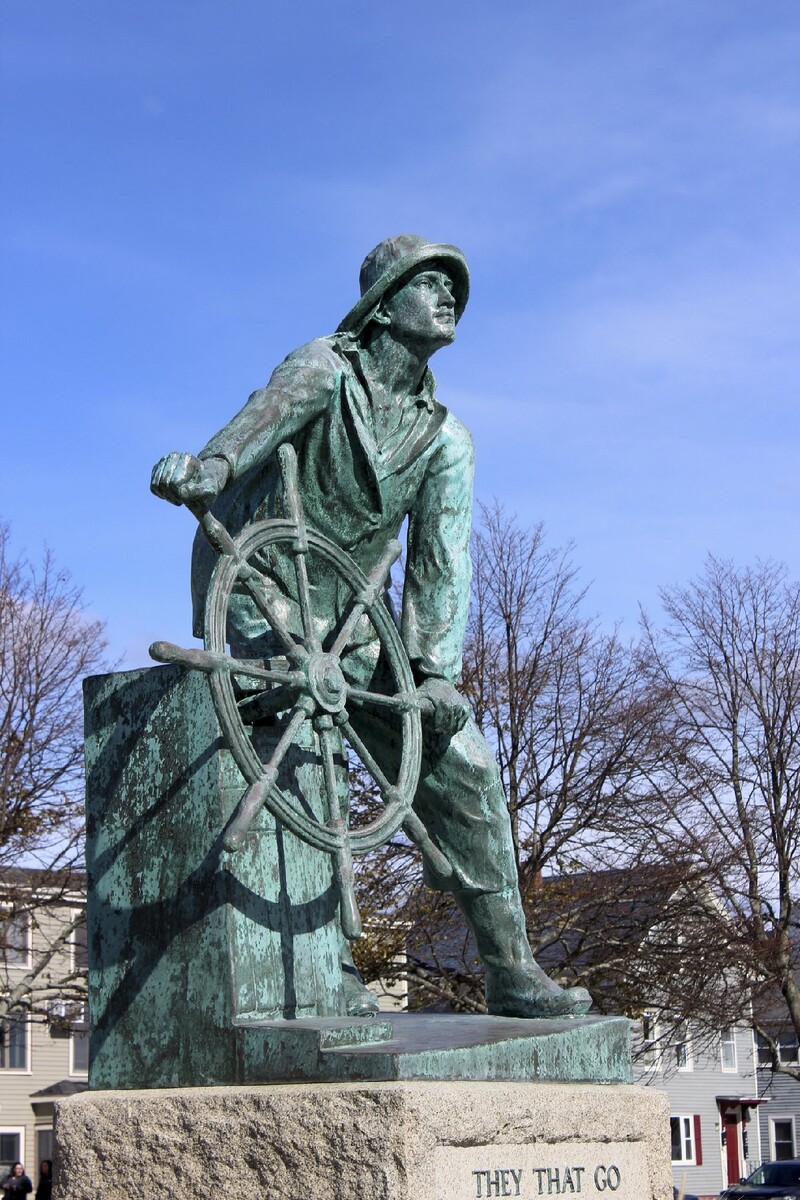
A bronze man wearing oilskins who is braced at a ship's wheel on a sloping deck gazes out over the harbor of Gloucester, Massachusetts, in a sculpture titled Gloucester Fisherman's Memorial." From the 17th to the 20th centuries, thousands of fishermen lost their lives just offshore. That includes 249 men on 29 vessels that did not survive a single storm in 1879. Also here is the 12-foot Gloucester Fisherman's Wives Memorial, a woman and her two small children, which honors the wives of those men who waited for their husbands to return.
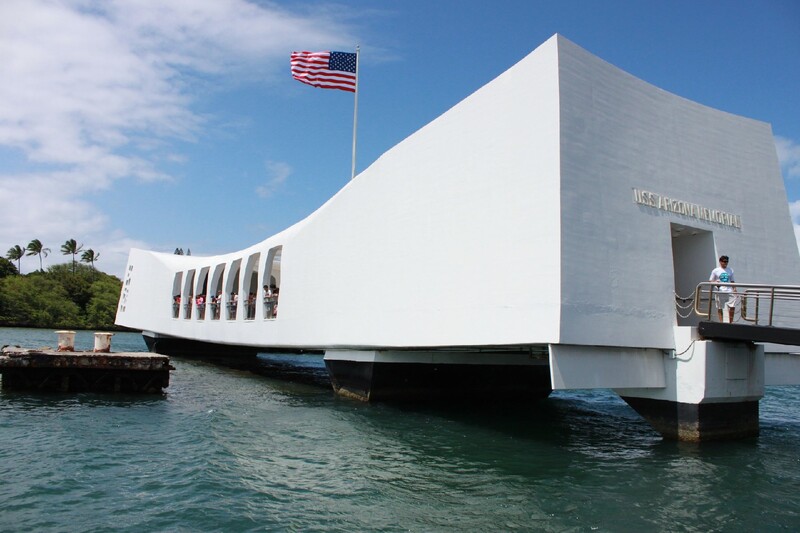
The USS Arizona Memorial in Honolulu marks the midsection of the battleship that was sunk during the Japanese attack on Pearl Harbor. The vessel is the final resting place for more than 900 of the ship's crewmen who lost their lives. Their names are engraved on a marble wall in the Shrine Room. As a special tribute to the ship and her lost crew, the U.S. flag flies from a flagpole attached to the Arizona's severed mainmast.
Other military memories are scattered around the United States. The Bunker Hill Monument in Boston commemorates the Battle of Bunker Hill, one of the first major skirmishes between British and Colonial forces during the American Revolution. The 221-foot-tall obelisk overlooks a museum that displays artifacts from that important encounter. Together they comprise a National Park Service site.
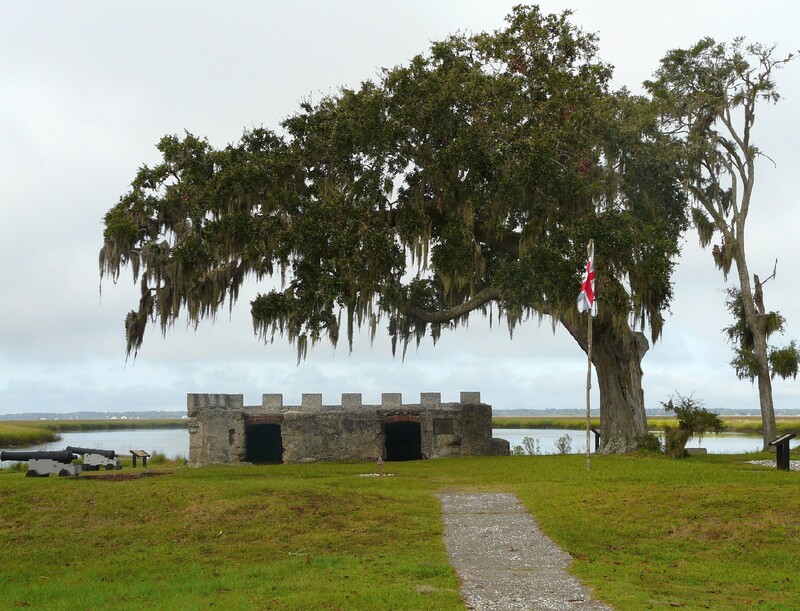
The British built a fort and town (1736-48) on St. Simons Island, Georgia, to protect that colony's southern boundary against raids by Spanish forces. About 630 troops manned the fort, and some 500 colonial residents occupied the village outside its walls. The community was named Frederica after Frederick, the Prince of Wales. The archaeological remains of the settlement are preserved in Fort Frederica National Monument.
The important role of Native Americans in the country's history also gets its due. Since 1948 work has been underway on the image of a Native warrior that is being carved onto a mountain in South Dakota. When completed, the Crazy Horse Memorial will depict that leader of the Oglala Lakota people. It will be 641 feet long and 563 feet high — much larger than the heads of the four U.S. presidents at Mount Rushmore.
Some prominent hills that have been left in their natural state recall people who once passed nearby. That's true at Scotts Bluff National Monument in Nebraska, where an 800-foot protuberance looks out over the surrounding prairie and North Platte River.
Native Americans called the bluff "me-a pa-te" (hill that is hard to go around), and during the 19th century hundreds of thousands of westward-bound pioneers, fur traders and others used it as a landmark. The monument, now a U.S. National Park, was named for Hiram Scott, a fur trader who was found dead in the area.
From a bluff to the statue of a man visiting his own burial place to watermen rowing a boat, lesser-known monuments around the country await discovery. These memorials to people, places and periods of the past have fascinating stories to tell.
WHEN YOU GO
findagrave.com (John Porter Bowman)
visitmaryland.org
nps.gov/nr/travel/maritime/glo.htm
nps.gov/perl/learn/historyculture/uss-arizona.htm
nps.gov (Bunker Hill)
nps.gov/fofr
crazyhorsememorial.org
nps.gov/scbl
Victor Block is a freelance writer. To read features by other Creators Syndicate writers and cartoonists, visit the Creators Syndicate website at www.creators.com.
The remains of a powder magazine are part of Fort Frederica on St. Simons Island, Georgia. Photo courtesy of Romarti/Dreamstime.com.







View Comments