By Athena Lucero
An exhilarating four-wheel-drive tour inside Bora Bora's mountainous interior had me on the edge of my seat in more ways than one. Climbing a narrow, winding, rocky road revealed the story of this remote paradise in the middle of the South Pacific Ocean. A 50-minute flight from Tahiti, French Polynesia's main island, brought to life the story of Bora Bora's "accidental" fame as the pioneer of luxury tourism in the region.
Formed by the cone of an extinct volcano, Bora Bora is roughly the size of Manhattan. Legend has it that it was the "first-born" because it was the first of the Society Islands to emerge from the sea, millions of years before Tahiti. Originally called Pora Pora (Polynesian for first-born), its geography — a main island surrounded by a chain of motus or islets — explains its captivating beauty.
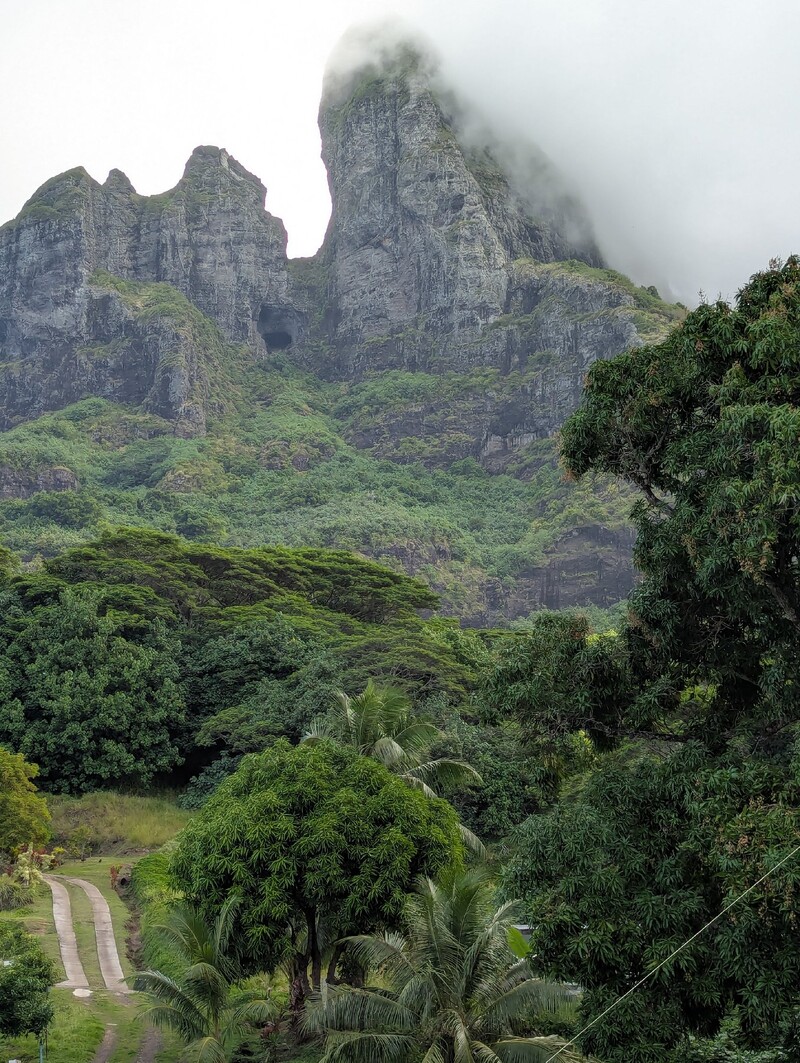
But long before this title, Bora Bora was a strategic location between America and Australia and New Zealand when it was a refueling and supply base for Allied ships during World War II (for secret mission Operation Bobcat). Remnants of this history can only be experienced on a four-by-four expedition because the untouched properties are restricted or private. The reward at the top is a 360-degree view — the peaks of Mount Otemanu and Mount Pahia, dense tropical jungles and the Pacific Ocean as far as the eye can see.
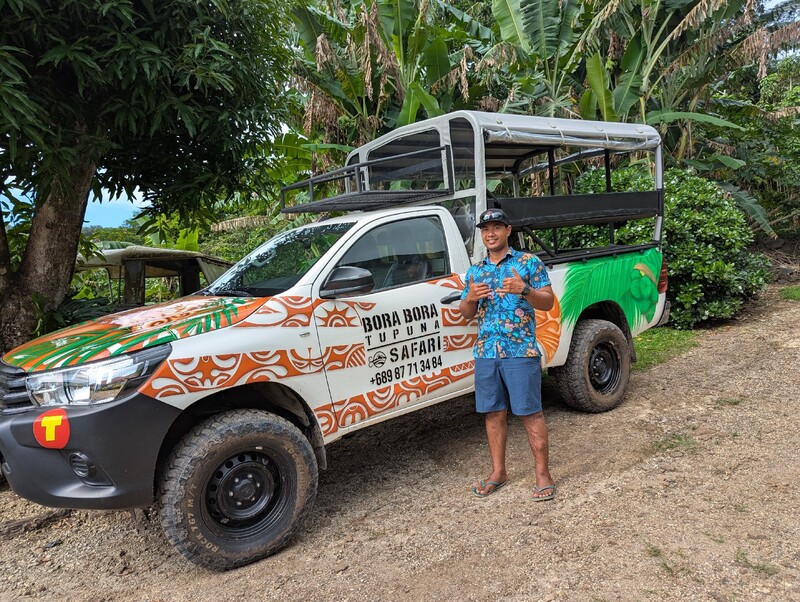
Standing beside me on the lookout was Mata'i, Tupuna Safari guide and technical driver extraordinaire. Established in 1992, Tupuna Safari was the first off-road tour to take visitors through Bora Bora's interior, previously inaccessible due to its steep terrain. He pointed down to Faanui Bay, which during the war formed a natural defense because it had only one entry into the deep-water fortress. "Deep enough for submarines," he said. The bay is now home to spectacular marine life and world-class deep-sea diving competitions. In the distance was the island's first airstrip, constructed by the military, that is today Bora Bora Airport.
American soldiers spoke fondly of the island, spreading the word about its exotic beauty and way of life. Life magazine journalists working in the region at the time wrote about this storybook-like place, which made other people want to come.
Back at the bottom of the military road, Mata'i locked the gate behind us, and we continued through Faanui Valley's cultural paradise, including a visit to the remains of an ancient marae or open-air temple. Ceremonial maraes were used for inducting kings and for royal weddings. Family maraes honored ancestors. The serene sites today offer tranquility and a place for reflection.
We strolled to the nearby home and gallery of renowned Polynesian artist Emmanuel Masson and his wife and daughter, also artists. Kiruna, his daughter, welcomed us to their working studio. She was hand-dying a traditional pareo, a versatile lightweight cloth used as a dress, skirt, wrap or decor. Tropical fruit slices on a plate were for the taking, compliments of their family farm. Lucky for visitors, artwork can be purchased here.
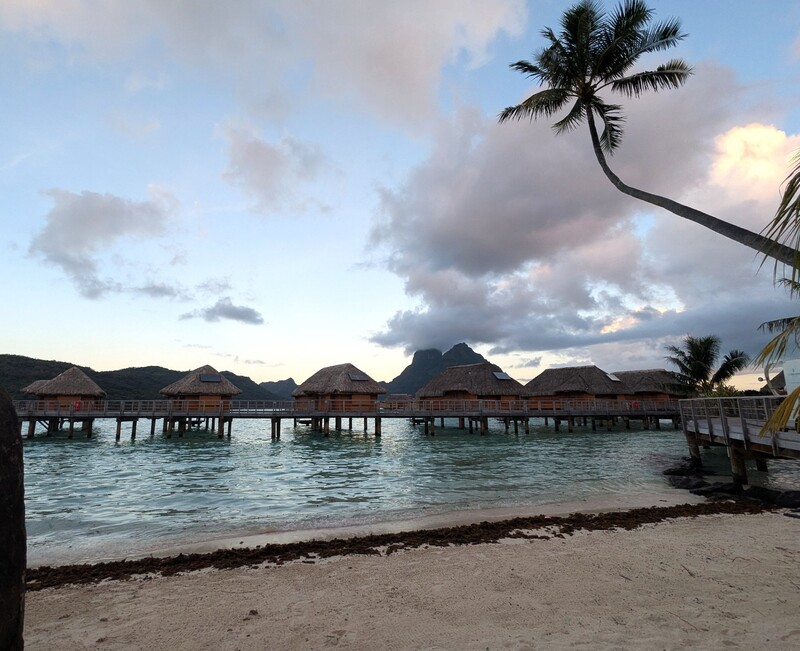
Some paintings depicted thatched huts on stilts over the water. For centuries the tiny structures housed fishermen because there was not enough land for building. Fast forward to the 1960s, when the same problem challenged three American expats (called the Bali Hai Boys) who had refurbished a small hotel on the island of Moorea but needed more guest rooms. The huts — the size of a guestroom — were a lightbulb moment. Their minimally redesigned rooms on stilts included windows on the floor through which guests could view the marine life below. The overwater bungalows that solved their need for more rooms became the symbol of French Polynesia.
Bora Bora has a unique geography. Dozens of motus — low-lying islets surrounding the main island along the coral reefs — form a natural breakwater and protect the shallow lagoon from the ocean's rough waves. It's no wonder the turquoise waters and white sandy beaches on the motus became idyllic locations for hotels to accommodate travelers seeking solitude and privacy.
From the mountains to the sea, I boarded an authentic Polynesian canoe and joined a small group of guests for an afternoon of snorkeling and lunching on a motu. Guided by Narii, our multitalented captain, we dove feet-first into the lagoon as he shared the spectacular beauty of his backyard.
Wearing long-blade fins, Narii led a young boy and me on an underwater safari. We held onto a tube as he pulled us through a labyrinth of coral reefs that he knew like the back of his hand. Floating through this "rainforest of the sea" had us spellbound with swaying corals, rocky formations, colorful fish staring into our masks and indigenous reef manta rays cruising gracefully below.
We anchored offshore from a motu and waded onto the tiny island. There, a cultural afternoon awaited: a delicious spread of traditional dishes, Narii playing the ukulele while singing Polynesian tunes and us learning to weave the crowns that are worn daily to celebrate the beauty of life.
I hurried to catch up with the others heading back to the canoe, but I backtracked to a rustic sign offering (chuckle) weather guidance: Coconut Moving = Windy, Coconut Gone = Hurricane, Coconut Still = Calm, and Coconut Wet = Rainy.
What an endearing example of the cultural contentment here that focuses more on happiness than fear or anxiety. Bora Bora's magical motus are intrinsic to this phenomenon.
WHEN YOU GO:
Bora Bora: tahititourisme.com
Tupuna Safari: tupunasafari.com/index.html
BOBCAT Museum at Le Bora Bora by Pearl Resorts: leborabora.com
Athena Lucero is a freelance writer. To read features by other Creators Syndicate writers and cartoonists, visit the Creators Syndicate website at www.creators.com.
Overwater huts in French Polynesia that date to ancient times are today the iconic symbol of French Polynesia. Photo courtesy of Athena Lucero.






View Comments