By Robert Selwitz
Gritty, history-drenched Nuremberg will never be anyone's idea of a serene vacation spot. A mighty medieval commercial power that morphed into Adolf Hitler's favorite city, it was virtually obliterated during World War II.
The city was a wealthy and prosperous trading center for centuries, an outstanding example of a place where the prime business was business. Much of that heritage, including most of the city walls (about 80 percent of the original three miles), was destroyed or badly damaged by bombing during World War II. Today, however, following massive reconstruction, much of Nuremberg's medieval past has been brought back to life.
During the 15th and 16th centuries, the city was a vibrant center of art and culture as well as commerce. For a sense of that, a visit the Hauptmarkt (for centuries the central market square) is essential. Highlights include Our Lady's Church, which was erected between 1355 and 1358 on the site of the city's oldest synagogue and leveled following a 1349 pogrom. While only small parts of the church's original facade remain, a 1509 clock draws massive noontime crowds who get to watch a series of mechanical noblemen parade their allegiance to Emperor Karl IV.
Across the square is the "beautiful fountain," a replica of an ornate 62-foot-tall golden tower resembling a Gothic spire. Topped with statues of biblical and medieval heroes, the fountain is one of Nuremberg's favorite meeting places.
A short walk away is the home of Albrect Durer. Born near Nuremberg in 1471, Durer lived in this half-timbered house from 1509 until 1527, the year before his death. The home features his living quarters as well as the studio where he created some of his world-famous masterpieces. The house also contains original etchings and woodcuts, plus copies of some of his best-known paintings. Though seriously damaged during the war, the home was repaired and converted into a museum in 1971. A self-guided tour with audio narration provides an excellent grasp of the life and works of one of Europe's greatest masters.
Hovering above the city up a steep hill is the Kaiserburg castle, almost a millennium old. For centuries it was home to German emperors, including Frederick Barbarosa. Today it looks much as it did following its rebuilding following a major 15th-century fire. The castle and its role as Germany's medieval center greatly appealed to Hitler, who chose Nuremberg to be his philosophical center as a link to Germany's glorious past.
The City Museum Fembohaus, a large Renaissance-era merchant's home that covers nearly a thousand years of Nuremberg history, will also intrigue history devotees.
Another major attraction is the German National Museum, located close to the reconstructed southern medieval walls. It's home to one of the country's largest troves of crafts, archeological finds and paintings. Artists displayed include Cranach, Rembrandt, Holbein, Kirchner and Durer.
The museum groups diverse works of art chronologically, giving the viewer a true sense of context. In many exhibition halls altarpieces, sculpture, pottery and paintings are grouped together, making for fascinating comparisons and perusal.
The city also offers many ways to engage the palates of its visitors. Not to be missed are the bratwurst — finger-length sausages that can be enjoyed on a bun or on a plate with mounds of pungent sauerkraut. Lebkuchen are a kind of gingerbread laced with nuts, honey and spices that are delicious washed down with one of Nuremberg's signature brews.
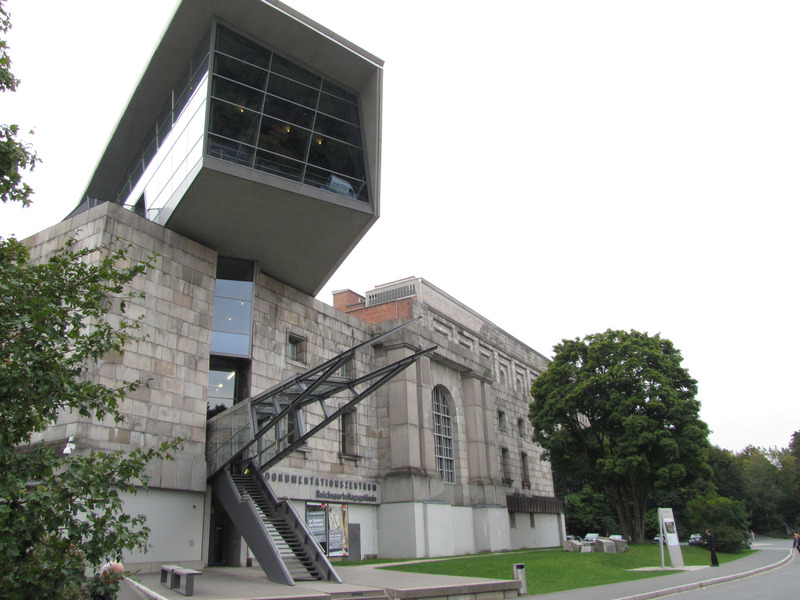
Of course, anyone who wants to know more about the worst of this city's history should visit the sprawling Nazi Documentation Center, which is a 20-minute tram ride from the Altstadt (old town). Here, on a site where Zeppelins were originally launched and landed, Albert Speer — Hitler's favorite architect —built factorylike structures as well as a parade ground that can accommodate at least 200,000 people. This is where the most famous Nazi mass rallies were staged, filmed for and televised to a nationwide audience.
Deserted for a quarter of a century following World War II, the center now houses photographs, posters and rally films directed by Leni Riefenstahl and others. Almost everything focuses on the 1930s, the decade immediately preceding the war.
Two hours or more can be spent roaming the vast halls and walkways in an effort to understand the madness as well as the media savvy Hitler used so effectively to drive his nation to war. Following a path through the jaggedly designed site, visitors are able to trace Hitler's rise to power — from his failed 1923 Munich uprising and subsequent writing of "Mein Kampf" while imprisoned to his decision to take power legally rather than via revolution.
Following his 1933 election as chancellor, thereby peacefully conquering German society, visitors see how he convinced the public that he was their savior. Also shown are the strategies he used to focus mass hate upon the supposed villains who brought Germany down during World War I. This is an extraordinary and highly disturbing walk through history — one most visitors will not easily forget.
Not far from the Altstadt, at Schwurgerichtssaal 600, is the courthouse where, in 1945 and 1946, the Nuremberg trials were held. Here, 24 leading Nazis were tried, and 19 were convicted. Today it is possible to visit courtroom 600 (if it is not in use) and also to see an exhibition detailing the history and impact of the trials.
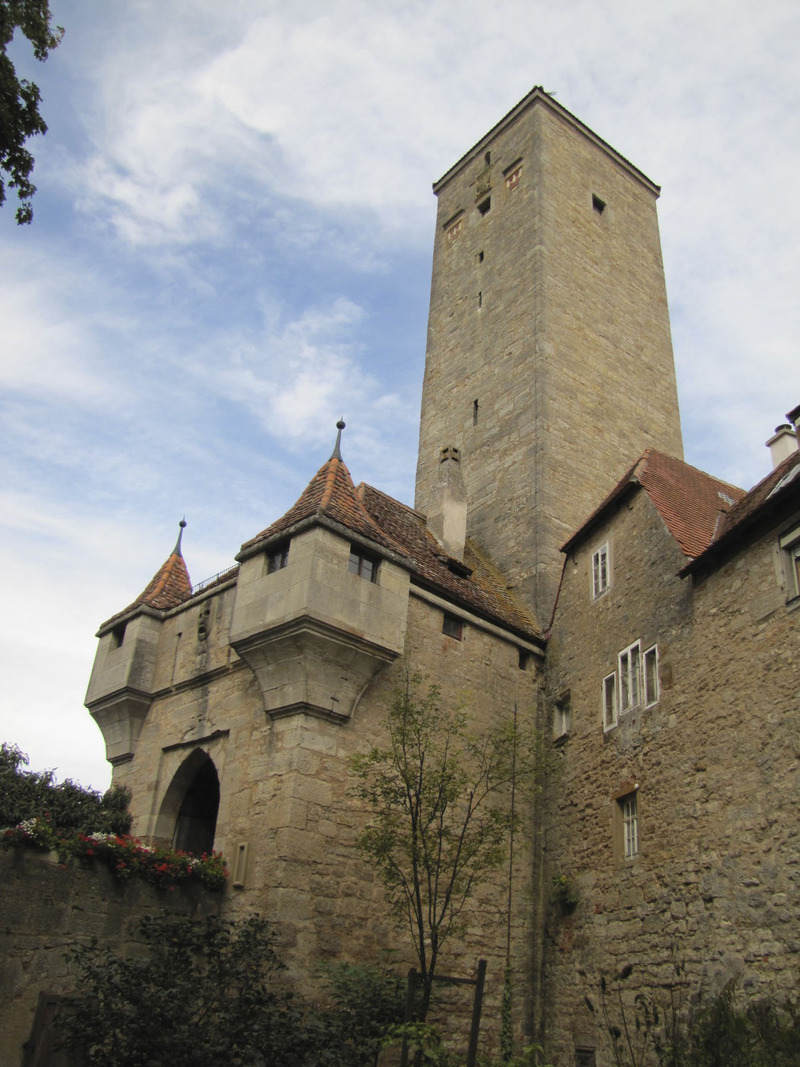
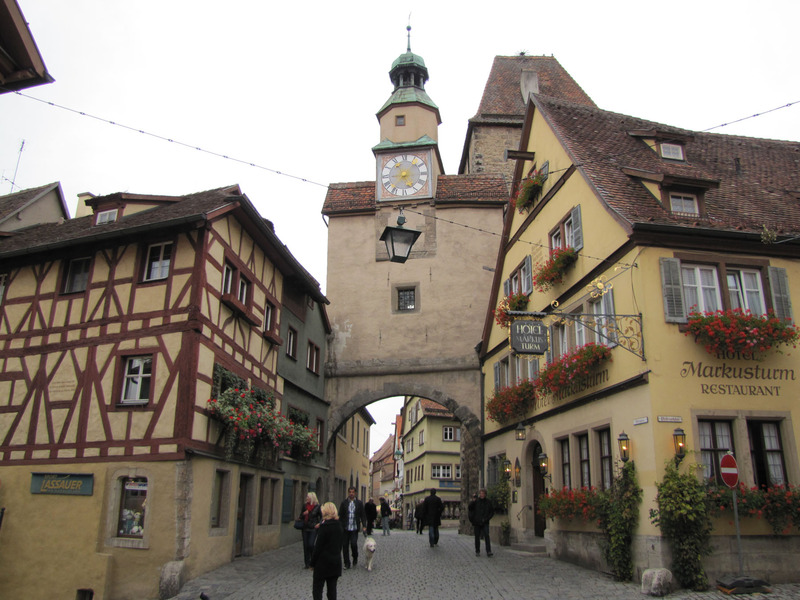
For a total change of pace, a good idea is a day trip to Rothenburg aub de Tauber, one of Europe's most wonderfully preserved smaller towns. Founded during the 12th century, Rothenburg is a festival of winding cobblestone streets, intriguing alleyways and impressive squares — a genuine step back in time. In the 17th century, the town's textiles were distributed throughout Europe. Rothenburg thrived for centuries turning wool from neighboring sheep into skillfully constructed garments and fabrics. But that all stopped in the 1630s, when the Protestant commercial enclave ended up on the wrong side of the Thirty Years' War.
After a deadly siege and an inadvertent explosion that blew a giant hole in one wall, Catholic troops entered the city, and its commercial dominance was effectively ended. Fortunately, its medieval architecture was not destroyed, and today it's an amazing stage that reflects how life was lived some 400 years ago.
Major sites within the town include the walls that one can still walk almost completely around. The Franziskanerkirche features an extraordinary Tilman Riemenschneider sculpture, and visitors can also see the surviving portion of the Gothic town hall and a newer Renaissance portion with Baroque arcades.
Beyond strolling on one's own, a great way to experience Rothenburg is to take the night watchman's tour. Offered daily at 1 p.m. and 8 p.m., it is definitely more evocative and fun at night. Dressed in period robes, the "night watchman" leads his throng through the darkened streets, telling tales of merchants and rogues, clergy and soldiers, and how Rothenburg lost much of its business but retained its architectural heritage.
WHEN YOU GO
For more information: www.germany.travel
Robert Selwitz is a freelance writer. To read features by other Creators Syndicate writers and cartoonists, visit the Creators Syndicate website at www.creators.com.







View Comments