By Carl H. Larsen
The City Cemetery was an unusual place to begin an exploration of today's Belfast, well onto its way of recovering from years of sectarian violence. My guide was former lord mayor of Belfast, Tom Hartley, who beyond being a longtime politician is a first-class historian of this city where class divisions have been overshadowed by a huge Catholic-Protestant divide.
A politician first and foremost, Hartley continues to sit on the Belfast City Council. His perspective is as a member of Sinn Fein, the republican political party seeking unity between the six counties of Northern Ireland, part of the United Kingdom and the Republic of Ireland to the south.
"I was born into a large working class northern Catholic family from the Falls Road in nationalist West Belfast," Hartley told an audience last year. "I grew up in a community burdened by the political weight of state repression ... and subjected to the practice of structural discrimination in housing and in the workplace."
During the "Troubles" — a period of terrorism by Irish Republican Army partisans and British Unionists — the cemetery in Hartley's Catholic Falls Road community was off- limits to Belfast Protestants whose relatives were buried there. And it was off-limits, as well, to Hartley and his family. Their Catholic upbringing ordained that they would be buried in the Catholic Milltown Cemetery.
That was then - this is now.
"Today, much has changed," Hartley said.
And that includes the City Cemetery, where Hartley regularly leads tours pointing out the burial plots of the movers and shakers of a city that once was an industrial giant. Seen beyond the headstones, the city's Harland and Wolff shipyard, now greatly diminished, once was the largest in the world.
While shipbuilding has waned, in many ways Belfast's ship has come in after many years of self-doubt and tit-for-tat terrorism.
Although isolated incidents still occur, Belfast has largely put behind 40 years of strife that came to a close a decade ago. It has a vibrant downtown with trendy pubs and restaurants and a strong music and theater scene. Helping to temper attitudes is an increasingly diverse population.
Visitors now are taken on tours of former neighborhood war zones, divided by aging walls that separated the two factions and are covered with graffiti themed with peace messages. A rich legacy of murals adorns the walls of houses in some neighborhoods, remembering martyrs of both sides in what seemed to be an intractable struggle.
British soldiers have long since left the streets, leaving policing to a local force. In finding a new direction, Belfast has attached its future to an unlikely engine of change - the Titanic. The city's connection to the ill-fated ship taps into most neighborhoods, for it was thousands of workers here who built the world's most famous liner.
Forgotten as an embarrassment after it sank in April 1912 on its maiden voyage, the Titanic now has resurfaced in Belfast with this line emblazoned on T-shirts: "She was fine when she left here."
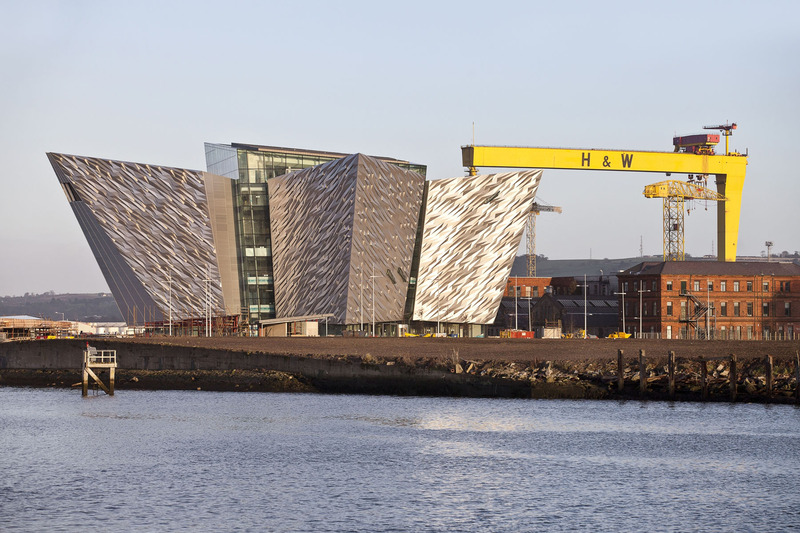
Today the city's Titanic Quarter on Queen's Island is one of Europe's largest redevelopment efforts, all clustered around the slipways where the Titanic and its sister ships Olympic and Britannic were built. High-rise apartment blocks, a high-tech science park and a large film studio now occupy land where dingy, abandoned warehouses once stood.
The focal point is Titanic Belfast, a visitor attraction that avoids calling itself a museum, perhaps because the Titanic story is never-ending. Opened in 2012 on the 100th anniversary of the ship's sinking, the exhibition already has become Northern Ireland's top visitor attraction, drawing 650,000 visitors in its first nine months. Housed in a striking waterfront building, it is a nine-gallery, multimedia experience that unfolds the full Titanic story and Belfast's role in its creation.
"It's really quite phenomenal. It's the biggest Titanic exhibit in the world," said "Titanic" film director James Cameron when he opened an exhibit on the film at Titanic Belfast last summer. Oceanographer Robert Ballard, who discovered the wreck in 1985, is in partnership with the Titanic center.
Outside, guided walking tours are offered of the old Harland and Wolff shipyard complex. At anchor and being restored nearby is the Nomadic, Titanic's "little sister," which was built in Belfast to ferry passengers to the big White Star Line ships calling at Cherbourg, France. Guide Susie Millar delivers a unique perspective while leading tours to the city's Titanic sites in a van. She's the great-great-granddaughter of Thomas Millar, an engineer aboard the ship who perished.
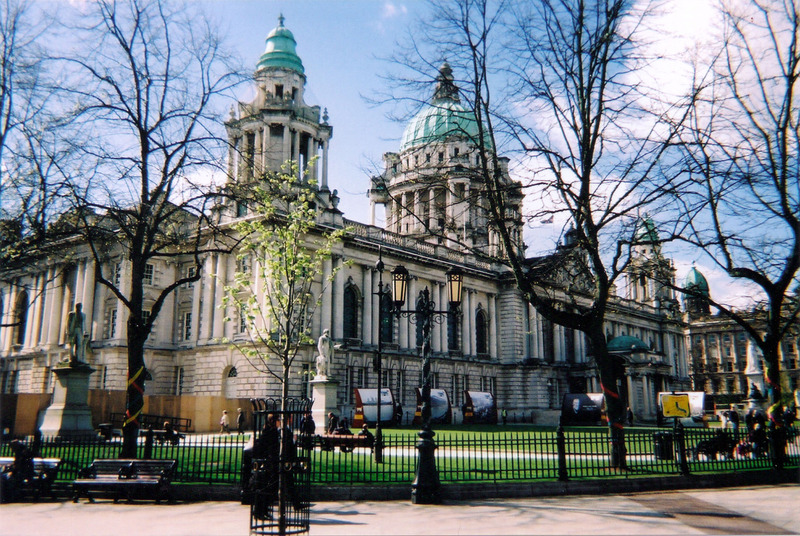
Built a few years before the Titanic, Belfast's Edwardian-style domed City Hall is the center point of downtown. It's a good place to begin an examination of the city and its history. Free tours are offered of the ornately designed building and there is an exhibit detailing the city's development.
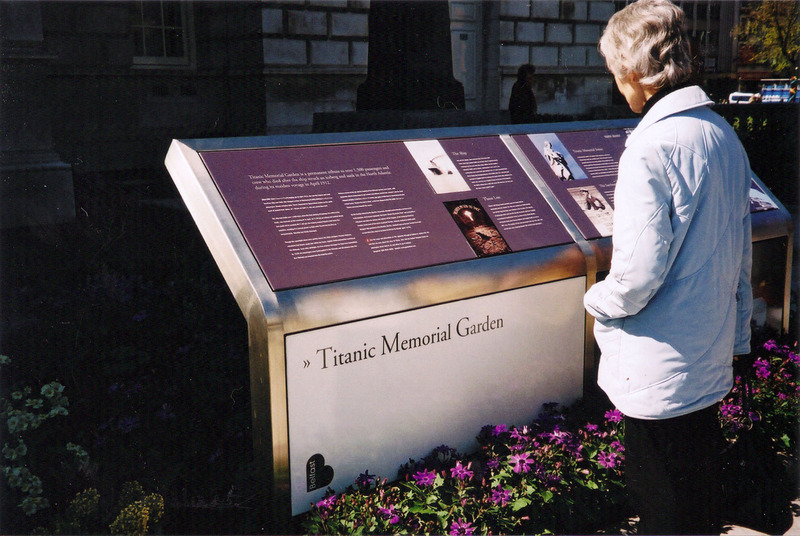
The Titanic story continues just outside in Donegall Square, where there are several memorials related to the ship, including a year-old garden dedicated to victims of the disaster. The only monument to record the names of all the victims, it is a stirring experience drawing crowds and flowers left in remembrance of relatives.
Across from City Hall is the Linen Hall Library, a great place to check out exhibitions related to Belfast's past and to grab a quick snack. The library celebrates its 225th anniversary this year with a series of exhibits and talks, many relating to the city's history. The Linen Hall procured the first printed copy of the American Declaration of Independence outside the United States. It also has an extensive collection of materials relating to the Troubles.
The city's other sites include Stormont, home to Northern Ireland's parliament. It is set in a beautiful park, but access is limited to its Great Hall and guided tours by special arrangement. St. George's Market, a Victorian architectural confection, offers a variety of vendors selling local produce and bric-a-brac on Fridays, Saturdays and Sundays. Check for hours.
Visiting Belfast requires a bit of preparation. It's not a city to parachute into without exploring beforehand a bit of its history and how the Troubles have evolved into today's political environment.
"In reality, while there remains a threat from dissident republican terrorists and rioting in a handful of flashpoint areas is possible, Northern Ireland has rapidly changed for the better," commented a Scottish journalist earlier this year.
Hartley, the former lord mayor, begins tours of Belfast Cemetery this way: "I remind visitors that they can either like or dislike the history they will be confronted with. ... they can agree or disagree with the politics of those who lie buried in the graves they visit. But whatever they think, be they Catholic or Protestant, Unionist or Republican, the history found on the headstones ... is the complex history of Belfast."
WHEN YOU GO
Belfast International Airport is served by nonstop flights on United Airlines from Newark. There are ferry connections to Scotland and England, and frequent train service to Dublin, capital of the Republic of Ireland, where there are more flight connections to and from the United States.
A broad selection of hotels is available in the central city. I stayed at the modern Hilton, adjacent to the city's Waterfront Hall entertainment venue, and at the venerable Merchant Hotel, housed in a former bank and with a wing of brand-new rooms. Other choices include Premier Inn Belfast Titanic Quarter, the Malmaison and the Europa, called the world's most bombed hotel during the Troubles, a title now in its past.
For more general information, visit Tourism Ireland at www.ireland.com.
For information on all of Northern Ireland, including events and lodging, see www.discovernorthernireland.com.
For the latest on what's happening in Belfast and transit: www.gotobelfast.com. Linen Hall Library: www.linenhall.com
Titanic Belfast visitor experience: www.titanicbelfast.com
Carl H. Larsen is a freelance travel writer. To read features by other Creators Syndicate writers and cartoonists, visit the Creators Syndicate website at www.creators.com.







View Comments