By Lesley Frederikson
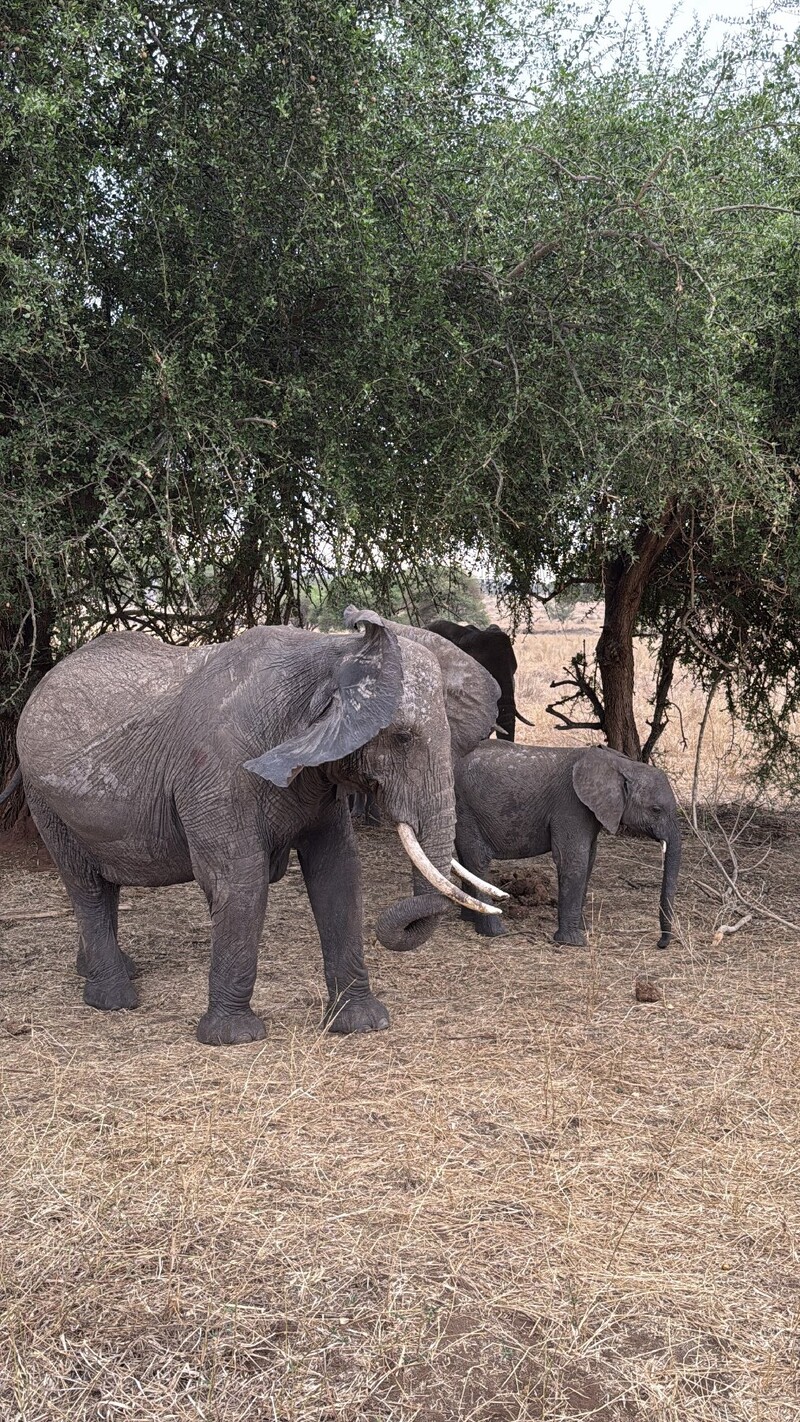
"Everyone hold very still," our guide whispered as a curious mama elephant turned to face our Land Cruiser and assess the danger to her little one. Ears flared, she considered whether or not to charge. Fortunately, she decided to let us pass — to our collective sigh of relief.
My husband and I, along with two other couples, were on safari in Tanzania, and Simon Sige was providing every opportunity for us to see animals we had never encountered before. A troop of striped mongooses slithered across our path one day on their bellies to leave a scent trail for following family members. An entire pride of lions stretched and yawned when they walked right up to lie down beside our vehicle. Ostriches chased and mated with fluttering feathers and total disregard for their observers.
Our trip took us to several areas of Tanzania, where we learned the migration never ends. Some animals stay in one spot, others move around. After spending two nights in each of five camps, we checked off almost every creature on our list. I even spotted a hyena sleeping in a ditch and lost a muffin to a daring vervet monkey.
Tarangire National Park is known for its many elephants, and that's where we came so close to the worried mother. Ngorongoro Crater, however, boasts an entirely different assembly of animals, many that never leave the protective walls of their ancient crater. Rhinos, hippos, Cape buffalo, baboons and flamingos are just some of the residents there.
On our drive from the park to the crater, Sige planned a lunch stop for us at Gibbs Farm. This organic farm and coffee plantation has been operating on the edge of Ngorongoro Crater since the early 1900s. Purchased after World War II by the Gibbs family and further developed as an inn and restaurant, it was a respite for world-renowned paleoanthropologists Louis and Mary Leakey as they made their important discoveries in Olduvai Gorge between the 1930s and 1980s, and that day it became our oasis for the afternoon.
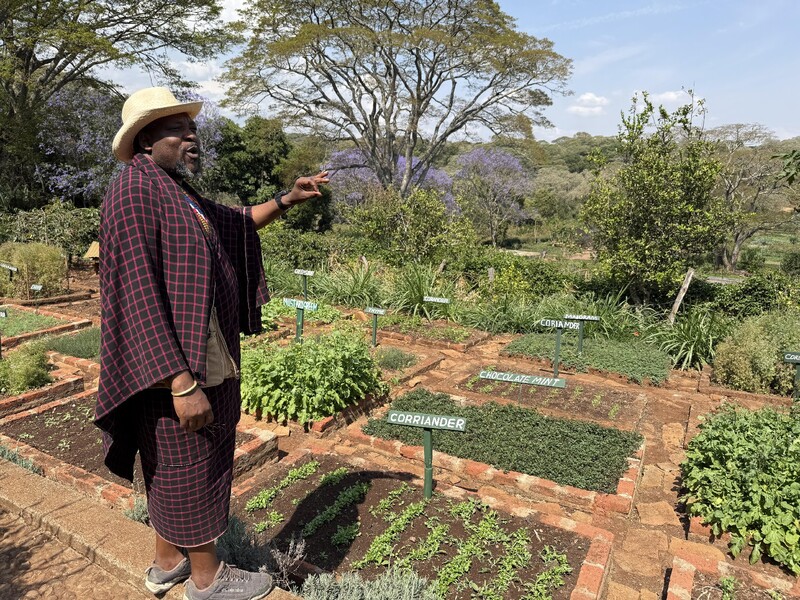
A long drive in a breezy Cruiser had us ready for a break, but when the gates opened on the paradise of Gibbs Farm, its unexpected beauty was overwhelming. Even the bathrooms had open views to lush gardens that spilled down the hill like patchwork. Our creative and colorful buffet lunch had been sourced from those verdant gardens, and we wanted to see more.
Guide Martin Mollel took our group for a walk through bountiful herb patches, past traditional honey logs and down to a small tower where a night watchman keeps an eye out for hungry elephants. At night, he tends a tobacco and chili fire whose smoke deters animals who would devour the bountiful garden. We tasted bitter tree tomatoes, held sun-warmed coffee beans and visited the small farm area from which restaurant meats are sourced. Mollel shared the yesterday, today and tomorrow flower. Named for its rapid change from purple to white in just days, its sweet heady fragrance is a gift that lingers.
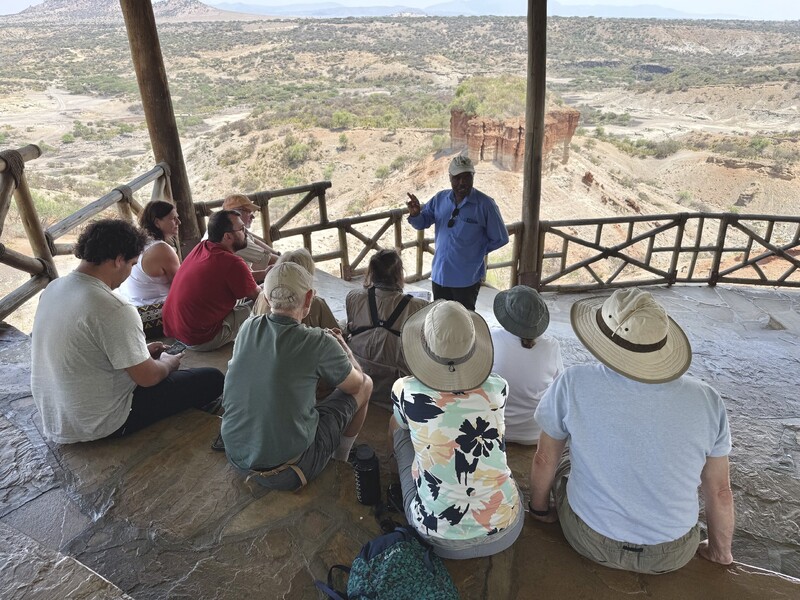
Not far beyond Ngorongoro Crater and Gibbs Farm is Olduvai Gorge, and our visit there was a magical event. From a platform classroom that overlooks the gorge, guides explain the gorge's important archaeological finds. A small museum goes into more detail and displays some of the significant bones and casts of ancient footprints.
Tanzania sits on the Great Rift Valley that has been dividing Africa for 30 million years. The gradual separation of the plates created great lakes and plains, but it also thinned the earth's crust, causing continuous volcanic eruptions — the most recent in 2025. As mountains were formed from volcanoes, a previously warm and tropical landscape was cut off from moist ocean air and became arid and dry. Ash from volcanoes layered up as the climate changed. It preserved bones, footprints and other signs of habitation that allowed the Leakeys and other archaeologists in the mid-1900s to document the evolution of our species from tropical Australopithecus Afarensis more than 3.5 million years ago to homo sapiens of today.
In college anthropology classes I learned that Africa is the cradle of civilization. To be there in person, engaging with wildlife, walking through gardens and overlooking the very gorge where so much discovery happened was truly the trip of a lifetime.
WHEN YOU GO
Simon Sige's company supports travelers from start to finish in a variety of luxury safari accommodations: Wanderful Tanzania: wanderfultanzania.com.
Lesley Frederikson is a freelance writer. To read features by other Creators Syndicate writers and cartoonists, visit the Creators Syndicate website at www.creators.com.
Elephants gather in Tanzania's Tarangire National Park. Photo courtesy of Lesley Frederikson.







View Comments