If you're thinking about installing a new lawn or renovating an old one, it is crucial to prepare both your property and your budget.
If it is possible in the initial budget, try to put as much of your property into landscape beds and as little into lawn as you can. Lawns are less expensive to install initially, but properly installed beds are less expensive to maintain. Lawns are best for areas that will be used actively by humans or pets.
Lawns with the highest visual quality are composed of 100% one species of grass. If there is more than one hybrid of that species in the bag, it is called a blend of grass seed. If there is more than one species of grass in the bag, it is called a mixture of grass seed.
Some grass species are not shade-, wear-and-tear- or disease-resistant as other lawn grasses. Therefore, in some areas of your lawn, there may need to be a mix of species. This may make a more durable lawn, but it may not be as nice to look at as a single species lawn.
If you need to renovate a portion of your lawn, it is wise to determine the reason for the original problem. Plants may decline in health due to improper or lack of care, too much shade, insect and disease damage or adverse environmental conditions. Once you have identified the cause (or causes), change your cultural practices to prevent repeating the damage. If necessary, change the type of grass to one that is more tolerant of the condition.
The basic process for installing a lawn is the same whether you want to use seed, sod or plugs and whether you want to plant a new lawn or renovate an existing one. Sod is nothing more than two-year-old seed. Can your seed lawn look like sod in that short of time? It can, if you do what the sod growers do. They keep the plants free from stress as much as possible. They monitor water, fertility, insects, disease, soil compaction and anything else that may arise during the years they care for the grass. That is why, even though the soil preparation on your property is the same, a sodded lawn will cost three to 10 times more than a seeded lawn.
The benefits of installing sod often outweigh the higher initial cost. It can be installed anytime the ground isn't frozen and water is available. The lawn will be usable within weeks, not months. Sod uses less water to become established and prevents soil erosion more quickly than seed.
Grass from seed or sod will not do well if the ground is not properly prepared. It must be loose so that the roots can penetrate. The soil in the sod must be of a similar soil type to your ground so that water will move easily between the two soil types. Problems with the soil will weaken the root system, which will eventually lead to problems with the top. Sod farms almost always grow blends of different varieties of the same species of grass, but not mixtures that would include other species of grasses. This can lead to the sod failing if some or all of it is installed in conditions where that kind of grass does not thrive. A seeded mixture of grass species will make a better lawn if the site has a variety of growing conditions.
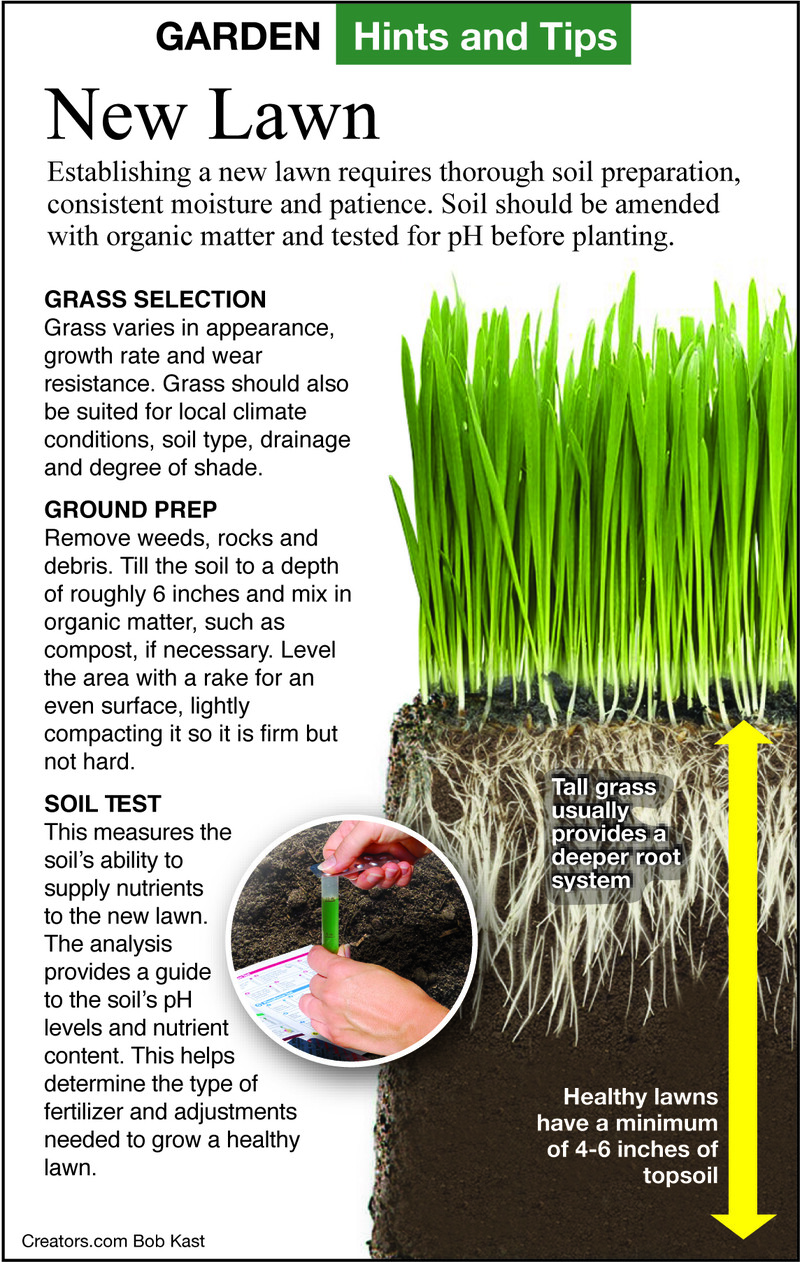
Having a successful lawn depends on having good soil — and the more topsoil, the better. If your house is under construction, ask for as much topsoil as you can get, because you will only get one chance for this critical growing medium. Testing the soil's nutrient analysis and acidity (pH) before planting allows amendments to be added to correct deficiencies. Use a starter fertilizer at the package recommended rates.
DIST. BY CREATORS.COM







View Comments