Dear James: I am planning a new room addition and have concerns about using drywall. I have heard some horror stories about having plaster walls, but will plaster really result in that much better walls? — Alyssa F.
Dear Alyssa: Plaster is considered superior to drywall in every aspect expect for installation. The strength of plaster is a great benefit especially if you have children who enjoy running and playing in the house with things in their hands.
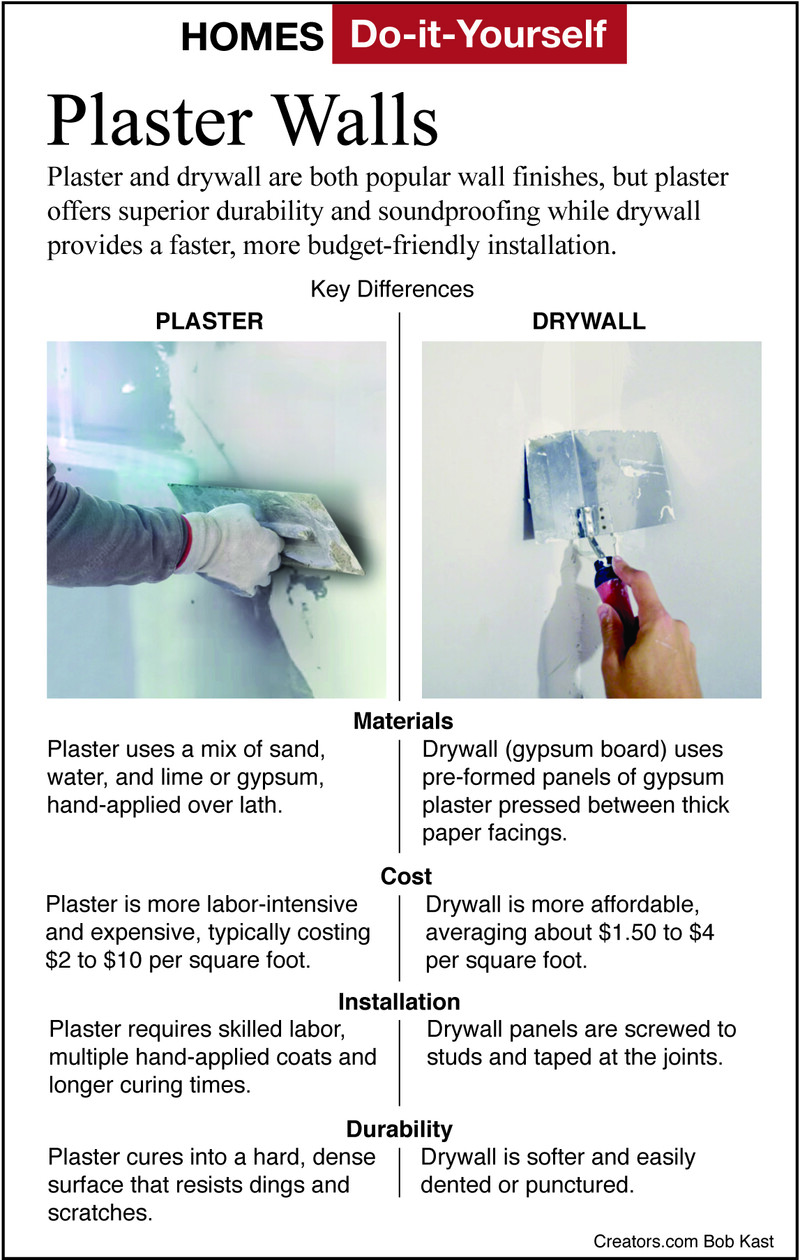
Plaster can be compared to cement by the way it works chemically. When it is mixed with water, a chemical reaction causes it to become a strong hard surface. It can cover the entire wall with no joints. Drywall, on the other hand, is soft gypsum with paper on each side. It is nailed or screwed into place and the joints are finished so they can't be seen.
Unlike drywall, plaster can even be washed without the possibility of water damage. Once cured, plaster is resistant to short-term water exposure.
Don't worry about repairing a plaster wall if it does get cracked or nicked. There are several types of plaster compounds available that have quick set times. These adhere much better to the existing plaster wall than premixed vinyl joint compounds. Once the plaster is dry, it can be sanded smooth and painted.
Using plaster walls will give you a flatter surface that is ideal for painting. This makes a very noticeable difference if you use a semigloss paint, which can accentuate imperfections. If you use drywall, the paint often appears different where the joint compound is used.
Even if you plan to wallpaper, plaster is a good choice. It is easy to strip old wallpaper off plaster without damaging the wall surface. You can use stronger enzyme solutions and scrape more vigorously to remove the old adhesive.
Today, plastering systems with plaster veneers make your choice even easier. Typically, plaster walls cost 25% more than drywall but will only add an additional 1% to the overall new house cost. This is a bargain for improved appearance and durability.
Keep in mind that plastering, even with the newer veneer systems, is not a completely do-it-yourself project. You can do nearly all the work, but an experienced plasterer will have to apply the plaster coating for a professional-looking result.
Unlike older wall plastering methods that required wood lath or small gypsum lath pieces common in the 1950s, plaster veneer is basically a one-step process. Large four-by-eight gypsum-based lath panels are nailed to the studs for the plaster base. A thin 1/16-inch layer of plaster is applied over this creating the smooth, hard finished surface.
You will have to decide whether you want plaster or drywall before any wall finishing has begun. The gypsum panels used for plaster veneer walls are different from standard drywall panels. If you have already put up the drywall, it is too late to select plaster.
These special panels for plaster are often called "blue boards" because they have a water-resistant paper coating with a bluish color. Without this water-resistant coating, the moisture in the plaster would damage the inner gypsum core. This application moisture is why standard drywall cannot be used with plaster.







View Comments