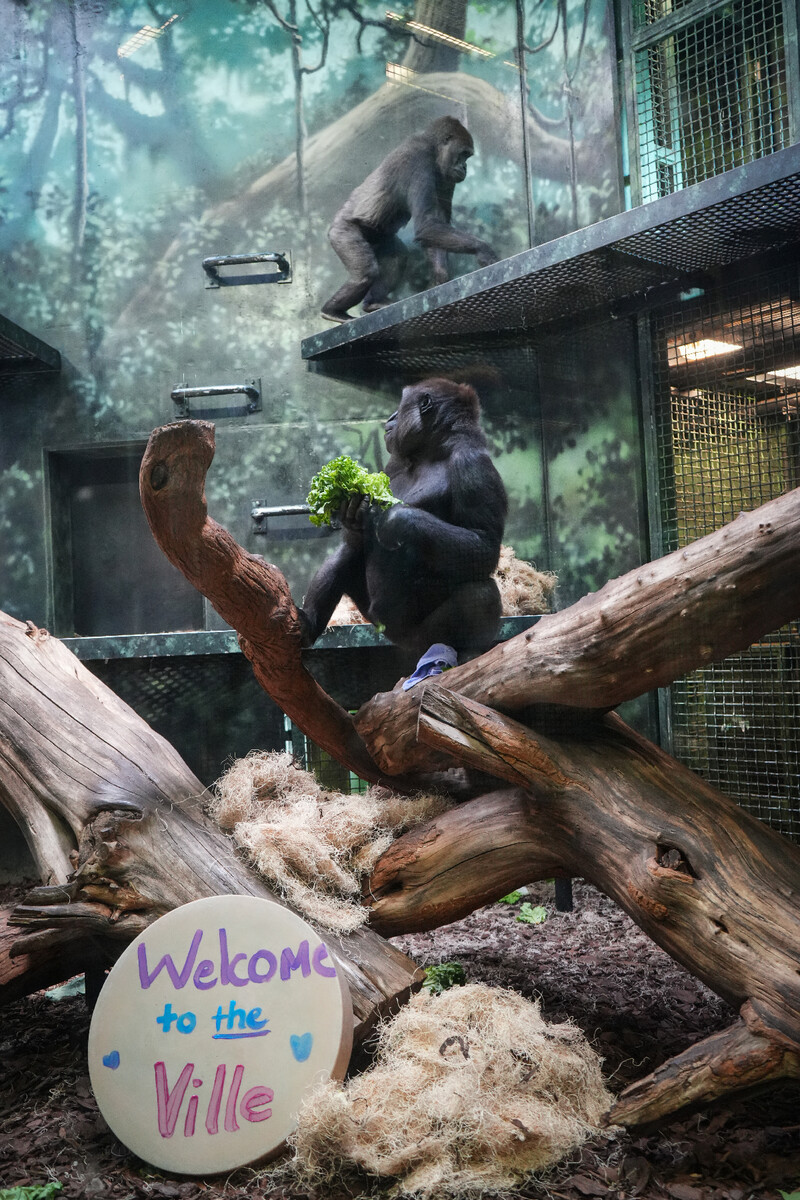
Two Western lowland gorillas just arrived at Louisville Zoo's Gorilla Forest from Zoo Knoxville in Knoxville, Tennessee. Obi and Andi are half-sisters and will hopefully create Louisville's next family group with 29-year-old male gorilla, Kicho. Their arrival piqued my curiosity about how zoos coordinate for breeding purposes as part of the Association of Zoos and Aquariums Species Survival Plan Program.
The Louisville Zoo once again welcomed me in to spend time with Steve Taylor, their assistant director of conservation. The zoo's Gorilla Forest opened in 2002 and is considered exemplary in its design. The 4-acre space allows keepers to rotate gorilla troops in and out of varied habitat spaces at unpredictable times, just like they would in the wild. The Louisville Zoo was actually the first to implement this type of exhibit design for several different species. This animal care strategy enables them to provide exhibit space for multiple gorilla troops.
The 11 gorillas currently part of Gorilla Forest have come to Louisville from seven different zoos throughout the United States. None of them were actually born there. Collaboration with other zoos is done in the spirit of conservation since each accredited zoo is accountable to the Species Survival Plan committee, which is made up of representatives from participating zoos.
"We all agree that we're going to manage them together as a population," Steve explained, "so we're going to do what's best for them, and whether you actually are listed as an owner or not, it really doesn't matter."
The committee develops a Breeding and Transfer Plan that identifies population goals and makes recommendations in order to manage a genetically diverse, demographically varied and biologically sound population.
The Species Survival Plan must look at all of the facilities with gorillas and determine how much space is available based on family groups, bachelor groups and the occasional gorilla that just doesn't want to live in a group at all. As technical and managed as this sounds, much of the species survival plan is accomplished by letting the gorillas lead, while keepers understand their individual needs. All of these scenarios happen naturally in the wild.
Fostering population growth of more social animals such as gorillas can be a bit more complicated. Zoos have to factor in the animals' behavior and preferences. You can't just put a random male with a random female and expect them to make babies. They may not like each other. Introductions move slowly, and matchmaking is intentional.
"There's a lot of intense discussions when the committee gets together," Steve said. Transferring and introducing gorillas takes thoughtful consideration.
You also have to be prepared to handle the results of that plan. Since animals develop relationships according to their own preferences and breeding happens naturally, you never know what you're going to get. When it comes to the sex of gorilla infants, "It's a roll of the dice," Steve said. This is one reason why Louisville designed their gorilla exhibit to make sure that they could handle multiple groups of gorillas. Steve remembers in the late '90s and early 2000s when zoos had to figure out how to maintain bachelor troops because there was an excess of male gorillas.
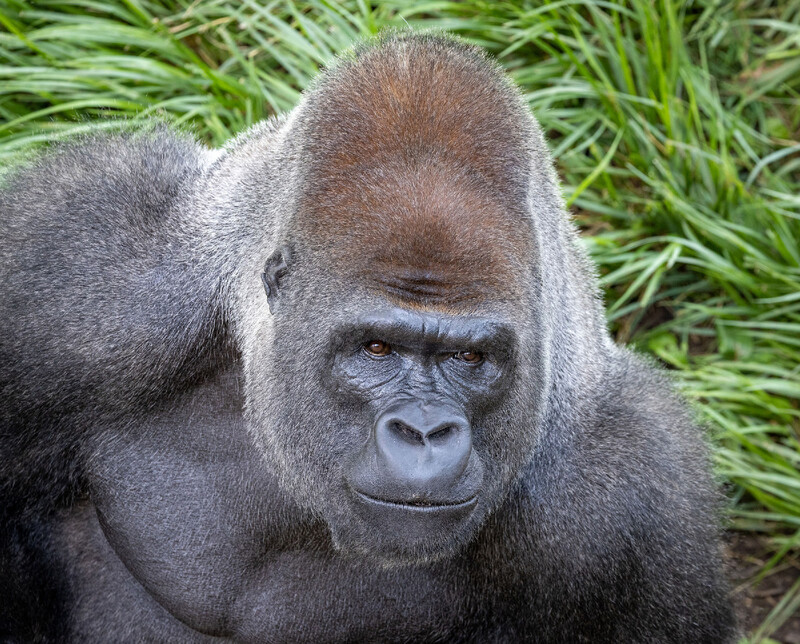
Zoos do their best to mimic what would naturally happen in the wild. A gorilla family will only have one dominant silverback to a few females. Younger bachelor groups of adolescent males are called blackbacks. It's natural for females to leave their family group at a certain age and join another silverback's group, just like it is natural for a young male to leave the bachelor group to lead his own family group. But this isn't the wild; the Species Survival Plan has to factor in the situation the gorillas are living in, what the exhibit is like and how each animal will benefit as well as the species as a whole.
Louisville Zoo had a bachelor group of four, so when it came time to consider genetic diversity and the next generation of gorillas in AZA accredited zoos, Louisville was a natural place to look. Cecil moved to the San Francisco Zoo in 2025 to start a new family group with three females there, and last month, the two females from Knoxville made their way to Louisville to start their new family group with Kicho. The two remaining bachelors, Jelani and Bengati, are best buddies, both from Chicago's Lincoln Park Zoo, and will continue to hang out together as bachelors in Louisville.
Watching as Kicho, Obi and Andi begin this new chapter, it's easy to think you're witnessing one gorilla family's story. But what it represents is decades of cooperation. Every introduction, every transfer and every birth is part of a much larger conservation effort to save the critically endangered Western lowland gorilla as a species. If Obi and Andi someday raise a family with Kicho, those youngsters won't only belong to Louisville. They'll represent the success of hundreds of people working together to protect a species that depends on all of us.
Do you know anyone who's doing cool things to make the world a better place? I want to know. Send me an email at [email protected]. Also, stay in the loop by signing up for her weekly newsletter at WriterBonnie.com. To find out more about Bonnie Jean Feldkamp and read features by other Creators Syndicate writers and cartoonists, visit the Creators Syndicate website at www.creators.com.






View Comments