creators.com opinion web
Liberal Opinion Conservative Opinion
Norman Solomon
3 Oct 2009
Rediscovering the Real Columbus

Columbus Day is a national holiday. But it's also a good time to confront the mythology about the heroic … Read More.

26 Sep 2009
A Farewell Column, But Not Goodbye

Seventeen and a half years ago — at a time when a little-known governor named Bill Clinton was running … Read More.

12 Sep 2009
The Devastating Spin for War

For those who believe in making war, Kabul is a notable work product. After 30 years, the results are in: a … Read More.

Post-Election Story: "Spreading the Wealth"

Share Comment

Two days before he lost the election, John McCain summarized what had become the central message of his campaign: "Redistribute the wealth, spread the wealth around — we can't do that, my friends."

The last weeks of the 2008 presidential campaign turned the election into something of a referendum on "spreading the wealth." Now, with an Obama administration on the near horizon, it remains to be seen whether media coverage will continue to explore the subject.

In view of the election results, it's important that journalists and the public not forget how the "spreading the wealth" issue unfolded.

"My attitude is that if the economy's good for folks from the bottom up, it's gonna be good for everybody," Barack Obama said on Oct. 12 in a conversation with an Ohioan named Joe. The candidate quickly added: "I think when you spread the wealth around, it's good for everybody."

McCain eagerly attacked the concept, most dramatically three days later during the last debate. While instantly creating the Joe the Plumber everyman myth, McCain sharpened the distinctions between the two tickets while the nation watched and listened. He charged: "The whole premise behind Senator Obama's plans are class warfare, let's spread the wealth around."

Obama routinely reframed the issue in terms of fairness. And he zeroed in on outsized corporate profits. During the debate, without repeating the controversial phrase, he in effect stood his ground in favor of the concept of spreading the wealth. "Exxon Mobil, which made $12 billion, record profits, over the last several quarters," he replied, "they can afford to pay a little more so that ordinary families who are hurting out there — they're trying to figure out how they're going to afford food, how they're going to save for their kids' college education, they need a break."

Such arguments were repeated endlessly all fall by the candidates and their surrogates.

Directly and indirectly, cable television and TV commercials engaged in a spinning free-for-all on the wisdom of government efforts to reduce economic inequities. Now, President-elect Obama may have the wind at his back in the journey to reduce the economic injustice in our country.

Frequently, the conventional media wisdom — largely in sync with Republican talking points — is that Americans reject anything that smacks of "class warfare." But the economic crisis and the greatly expanded appeal of populist rhetoric have pushed the subject into new political realms.

As much as anything else, the election became a dispute over the desirability of "spreading the wealth." McCain and Sarah Palin fervently denounced the idea that government policies should reduce the huge economic gaps between the rich and everyone else.

From the top of the GOP ticket, the battle cry was a recycled attack on the principles of the New Deal. Like Franklin Roosevelt when he first ran for president in 1932, Obama put forward economic prescriptions that were hardly radical. In the next few years, an Obama presidency could accomplish great things — reminiscent of the New Deal, with its safety-net guarantees and its mammoth commitment to public works programs that created jobs. Today, we need green jobs that cure our economy and heal our environment.

Vote totals were still coming in Tuesday night when several pundits and GOP spinners on the cable networks somberly warned the president-elect to govern from "the center." Presumably, such governance would preclude "spreading the wealth." But before the conventional media wisdom has a chance to harden like political cement, we should be engaged in fresh national discussions of economic options for moving toward a more egalitarian society.

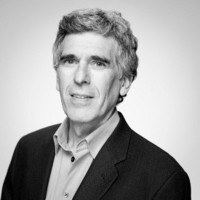
Norman Solomon is author of "War Made Easy: How Presidents and Pundits Keep Spinning Us to Death." The book has been adapted into a documentary film of the same name. For information, go to: www.WarMadeEasyTheMovie.org.

COPYRIGHT 2008 DISTRIBUTED BY CREATORS SYNDICATE, INC.


Comments

2 Comments | Post Comment
Sir;... The redistribution of wealth was certainly The republican isssue; and it remains so... But the distribution of wealth as it stands, is the problem, and so; what is the cure??? Marx said, I believe quoting another, that High profits were synonymous with glut, meaning depression... We have had a lot of record profits and they have sucked a lot of wealth out of the hands of the poor, and now, the government.... When you have sold all you can sell, and you are up to your eyballs in debt, and your government is deep in debt, you have no money to buy what you produce if you are working to produce anything... At that point, money, wealth, and property are all cornered... Is there some little piddly stimulous that will feed the economy to get it going??? The more you feed this failed economy the more it eats... If you do not get the weight of government off the backs of working people, and onto the rich who most benefit from government, you can kiss the whole system good bye... Either the rich will take over government, or the government will have to tax the rich to pay their own way....A people can only afford so many super billionaires, or so big a government; and then the weight crushes the life out of them... No; this land is sold... The people do not own it anymore... They will not even have their civil rights if they cannot make their claim to ownership of the whole nation... To be smart, the rich would volunteer more taxes... To be dummm, they will stand pat on the issue, and find themselves in the street with the rest of us... Rich people are easy to replace... You cannot replace the whole working class...And it is a huge mistake to ride the working class too far without a break... If I may, let me tell you where the weakness of the republican argument lies, and Mr. Greenspan made some note of this in his latest book, but when a whole people are deprived of property, and put on the skids even while working hard, then Property and Property right is deprived, by its own choice, of critical political support...People should remember that everything, and this includes economies, and governments, and property are all forms of relationship... The form of property, and the form of property rights has got to serve most of the people to have enough support as a form to exist... If a form divides us, and injures us it will not have much support... We would all like to be rich, and we all would like a big estate... When we all realize that property is sewed up tight, and we will never have any to speak of, then the whole form is in serious danger, and that is where we are taday....So the rich are right to be afraid... They would be more right to make property plentiful, and cheap... The more people having something to lose, the more support there will be for the great estates of the rich.... Thanks...Sweeney
Comment: #1
Posted by: James A, Sweeney
Sat Nov 8, 2008 12:18 PM
Of course there is class warfare in this country, and the DLC and GOP have been waging it for decades by replacing American labor with the poor of this world, particularly Asia, and ironically, with the people of Communist China and Vietnam, the same people we of the 60's were told we had to fight over there so as not to have to fight them over here. Sound familiar? It's all bullshit, of course; the corporations of this country are no more patriotic than Cheney and Bush were during the Vietnam war. Our economic difficulties of today, beyond the sheer fraud and criminality of Wall Street, exist because the American public bought into the idea of the global economy 25 years ago because it gave them cheaper products while not taking their jobs away, at least not at that time. Each succeeding year saw Americans higher up the food chain being challenged by global labor, and yet we kept on, lemming like until now when the consequences of "free" trade have gutted this country to the point that we're seeing the light and complaining as though we're totally innocent. What went around has come around. The bill is due and can be paid only if we totally reverse all aspects of American ploicy. Are we mature enough to learn the lesson?
Comment: #2
Posted by: michael nola
Fri Nov 14, 2008 8:19 PM
Already have an account? Log in.
New Account  
Your Name:
Your E-mail:
Your Password:
Confirm Your Password:

Please allow a few minutes for your comment to be posted.

Enter the numbers to the right:  
Creators.com comments policy
More
Norman Solomon
Oct. `09
Su Mo Tu We Th Fr Sa
27 28 29 30 1 2 3
4 5 6 7 8 9 10
11 12 13 14 15 16 17
18 19 20 21 22 23 24
25 26 27 28 29 30 31
About the author About the author
Write the author Write the author
Printer friendly format Printer friendly format
Email to friend Email to friend
View by Month
Lawrence Kudlow
Lawrence KudlowUpdated 16 Feb 2012
Judge Napolitano
Judge Andrew P. NapolitanoUpdated 16 Feb 2012
Joe Conason
Joe ConasonUpdated 16 Feb 2012

13 Dec 2008 Green Future Needs Two Wings to Fly

15 Aug 2009 Media Measures of a War's Success

28 Feb 2009 The Media Default for Escalation