By Jim Farber
I have always been fascinated by America's great river towns, large and small. That being said, I was not prepared for the remarkable layers of history to be found in Steubenville, Ohio, on the eastern bank of the Ohio River.
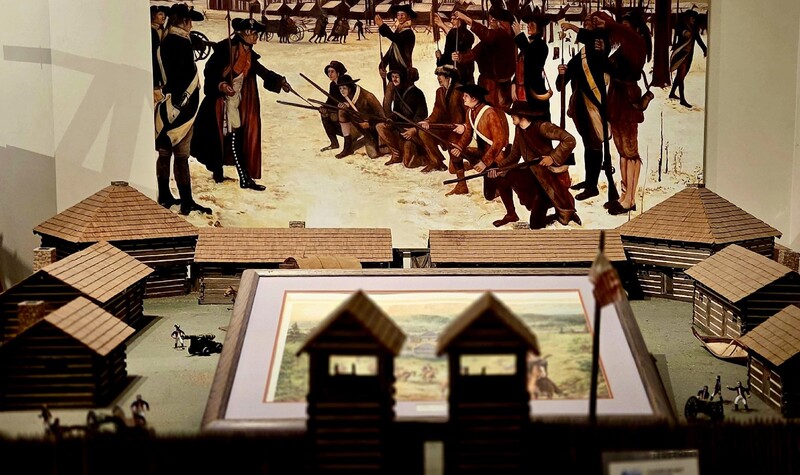
Fort Steuben was erected in 1786 and named for Baron von Steuben, a Prussian military leader who helped train American troops during the Revolutionary War. Its primary purpose was to protect the newly acquired territory along the great river — land a young British military surveyor named George Washington had explored in 1770. Which is why the town's visitor center proudly proclaims Steubenville as the place "where Ohio began."
Long before the arrival of the American westward expansion, however, the river had been home to countless generations of Native American tribes. And one of the treasures on display at the visitor center is a remarkable collection of the chipped arrowheads they left behind.
Lewis and Clark and their "voyage of discovery" made Steubenville their first stop after departing from Pittsburgh. In his journal dated Sept. 6, 1803, Meriwether Lewis described Steubenville as "a small well-built thriving place, has several respectable families residing in it, just five years since it was a wilderness." A re-creation of Fort Steuben erected on the site of its namesake is a popular tourist attraction complete with authentically clad woodsmen of the period armed with their trusty flintlocks.
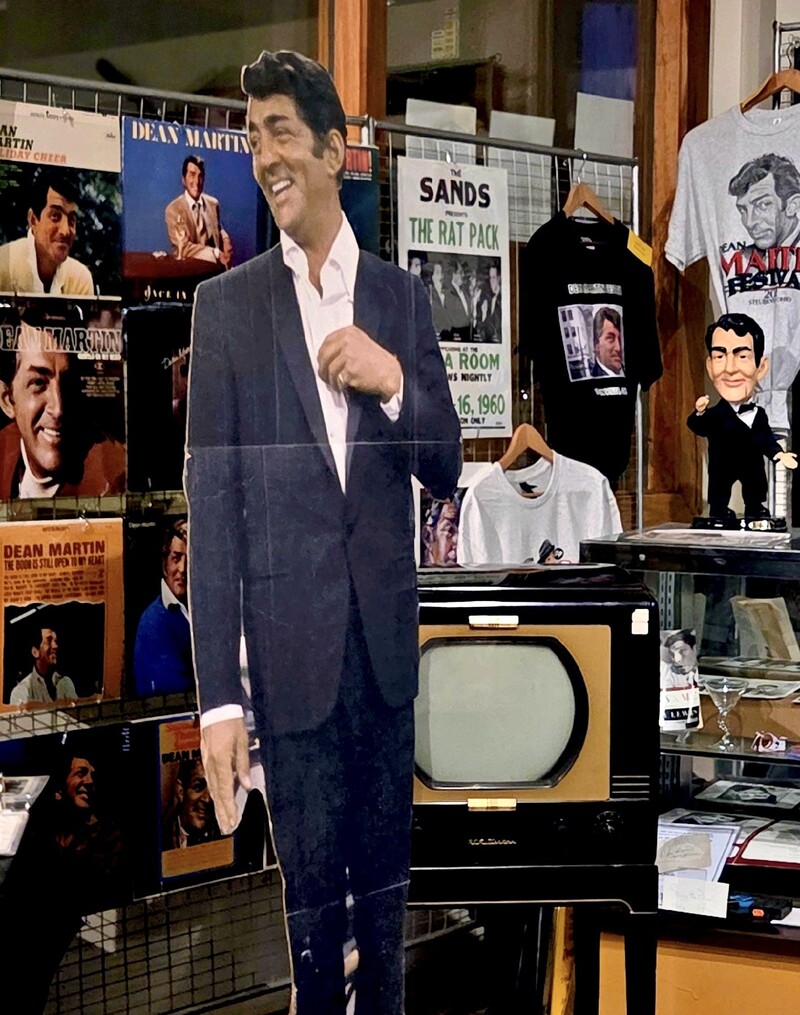
But what brought the biggest smile to my face was the extensive display at the visitor center dedicated to Steubenville's favorite son, Dino Paul Crocetti, better known as Dean ("That's Amore") Martin. A life-size cutout of Dino is flanked by pictures of him with his court-jester partner, Jerry Lewis, and the confederation known as the Rat Pack. The display features record covers, movie posters and an iconic martini glass.
My reason for visiting Steubenville, however, had a very different mandate. I was traveling (and cycling) with a small group organized by the Rails to Trails Conservancy. For 40 years this visionary organization has been advocating for the creation of a transcontinental network of connected cycling and walking trails. The goal is to create one continuous 3,700-mile trail from Washington, D.C., to Washington state built upon the roadbeds of abandoned rail lines — The Great American Rail-Trail.
At this point the existing trails, which are all available free to the public, form a spider web that stretches over 2,000. Even so, there are substantial gaps due to urban congestion, lack of available rights-of-way, and — in the case of Steubenville — the deterioration (and proposed replacement) of the 1,795-foot span of the Market Street Bridge, constructed in 1905, that connects Steubenville to the town of Weirton, West Virginia.
The mayors of Steubenville (Ralph Petrella) and Weirton (Dean Harris) advocate the construction of a new bridge that has already been approved with substantial funding allocated during the Biden administration. The challenge is to raise the additional funding to begin construction. It would unite the two states across the Ohio River with a dedicated bike lane and pedestrian access and close a critical gap in the trail.
The arguments are impassioned and convincing, a win-win scenario for both towns. Put in this era of extreme politics, who knows? But where there is enough will, and it appears there is, the new bridge may rise, ushering in a new voyage of discovery over this so historic stretch of the mighty Ohio.
WHEN YOU GO
For more information: visitsteubenville.com
Jim Farber is a freelance writer. To read features by other Creators Syndicate writers and cartoonists, visit the Creators Syndicate website at www.creators.com.
A re-creation of Fort Steuben has been erected on the site of its namesake in Steubenville, Ohio. Photo courtesy of Jim Farber.





View Comments