Week of December 14-20, 2025
We've all noticed it. Nights are growing longer, furnaces are working harder, and in many places, snow is blanketing the land. No doubt about it: Winter is coming!
The exact moment that winter arrives in our planet's Northern Hemisphere this year is at 10:03 a.m. EST (7:03 a.m. PST) on Sunday, Dec. 21. For those south of the equator, however, this defines the beginning of summer.
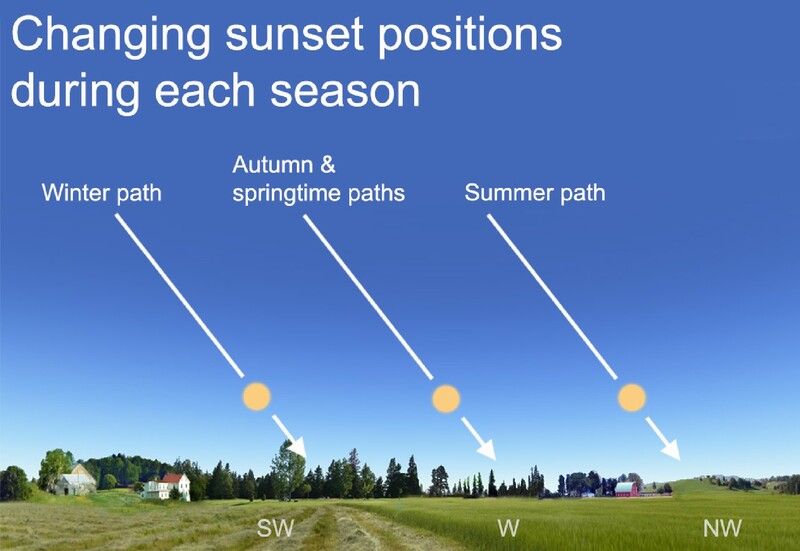
This moment has long been known as the winter solstice. To Northern Hemisphere skywatchers, it marks the sun's most southerly midday path across the sky, as well as the most southerly sunset point on the western horizon.
The winter solstice has been celebrated by cultures throughout the ages as the end of the season's darkness and the rebirth of sunlight, warmth and life on Earth. It's not a coincidence that some of our world's major holidays are celebrated at this time of year. In fact, some — including Christmas — are scheduled around this one important celestial event.
Even the term "solstice" originates in antiquity, coming from two Latin words: "sol" (meaning "sun") and "sistere" (meaning "to stand still"). It is on the winter solstice that the sunset's southerly travel along the western horizon seems to end (the sun "stands still"), and our sun begins to drift northward once again.
You can easily watch this yourself. Go outdoors just before sunset and notice where the sun disappears behind the western horizon. You might even make a sketch or take a photograph of its position. Keep watch over the next few weeks and months, and you'll notice that the sunset position will begin to drift northward along the horizon. By summertime, it will appear to set at its northernmost point, before it "stands still" and the cycle begins all over again.
The reason that our seasons occur is, unfortunately, a mystery to many, despite having learned all about this in elementary school. Some folks still believe that wintertime occurs because our planet lies farthest from the sun and conditions are much colder as a result. Now, while it's true that our distance from the sun varies during the year, we're actually millions of miles closer to the sun during our winter than during our summer!
No, our lower wintertime temperatures occur mostly because our planet's axis is tipped 23.4 degrees to its orbit around our star and, at this time of year, the sun doesn't appear in our daytime sky very long.
During the months of December, January and February, the Earth's Northern Hemisphere tilts away from the sun, causing sunlight to fall on us at a rather shallow angle. Six months later — in summer — when we're on the opposite side of the sun, our planet's tilt aims the Northern Hemisphere toward our star. Now solar rays beat down more directly onto the Northern Hemisphere.
From this moment on, the days become longer, the sun gradually appears higher in the daytime sky, and the greens of life slowly return to our planet's Northern Hemisphere. And, though the stargazer in me enjoys the long, star-filled nights of winter, I'd be less than honest if I said I won't relish the return of springtime!
Visit Dennis Mammana at dennismammana.com. To read features by other Creators Syndicate writers and cartoonists, visit the Creators Syndicate website at www.creators.com.
Throughout the year, the sunset's position in the sky changes.






View Comments