Over the course of their decade-plus as a filmmaking team, the Safdie brothers, Josh and Benny, evolved a hair-raising cinematic sensibility. "Uncut Gems," their 2019 breakout, suggested what it might be like to be strapped onto the front of a runaway train with your eyelids stapled to your forehead and your lips flibbering wetly in the wind. It was a whole new kind of night out at the movies.
Last year, the Safdies announced they were ending their cinematic partnership to devote themselves to separate projects. How's that going? Well, Benny's first post-split film, "The Smashing Machine," a rather mild wrestling biopic starring Dwayne Johnson, appeared in October and quickly stiffed. Now, Josh is making his move with "Marty Supreme," a movie that asks the unexpected question of how much raw hilarity and violent action can be crammed into a two-and-a-half-hour movie set in the world of competitive Ping-Pong.
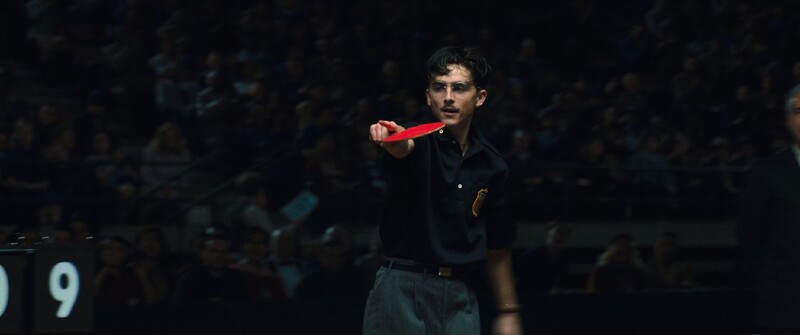
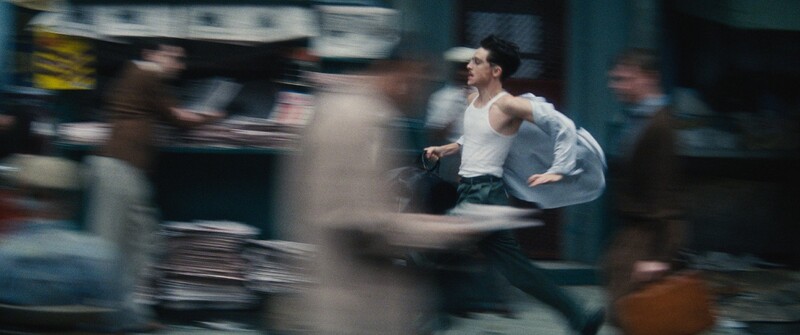
Strike that: "table tennis," I mean. The year is 1952, and Marty Mauser (Timothee Chalamet), an ambitious young hustler who can feel precious time sifting through his fingers, is working as a salesman in his uncle's shoe store on the Lower East Side of Manhattan. It's a temporary gig, because Marty has a dream. He's discovered he has a talent for table tennis, and he's pursuing it toward a professional level. The game may get little love in the United States, but overseas, in England and Europe and especially Japan, it's a serious sport, regularly selling out whole arenas. So Marty has only taken the shoe store job as a means of raising the $700 he'll need to fly to London for the British Open.
The story was inspired by a 1974 book by the late Pong master Marty Reisman, who would surely be impressed by Chalamet's yearslong dedication to mastering the sport. (As we can see in the movie's many long shots of various matches, the actor has reached a state of mastery in which he can accurately whack the ball back and forth from a distance of maybe 20 feet away from the table.)
Even a Ping-Pong movie has to have more going for it than just Ping-Pong, of course. So the writers — Safdie and his longtime collaborator Ronald Bronstein — have devised several narrative nooks and crannies to open the story up. This helps, and Chalamet, in glasses and roomy pleated trousers, as usual gives the role his all, doing everything he can to make Marty — who's an unconsciously abrasive narcissist — a sympathetic character. But it's hard, especially when we see the guy cruelly mistreating a pregnant girlfriend (Odessa A'zion, giving the picture's warmest performance), and telling her things like, "I have a purpose — you don't." On the other hand, it's gratifying to watch him meet his match in an older woman — a retired actress named Kay Stone (Gwyneth Paltrow, un-retiring six years after her last Pepper Potts gig in the MCU). Kay has Marty's number — she knows he's a thief and a cheat and a liar, but she puts up with him for a while, possibly for simple amusement. This is a stroke of luck for Marty, since he's eyeing Kay's wealthy industrialist husband (played by actual wealthy industrialist Kevin O'Leary) as a source of financing for his globe-trotting table tennis plans.
The movie's many actors are adventurously cast, especially Tyler the Creator as Marty's taxi-driver pal Wally and Luke Manley as his sweet, overweight cousin Dion. But there are so many performers in the picture that they crowd each other out in memory. (Was that David Mamet? Sandra Bernhard? Could a bit more not be found for Fran Drescher to do as Marty's mom?)
The movie has a period-appropriate lived-in look (Darius Khondji did the photography) and one strikingly original scene, involving bees and honey, that will surely take up residence on YouTube in the near future. Other elements in the overlong picture, however, are given more narrative space than they justify — especially the dragged-out bit involving a missing dog and Marty's bright idea to introduce orange Ping-Pong balls into the game. And while it's presumably intended to be kooky/cool to seed the soundtrack of a movie set in the 1950s with '80s pop hits, how clever is it to reference Marty's consuming ambition with the on-the-nose Tears for Fears track "Everybody Wants to Rule the World"?
I won't go into the movie's final shot, which seems to me startlingly misjudged — a banal conclusion to a picture with quite a bit of the old Safdie magic to recommend it.
Photos courtesy of A24







View Comments