I consider it an incredible blessing to have witnessed two of America's great milestone birthdays: the 200th celebration in 1976, when I was a rising second grader, and now the 250th anniversary as an older, seasoned adult. Looking back to 1976, as a kid, I enjoyed the fireworks and the parades I watched on television, and for me, this was a time of innocence when I began to learn about our country's principal ideals of freedom, individual liberty, opportunity and democracy. Although the suffering of Native Americans was glossed over in school, and the contributions and achievements of many significant African Americans — W.E.B. Du Bois, Medgar Evers, Charles Drew, Anna Julia Cooper and Shirley Chisholm, to name a few, figures I would study more in college and graduate school — were left out of my history books, I was gaining a basic understanding of what the Founding Fathers envisioned when they wrote the Declaration of Independence. Their vision, of course, was birthed while slavery was the dominant disgrace of the nation, and at 6 years old, I did not fully comprehend this controversial framework of our country's beginnings, but I was fascinated by the concepts of freedom and opportunity. This was mainly due to my learning more about my family's history and how my great-grandfather thrived in the Southern Jim Crow era. His success was a remarkable example of how many Black Americans never gave up on what the U.S. could become.
As I share part of his story, I like to think of how my great-grandfather, Cleve Stephens Sr., chased the American dream and actually achieved it for a Black man in the early 20th century. He began by establishing a solid family foundation when he met my great-grandmother, Ida Carter, during their late teens in the 1880s. Cleve came across Ida while she worked as a sharecropper in a cotton field in Walton County, Georgia. He told her that if she married him, she would never have to pick cotton again. It didn't take much coaxing, as Ida left the field and married Cleve, and together they built a life in Athens, Georgia, roughly 28 miles from where she was born. They joined Hill First Baptist Church, located in the historic Reese Street District, where Cleve would become head of the deacon board. Cleve worked as a groundskeeper for wealthy White families on Athens' Milledge Avenue, and Ida stayed home to care for the seven children they would have. Cleve, affectionately called Papa by his children, was an industrious man, purchased land on Rocksprings Street and eventually built four houses. The first one was for him and Ida. Two were later for his daughters, Isabelle and Mozelle, and the third was for his son, Cleve Jr.
Although Athens was segregated at this time, Cleve was well respected in both the Black and White communities. When he was just past middle age, some unscrupulous developers tried to force him off his land to construct a housing project. They issued a court order, and his rich White employers came to his rescue, fought the case with their lawyers, and paid his legal fees, allowing him to keep everything he had labored so hard for.
I have often thought about the resilient trust my great-grandfather had in God to overcome this trial and countless others he definitely faced during his life. Lynchings of Black males were prominent in the South when he was a young man, and even though he was fortunate to have White employers who looked out for him, he was not exempt from dealing with the everyday pressures of overt racism and discrimination. Yet he taught his children to respect all people, firmly believing what 1 John 4:20 teaches: that you cannot profess to love God, whom you have not seen, and outwardly hate others.
If my great-grandfather could see where our nation is today, he would be proud to celebrate 250 years. Our country is far from perfect, as there is still racial animosity, oppression and inequality, but there is no denying that we have made incredible progress. As I observe this momentous Fourth of July, like my Papa, I will continue to look to God to prosper me in a land that still has abundant potential.
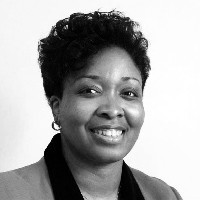
Dr. Jessica A. Johnson is a lecturer in the English department at Ohio State University's Lima campus. Email her at [email protected]. Follow her on X: @JjSmojc. To find out more about Jessica Johnson and read features by other Creators Syndicate writers and cartoonists, visit the Creators Syndicate website at www.creators.com.
Photo credit: benjamin lehman at Unsplash






View Comments