Q: We planted a nice redbud tree three years ago, and it has grown too high for where it is. We want to move it about 20 feet to one side of the yard. Do you think the root system is too big now? How should we dig it up? It was balled and burlapped, and very large and heavy when we bought it. We spent a good amount of money on the tree and don't want to just cut it down.
A: OK. This is doable, but not right now. I will give you three methods to do this. In all three methods, when the top of the tree has dropped its leaves this fall, the top will be dormant and not need a lot of water coming up from the roots. Move the tree between leaf drop and next spring, before the leaves start growing.
Did you remove the metal basket and burlap from the original root ball when you planted the tree? You should have. If you didn't, you will find the basket as you dig the new hole. The roots should have grown several feet past the original basket. The more roots that you cut off, the longer it will take for the tree to recover, so try to keep as many roots as possible.
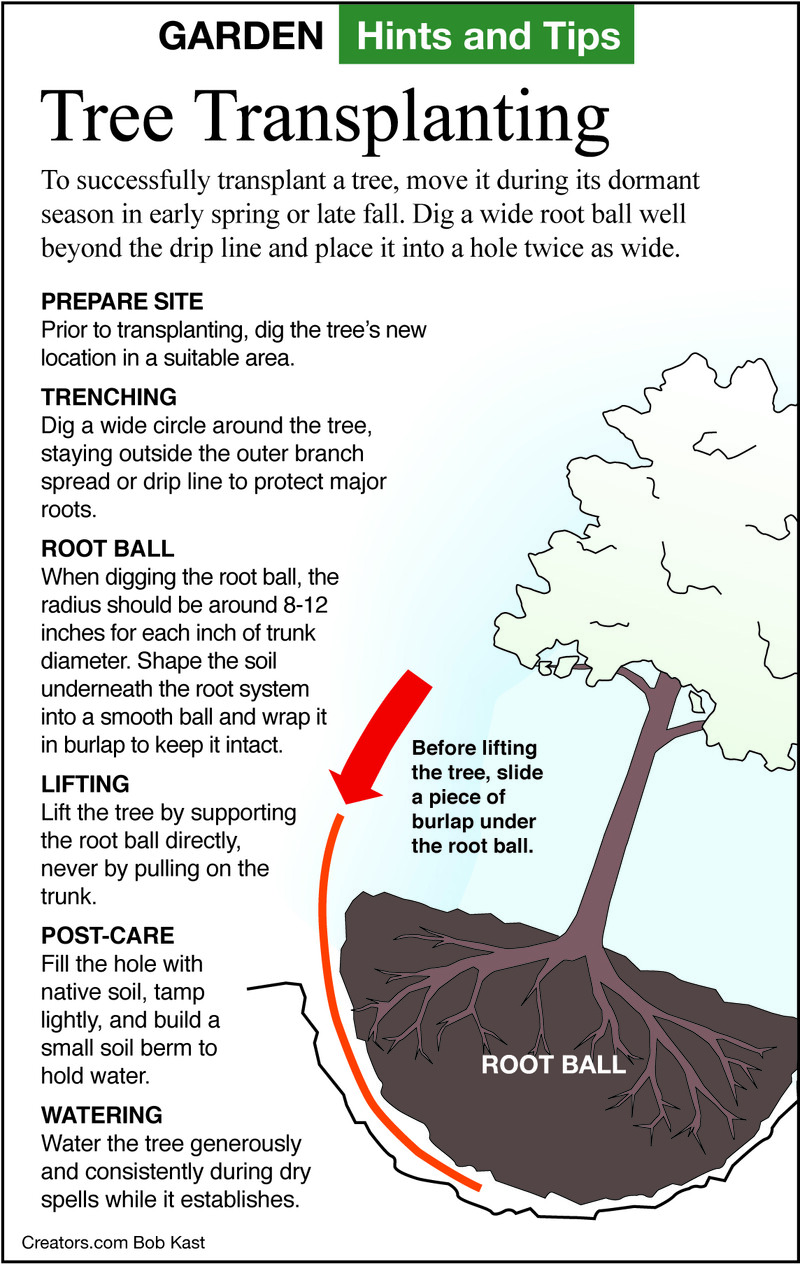
Dig a trench around the tree. Use a sharp shovel to cut down vertically on the edge of the trench closest to the tree trunk, to cut the roots as cleanly as possible. Make the new root ball about 1 foot in diameter for each inch of trunk thickness, measured about 4 feet above the ground. The original root ball was probably cone-shaped, tapering down under the center of the tree. This extra depth helps hold the tree in place, but it usually doesn't include many roots.
Once you have dug the first shovel depth of trench around the tree, start digging the second layer deep, and start going under the tree. Try not to rock the tree trunk back and forth, as that may break a lot of roots. However, as you dig, you can tip the tree over so that you can slide a tarp under the tree. You can have a rather flat root ball. It doesn't need to be cone-shaped.
When the tree is sitting on the tarp in the hole, you can dig a slope out of the hole on the side towards the new location, and you can slide the tree up the slope and over to the new hole. The soil from the new hole can be used to refill the old hole.
If the tree is older and has been in the ground longer, you can dig it up in two steps. This fall, pick the distance out away from the trunk that you want. Use a sharp shovel to make cuts straight down through the roots. Let's say the shovel is 1 foot wide. Cut down once, then move the shovel one shovel distance away around the circle and cut down again. This cuts the roots in every other foot and leaves them intact in the other foot.
Over the winter, the roots that have been pruned will start to grow again. In the spring, cut the other roots. Next fall, you can move the tree with all of the roots having been pruned, and new roots should all be growing within the new root ball area. It is possible that you could move the tree next spring instead of waiting a full year to do the move.
Keeping as many roots as possible is always best for the tree being moved. The third method keeps the most roots but may not be as easy as it first sounds. Use a garden hose or air compressor to blast away the soil from around the roots. Starting at the trunk and moving outward, wash or blow the soil from around the roots. The water method is the messiest, and the home-sized air compressor may not have enough power.
There are companies that move large trees with powerful air compressors. The roots need to be covered in wet towels to prevent them from drying out. I have planted spruce trees that are 8-10 feet tall into planters that we could not move the heavy root balls into. We received the ball and burlapped trees, and then I used a garden hose nozzle to wash all of the soil off the roots. The trees were now light enough to move over stone and brick walls into the planters.
After the move, water, mulch and stake the tree as necessary.
DIST. BY CREATORS.COM







View Comments