Q: We have fish and plants in our backyard pond, but now we would like to add turtles and dragonflies. How do we get them in the pond, and are they safe to have?
A: Some wild animals will find their own way into the pond, and others you have to add. Some wild animals are not invited, such as alligators in the South and moose or otters in the North.
Of the seven groups of turtles native to our rivers and ponds, only a couple are easily kept in a backyard water garden. They tend to have two problems: Either they run away, or they eat the plants and fish in the pond.
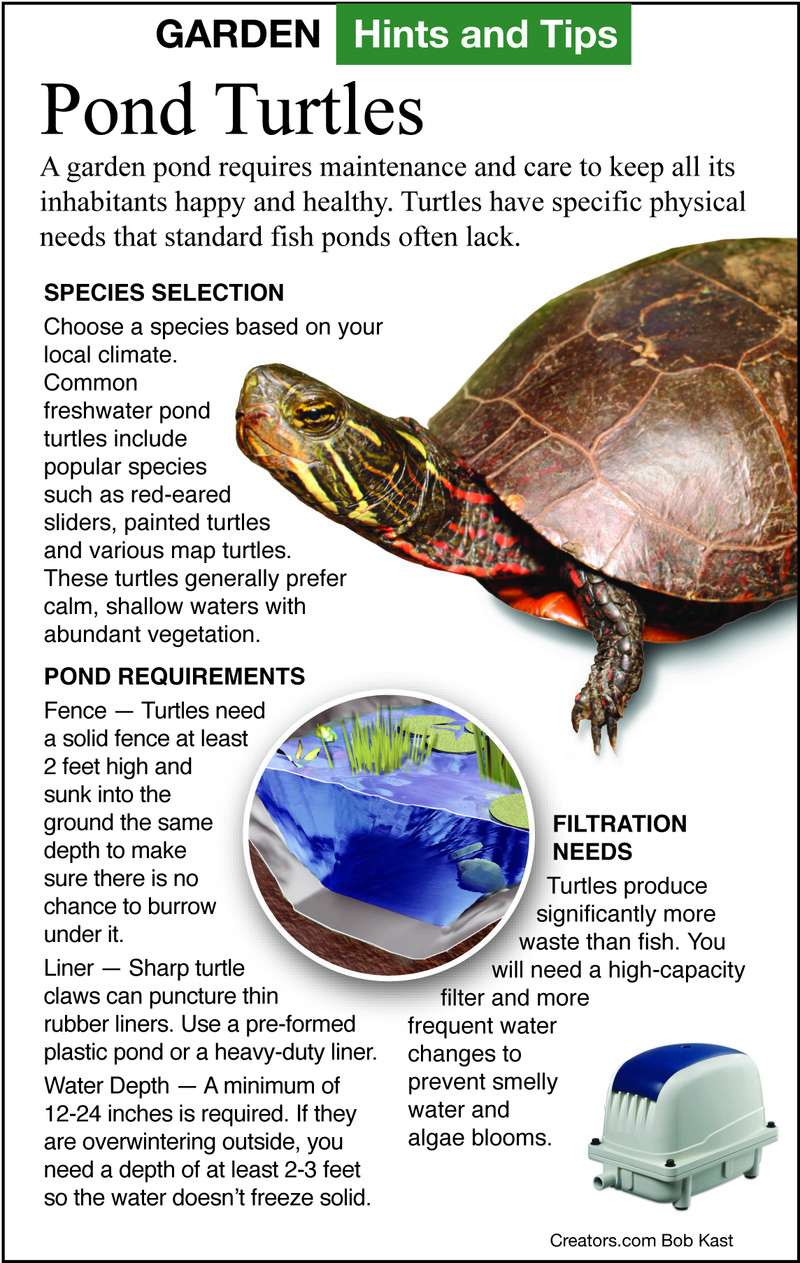
If you really want turtles in your pond, you will need to build it slightly differently from a pond just for fish and plants. Turtles need the same water temperatures, water chemistry and filtering as the fish, but they also need to be able to get out of the water and walk around on dry land. They will get fungal diseases if they are forced to stay in the water all the time. A fence will be required to keep them from walking away from the entire yard once they are out of the pond. Not only can they climb a small fence, but many can burrow 2 feet under a fence.
In the winter, they go dormant in the mud on the bottom of a natural pond. Large flowerpots of soil will give them a place to hide, but those can make the whole pond muddy. The larger a turtle grows, the harder it is to overwinter indoors. Indoors, they will still need water and a place to climb out and dry off.
The snapping turtle, musk turtles and spiny softshell turtles are all meat eaters. They will eat any pretty fish that you like. You can supply them with goldfish to eat. They can nibble on plants when they are hungry. The snapping turtle eats animals, plants and pond owners, so be careful if you try this one.
Red-bellied turtles are plant eaters. They will destroy all the plants in the pond. Some ponds that are only for fish have few plants, so they could be raised in this type of pond.
The red-eared slider of dime-store fame is easy to raise. They are omnivorous when small, but they can become heavy plant eaters as they get bigger.
The map and painted turtles are the best two groups for backyard ponds. Both eat snails, crayfish and other small invertebrates. If there is not enough food in the pond, they will resort to eating plants. They can be fed floating turtle food and insects.
None of the turtles should be collected from the wild, and only a few pet stores offer them.
Flying dragons and damsels in distress are not just for medieval novels. Dragonflies and damselflies both find their own way into our ponds. The larval stage eats other insects, and small fish and turtles eat them. As adults, they can eat lots of mosquitoes. Dragonflies rest with their wings straight out to the side, and damselflies rest with wings held straight back over the slender body. Even with six legs, they cannot walk. They use their legs to catch their prey. There are hundreds of species. The males will patrol an area of shoreline waiting for a female to arrive. She lays her eggs in the water by flying along and depositing them in the water one at a time, or some species lay eggs near aquatic plants.
DIST. BY CREATORS.COM






View Comments