Many new homes built over the winter don't have a lawn. If your home is being built this summer, save this article for use later. Some lawns need touch-up work from winter injury.
In northern climates, early fall is the best time to install a new lawn or renovate an old one. Warm days, cool nights and the expected rainfall favor lawn grass growth. Fewer weeds sprout in the fall, offering less competition in newly seeded lawns. Many weeds that do sprout are killed off by cold weather. How well a lawn that is started in the fall succeeds depends on what kind of weather we get later in the fall and through the winter, so the earlier you start, the better.
For those of us needing new lawns or repairs to older lawns, the second-best time to start a lawn is spring. Hot, dry summer weather and more weeds make establishing a lawn a little harder, but there are steps that can lead to a successful lawn.
Spray any existing unwanted vegetation with a herbicide. After a week to 10 days, cultivate the soil, remove any debris, and rake smooth. Correct any visible drainage problems.
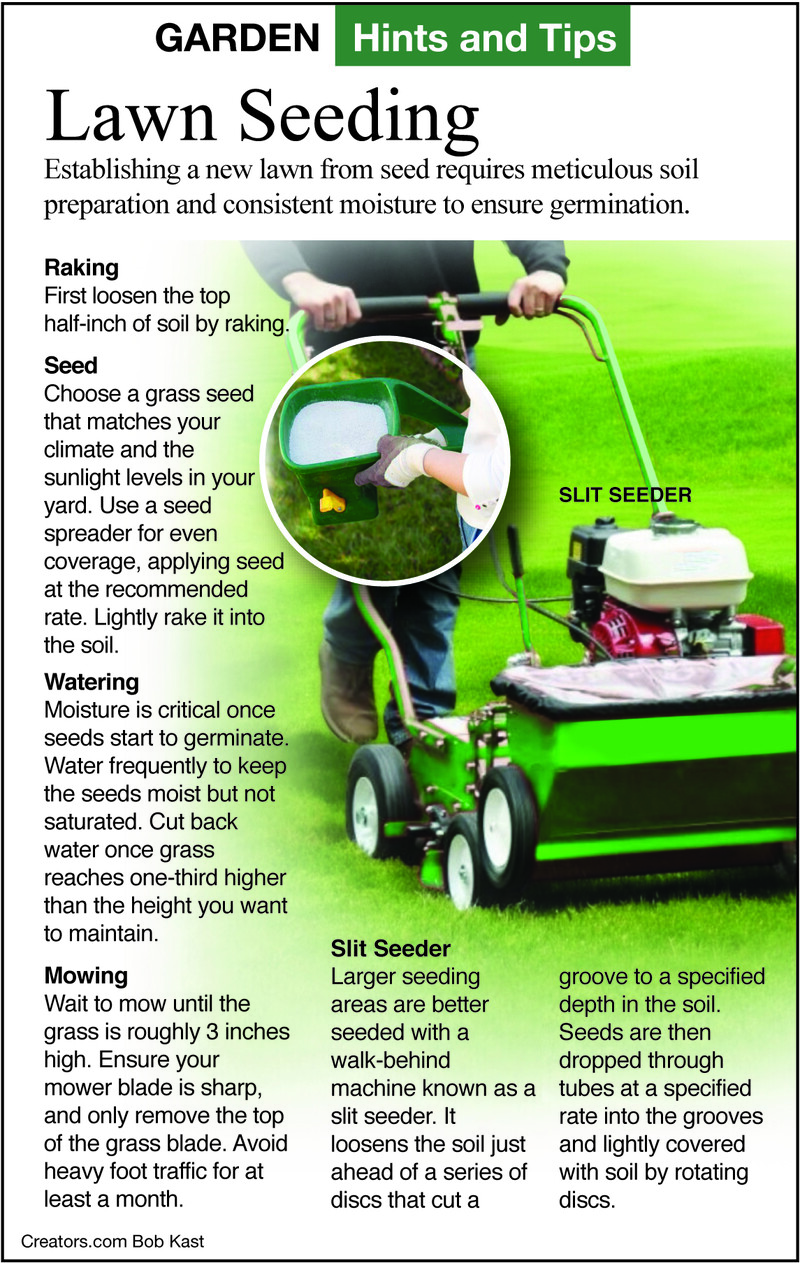
If you are renovating an existing lawn that requires no grading change, you can seed directly into the dead grass stubble. The stubble provides organic matter and helps provide erosion control. The seed needs to be in contact with the soil and only about 1/4 inch deep. For renovations, a machine called a slit seeder works very effectively. It is a lawn mower-sized machine that scrapes shallow grooves that the seed drops into, assuring good soil contact.
Once the seed is planted, the top inch of soil must stay continually moist (like a damp sponge) until the grass is growing. The key to a strong lawn is the word continually. A high water bill is useless if you water excessively one day and none the next. Continuously waterlogged soil drowns the seeds and wastes water.
A hot, windy or sunny day will dry out the top 1/4 inch of soil very quickly. If it dries out, some of the seeds or small plants will die. Grass seeds are small, the largest being the size of a grain of rice, so they may need to be watered several times a day to stay moist. An automatic irrigation system is very helpful. For small areas, a timer that attaches to the hose spigot may be all you need.
If you plant sod, lay it as soon after harvest as possible. Lay it in an overlapping pattern like brickwork. Butt the strips together tightly, but don't stretch them. Don't let them dry out, because in either case, they can shrink, leaving gaps between pieces. Water the sod heavily, then maintain it moist until the sod has rooted into the soil.
Rolling the seed or sod should only be necessary if you can't get good soil contact from normal watering. Begin mowing when the grass reaches a height one-third higher than the height you want to maintain. After it has been mowed three or four times, you can cut back on watering and begin a weed control and fertilization program.
Do not worry about any weeds that come up with the seed. There is nothing you can do about them at this point in the process. Most weeds can be killed with a weed killer or by the lawn mower after the lawn is established.
DIST. BY CREATORS.COM







View Comments