It is becoming increasingly clear that the Republican Party has a huge problem going into 2008. Usually, it has a clear frontrunner going into the process who is broadly acceptable to most Republicans. But in this election cycle, that is not true. The race is wide open and it is hard to predict who will be left standing when the last primary vote is cast.
One thing that can be predicted is that a great many Republicans will be dissatisfied with their party's presidential nominee. It won't matter who among those currently running ends up with the nomination, because, in my opinion, none have the capacity to unite the party or to stimulate the kind of intense support a nominee needs to win the general election.
Moreover, I think the Democrats will be united around their candidate, whoever it is. They have been out of the White House for a long time and feel, rightly or wrongly, that the last two elections were stolen from them. They won't let that happen again. Nor do I think it is likely that the Democrats will run three historically awful campaigns in a row. They are due for a rebound.
One thing that could have changed things for the better, from the Republican point of view, is if it had a sitting vice president who was a candidate. That person would at least be the prohibitive favorite for the nomination. While this is no guarantee of success in the general election, it can be very helpful. For example, it is doubtful that George H.W. Bush would have been elected in 1988 otherwise.
That the Republicans do not have a sitting vice president running for the presidential nomination in 2008 is entirely George W. Bush's doing. In 2004, he decided that he would rather have a vice president who would never question him than one who could carry on his legacy. As Bush explained in a Feb. 12, 2007 interview on C-SPAN:
"From my perspective, it is good not to have a vice president running for president. Can you imagine somebody out there running and all of a sudden saying, 'Well, I wouldn't have done it exactly that way.' When things got difficult, like they are in Iraq, I told the president that he should have done it this way. He chose another way.' In other words, there would be the tendency for a candidate who was associated with the president to feel like they needed to distance themselves during the tough moments, like right now, and that would create instability inside the administration."
Most presidents have not looked at it this way. They usually have wanted a vice president who could succeed them, to carry on and defend their policies and, perhaps, protect them and their supporters from retaliation from a political rival or a president from another party. Rather than giving the vice president an incentive to distance himself from the president, the necessity of having his endorsement has forced vice presidents to defend his policies even when he would have preferred to go in a different direction. Think of Hubert Humphrey in 1968. He probably would have opposed Lyndon Johnson's Vietnam policy if he hadn't been the vice president.
Another virtue of having a vice president with ambitions of his own is that he is the only senior White House official in a position to resist the sycophancy that always surrounds the president. This is important because presidents live in a bubble, surrounded by people who owe their power and position solely to him. They are loath to be seen as "out of the loop" or to read news stories about their imminent departure, when they had no such plans. This tends to make the White House staff highly responsive to the president's wants, biases and whims.
Once into a second term, the vice president cannot be fired and his own ambitions will encourage him to pressure the president into adopting policies and taking positions that will be popular with voters. Since presidents cannot run for a third term, they would otherwise be totally impervious to public opinion. If a vice president hopes to be elected president himself, he has a strong incentive to advise the president to adopt policies that will make it easier for him to win.
For these reasons, I think Dick Cheney's lack of ambition for the presidency has been more of a handicap to Bush than the blessing he sees it as. It has fostered insularity at the White House and closed off an important avenue of influence to the president that has encouraged him to take a "go it alone" attitude, which is bad both for the country and the Republican Party.
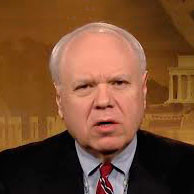
To find out more about Bruce Bartlett, and read features by other Creators Syndicate writers and cartoonists, visit the Creators Syndicate Web page at www.creators.com.





View Comments