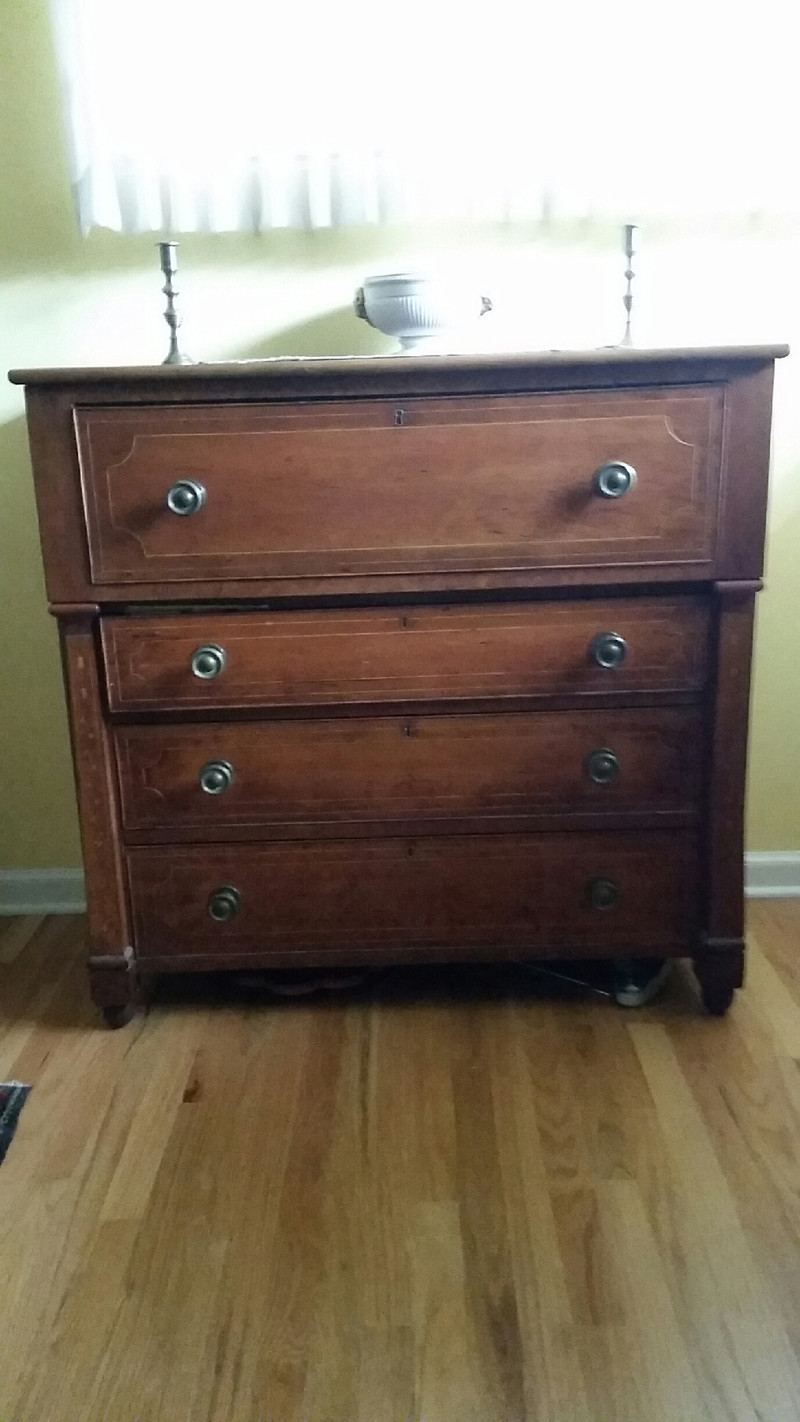
Q: This is a photo of an antique chest that I inherited from my parents. It is 41 inches tall, 42 inches wide and 20 inches deep. It is made of cherry. It has inlay on the drawers and floral inlay on the columns. The chest is in very good condition and has the original finish. I'm not sure if the pulls are original.
I hope you can provide information on the vintage and value.
A: Your chest was made between 1820 and 1840 during the late Federal period of furniture and the beginning of the Empire era. The overhanging top drawer above three graduating-in-size smaller drawers, the stringing inlay on the drawers, the three-part bellflowers inlay on the pilasters, and the keyhole escutcheons were all made by a cabinetmaker. Three-part bellflower stringing can be traced back to the work of cabinetmakers in Baltimore. Bellflowers with one part were made in New York. Similar chests were made of maple, mahogany or cherry. The pulls often were mushroom-shaped, glass or brass rosettes.
The vintage of your chest is late Federal and early Empire. The three-part bellflowers would suggest a Baltimore influence.
The value might be $1,000 to $2,000.
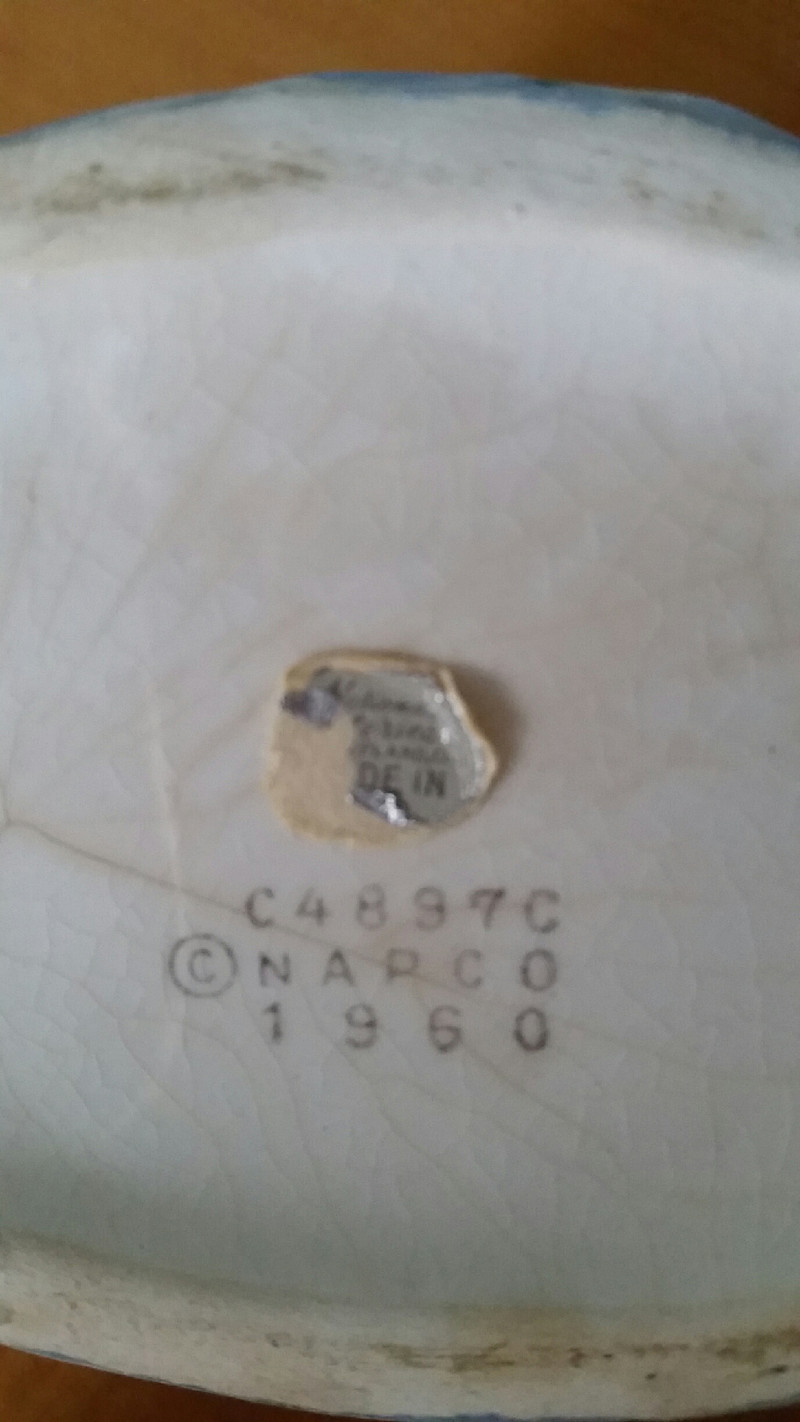
Q: This mark is on the bottom of a porcelain vase that I have. It is the shape of a woman's head and has an opening for a plant. She has blonde hair, cherry red lips, earrings, pearls, black 3D eyelashes and a sun hat that matches the top of her blouse. The height is around 5 inches, and she is in perfect condition.
I don't remember how I acquired it or know anything about the vase. Before I put it in a yard sale, I would like to know if it is antique or junque.
A: That's a good question. There are some collectors who would be willing to pay anywhere from $50 to $150 for a lady head vase. Other collectors would challenge that assessment and put it in the "junque" category. To be an antique, an object has to be at least 100 years old. Head vases were produced from the late 1940s to the 1970s and can be considered to be collectibles. "Napco" is the mark used by the National Pottery Corp. located in Bedford, Ohio. Lady head vases were usually 5 inches to 7 inches tall. They reflected the images of fashionable style of the mid-20th century.
Your lady head vase was made in1960 and would probably be worth $25 to $50.
Address your questions to Anne McCollam, P. O. Box 247, Notre Dame, IN 46556. Items of a general interest will be answered in this column. Due to the volume of inquiries, she cannot answer individual letters. To find out more about Anne McCollam and read features by other Creators Syndicate writers and cartoonists, visit the Creators Syndicate website at www.creators.com







View Comments