"Will you join me in lowering our impact?"
That was the subject line on a recent e-mail I sent out to family, friends, column readers and radio listeners asking them to join me for a week in trying to reduce our individual environmental footprint. Inspired by Colin Beaven's prophetic book "No Impact Man," I proposed four pollution- and waste-reducing steps many people could try for a few days: Stop consuming meat, devote one meal a day to eating only locally grown products, avoid producing non-recyclable garbage and refrain from riding in a fossil-fuel burning vehicle with fewer than three people.
Having now completed this Low-Impact Week, I can report that it was not easy and that I did not achieve perfection — not even close. However, I can also say I learned a few things beyond how to manage bicycle-seat discomfort.
For one, I discovered that you can find affordable food that isn't flown in at great energy expense — but it takes initiative. You have to check food labels at the grocery or hunt down a farmers market.
I was also reminded that we waste an obscene amount of paper and plastic. Coffee cups, disposable utensils, food wrappers — this offal is everywhere and most of it is used for less than 15 minutes and then discarded. Avoiding this trash for a week makes you think about the monstrous amount of energy used in producing, distributing and tossing it.
When it came to transportation, I discovered that the inconvenience of eco-friendly choices can come with unforeseen benefits. Sure, it took effort to get my bike working. Sure, my "not a morning person" gene didn't love sweating my way to the office at dawn. But my "I hate traffic" and "I like saving money" genes enjoyed avoiding congestion and gasoline bills.
These embarrassingly self-evident realizations led to my two biggest Low-Impact Week epiphanies of all.
The first is that a lot of environmental pollution comes from our aversion to basic forethought and from our on-demand culture. Think about it: We use so many disposable products simply because we don't even think to bring our own. Many people have come to rely on cars — rather than public transit, bicycling or walking — in part because we're not willing to plan ahead for train times, organize car pools or perspire a bit, and we like the idea of driving whenever we want to drive, rather than conforming to a schedule. And many don't eat locally grown food, not because it's necessarily expensive, but because we just don't enjoy inspecting labels — and because we feel entitled to eat whatever we desire, regardless of season.
My second realization is about the nature of environmental solutions. Dick Cheney famously told America that "conservation may be a sign of personal virtue but it is not a sufficient basis for a sound, comprehensive energy policy." And lots of liberals will insist, as one reader recently did, that "do-gooder" attempts to reduce personal pollution harm environmental causes because they "make conservation a purely individual effort."
But with global temperatures rising and a Texas-sized island of garbage in the Pacific Ocean, it's clear that we need both individual and collective action. Arguments to the contrary — claims that individual actions are insignificant and that the only important actions come from government — are self-interested cop-outs designed to let a nation of buck-passers simultaneously feign conscientiousness and rationalize individual gluttony.
Accepting these truisms over the course of a week only makes me want to once again ask: Will you join me in lowering our impact? You can pretend that question isn't important, but the truth is obvious: Our planet's future rests on your answer.
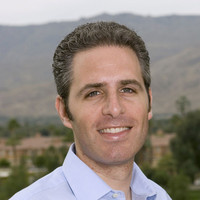
David Sirota is the author of the best-selling books "Hostile Takeover" and "The Uprising." He hosts the morning show on AM760 in Colorado and blogs at OpenLeft.com. E-mail him at [email protected] or follow him on Twitter @davidsirota.






View Comments