Recently, a friend and I were talking about our younger parenting days when she said, "You know, you still talk about your single mother days, but that was years ago."
She is right, but not really.
I've been married for 17 years now, to a man who became so important to my two kids that my daughter asked him to give the father's toast at her wedding. There are other reasons I love him, of course, but in this context, it's his relationship to my children that matters. Certainly, I have not felt alone in parenting for a long time.
And yet.
In my experience, being a single mother is similar to being from the working class. No matter how big your world becomes, you never forget that time in your life when you had less and worried more. It's a lesson that sticks with you long after everyone around you has moved on.
Predictably, the days leading up to Mother's Day take me back to that time in my life. When I became a single mother, my son was grown, but his younger sister was still home with me. That first December, when she was 8, she pointed to our three stockings hanging from the mantel and asked if we were still a family. I assured her there are many ways to make a family, and it had nothing to do with size. That was also the year I started making Christmas stockings for each of our pets to fill up the mantel.
Without my son and devoted friends, my daughter would not have been able to give me Mother's Day gifts when she was little. This would have shattered her. No matter how much I assured her that it didn't matter, it most surely did. I think that's when I first started resenting the holiday. I hated the pressure my little girl felt to prove her love.
Twenty-six years later, my feelings about Mother's Day have only grown more complicated. You might view this as overthinking. Welcome to the center hallway of my mind.
There are many ways to be a mother. Some mothers fail miserably and inflict great harm, which can make the holiday painful for those who wish they had a mother they could celebrate. Most mothers are better than they know, but it seems everyone, including the marketing industry, has an opinion about mothering. Which makes it easy to imagine all the ways you've fallen short.
No matter how good your own mother, if you live long enough, you'll eventually find yourself without her on Mother's Day. My mom has been gone for nearly 22 years now. You'd think I'd be used to that singular fact about my Mother's Day. Doesn't work like that. The longer I've been a mother, the more I understand just how much she influenced who I've become. I'd sure like to tell her that.
My mother wasn't a writer, but her ability to tell stories about her life helped me find the words for mine. I took too long to see how my mother's seemingly small acts of living would loom large in my world. She encouraged my biggest dreams, in part because she was so young when she gave up on her own. Our country has a long history of encouraging women too briefly, and even then, only when they are young and in the crosshairs of male ambition.
One of the gifts from my mother and her generation of women — one that I recognized only after I turned 50 — is my refusal to volunteer for invisibility. A strong woman repels weak men, which gives us room to keep growing. In this way, I'm my mother's dream come true.
And so, my mother keeps mothering long after she is gone. That makes me hopeful for my own children and now my grandchildren. For me, too, to be honest. Have I done enough? Have I been enough? If they could pick who gets to be their mother, would they still choose me?
I don't know, but I get to keep trying, and that's enough for this mother on every day except you know when.
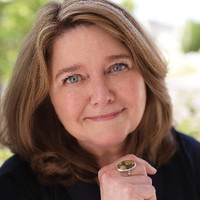
Connie Schultz is a Pulitzer Prize-winning columnist and professional in residence at Kent State University's school of journalism. She is the author of two non-fiction books, including "...and His Lovely Wife," which chronicled the successful race of her husband, Sherrod Brown, for the U.S. Senate. She is also the author of The New York Times bestselling novel, "The Daughters of Erietown." To find out more about Connie Schultz ([email protected]) and read her past columns, please visit the Creators Syndicate webpage at www.creators.com.






View Comments