By Sandra Scott
After years of civil war, peace has arrived in Sri Lanka — and so have the tourists. The reason is that the country is home to eight UNESCO World Heritage Sites, an array of beaches and exotic animals, plus it's affordable and the English-speaking people are friendly. All of this is packed into a country the size of West Virginia.
Sri Lanka had been on my "Gotta Do" list for several years. I finally made it, and I wasn't disappointed. Now the list it's on is "Gotta Visit Again."
To get my clock and my thermostat synced with Sri Lanka I started my visit in the capital city, Columbo. In January the temperature was very agreeable — not hot and humid as I had anticipated. One morning I toured the bustling capital, which has many of the British colonial buildings plus an ornate Hindu temple, and Slave Island. Slave Island was originally a place where the Dutch kept the slaves they brought to Sri Lanka to build the canals they needed for transporting goods from inland to the harbor. Today it is a relaxing little island in a large pond that was once home to the crocodiles that deterred slaves from trying to escape. Eventually the slaves were returned to Africa. Sri Lankan culture has been influenced by the Dutch, Portuguese, English and Indians.
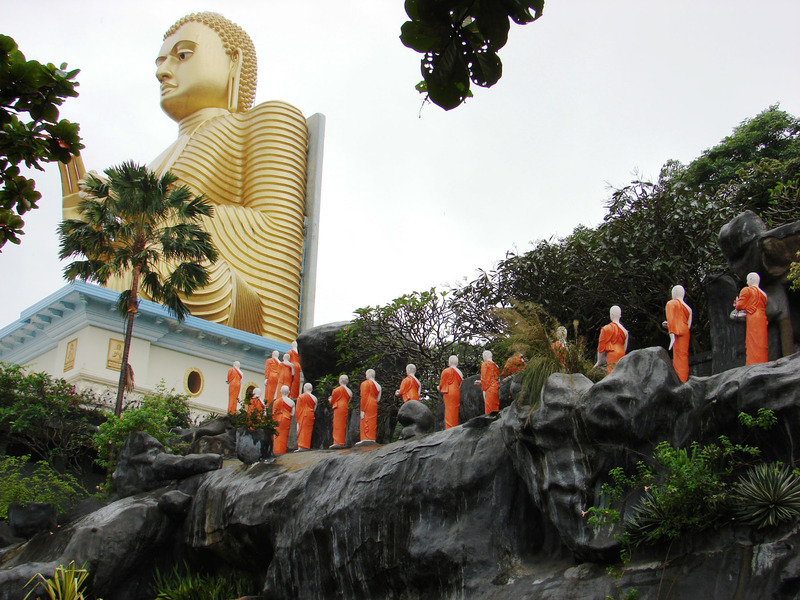
I managed to visit most of the World Heritage Sites. Heading inland, I was impressed by the Golden Temple of Dambulla, which dates to the first century B.C. and where a long row of saffron-robed monk statues bearing alms are heading toward the giant golden Buddha.
At the iconic Sigirya, built in the fifth century, I would like to have climbed to the top of Lion Rock to see the ancient city and gardens, but it was a bit too strenuous for me. The rock that towers 600 feet over the plain is impressive, as were the moats surrounding it. It is hard to envision building anything atop it.
My favorite World Heritage Site was the Polonnaruwa archeological site, mainly because many of the 900-year-old ruins are still discernible and diverse in nature with palaces, temples, statues and murals. Especially impressive were the beautifully carved statues of Buddha at Gal Vihara, one of which is 21 feet tall. One evening I strolled the walls of the 17th-century Dutch fort in the coastal city of Galle. Within the walls are many Dutch-style buildings, museums and other attractions. Galle Fort is a living, functioning World Heritage Site.
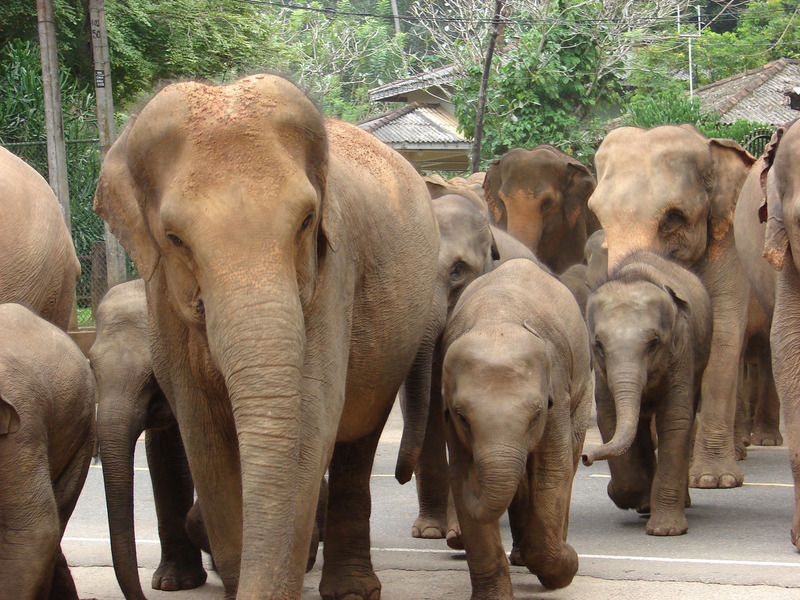
I had expected the archeological sites but never really thought about the wildlife. It turns out Sri Lanka is a great destination for naturalists. I made sure I was at the Pinnawela Elephant Orphanage at 9 a.m. for the morning bottle feeding of the 80 orphaned or injured elephants. One elephant had a difficult time standing due to a serious leg injury from a land mine. Later in the morning they were led down to the river, obviously one of their favorite activities. The young wrestled and dunked one another in the water like children.
I never associated the word "safari" with Sri Lanka, but that is the most popular activity at Chaaya Wild, which is located on the edge of Yala National Park. On safari I saw wild elephants, monkeys, boars, sambars, deer, crocodiles, water buffalos, huge monitor lizards and a wide variety of birds. Alas, I did not see the leopards for which the park is famous.
Most visitors come here for the sun, sea and sand, and they are never disappointed. Beaches encircle the island so that there is a beach for everyone and accommodations that range from basic to luxurious. I stayed at Jetwing Beach in Negombo, not far from the international airport, just north of Colombo, and also at the Bentota Beach Hotel, located about two hours south of the capital. They are just two of many full-service resorts that line the coast. While the resorts offer a wide variety of activities, there are many fascinating day trips that also are not to be missed.
My favorite was a boat trip on the Madu River, where we visited Cinnamon Island, a temple and a fish farm where I had a fish foot massage. Other day trips include a visit to a turtle hatchery dedicated to turtle conservation; the Temple of the Sacred Tooth Relic, one of the most sacred sites in Sri Lanka; mines for moonstone and other gems for which the country is noted; and a tour of a tea plantation to learn about famous Ceylon tea.
WHEN YOU GO
You can apply for a visa online. Weather-wise the best time to visit is between December and March, but that is also the most expensive. For the best deals with a chance of great weather, consider April and September. Excellent places to stay are the Hilton in Colombo with a wide variety of restaurants; Mahaweli Reach Hotel in Kandy, which is close to many inland attractions; Chaaya Wild in Yala National Park; historic Closenberg Hotel on a promontory in Galle; Bentota Beach in Bentota; Jetwing Beach north of Colombo; and for a luxurious eco-friendly destination resort check out Ulagalla on the Sambulla-Anuradhapura Road. For more general information visit www.srilanka.travel.
Sandra Scott is a freelance travel writer. To read features by other Creators Syndicate writers and cartoonists, visit the Creators Syndicate website at www.creators.com.






View Comments