By Steve Bergsman
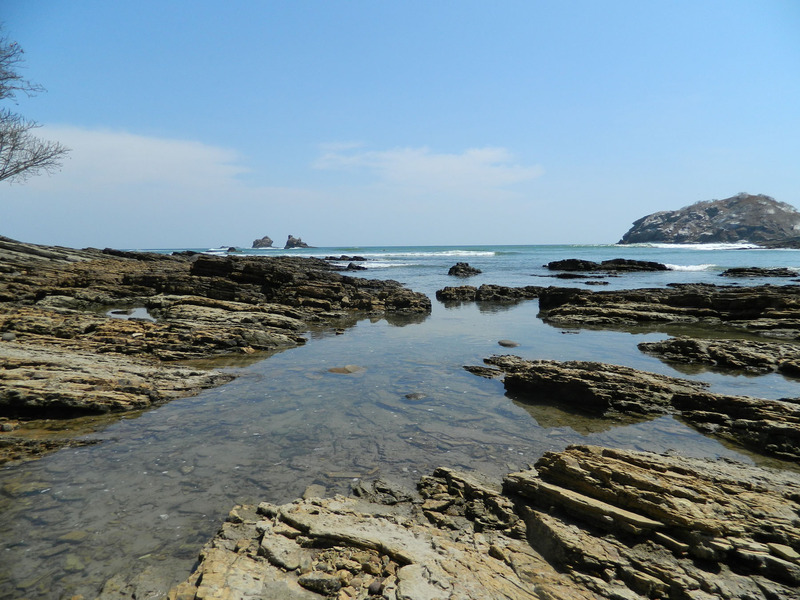
Baldo, as he liked to be called, was helping my friend into the rappelling harness. This wasn't Debbie's first time at the sport. A native of Alberta, Canada, she had done it in the Canadian Rockies, but she still looked a little nervous. The drop was long, about 365 feet, or more than a football field, and when it was over she would be standing on a rocky ledge with the Pacific Ocean not far from her feet.
Baldo is a native Nicaraguan, a young man known in the town of San Juan del Sur for his prowess as a surfer, but Baldo has a restless spirit. He's an organizer of the local surfing association, a Web designer and finally an entrepreneur.
A lot of young people used to come into San Juan del Sur to surf, but after a couple of days on the water there wasn't a lot else for them to do. Baldo, who liked to rappel, looked to the south at the cliffs that closed off the San Juan del Sur bay and thought what a beautiful rock for rappelling. That was good, but he knew for North Americans there had to be something more, so for the walk up to the top of the cliff, where there were some 19th-century battlement ruins, he created a walking tour replete with a history lesson of the area. It was informative and it made the mildly strenuous walk in thick, humid heat bearable.
Nicaragua is still off the tourist map for most people, even those who have Central America in their travel sights. Located between Costa Rica and Honduras, the beautiful country has an unbeautiful history, with much lasting animosity between the United States and historical political factions in the country. This makes some American travelers nervous, but it really shouldn't because Nicaraguense are some of the most friendly folks I've met on several journeys to Central America.
Despite flirtations with planned economies and a current left-leaning government, Nicaraguans are extremely entrepreneurial. Baldo's thought was to create a rappelling venture, and for the adventuresome like my friend Debbie, this sounded like a good deal of fun.
Tourism in Nicaragua is getting better organized, but where it's not, entrepreneurship comes in many different forms. Most visitors to the country will eventually make their way to the shores of Lake Nicaragua, the largest inland body of water in Central America. The lake can be approached by a number of venues, from the shores of the colonial city of Granada to untamed national parks.
One of the most popular ways is to take the ferry to the volcanic island of Ometepe, home of the active volcano, Concepcion, and the dormant Maderas. Although there are some nice accommodations on the island, it's most popular with Nicaraguan day-trippers and foreign backpackers.
Ometepe was formed by the two volcanoes, and the shape is like the number eight, with the orbs smashed together at the middle. At the connection point is a natural spring swimming hole, a great respite from the heat of the day.
After we bumped around the island for most of the day, my guide told me we were going to visit El Ceibo, the museum of Ometepe. I didn't think it sounded interesting, and when we arrived onsite my fears were realized. There didn't seem be anything around but random wagons and old farm implements.
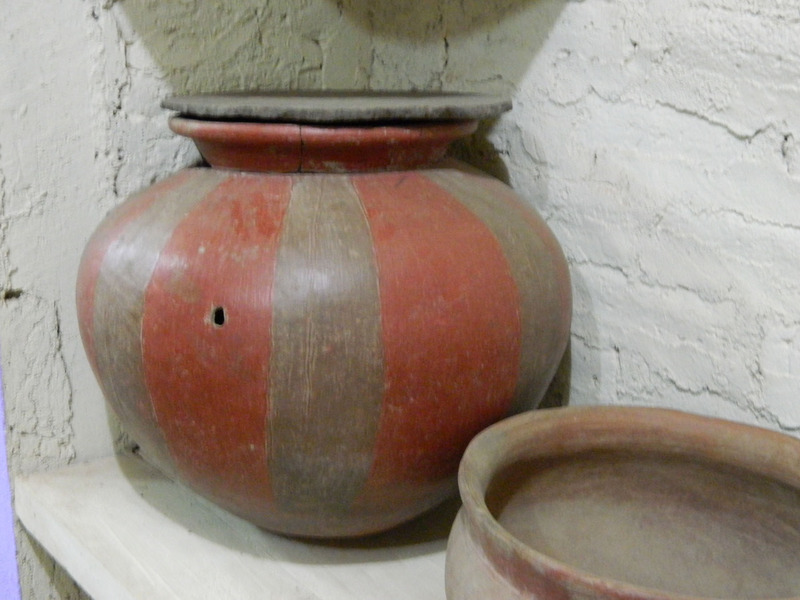
Then we walked into what looked like an early 20th-century brick structure, probably once used for crop storage because we were literally in the middle of a farm. In a sense the building was still used for storage because inside was the largest collection of ancient artifacts in the country — all privately owned and gathered. It was truly an amazing collection of figurines, jewelry, food-storage vessels, items of war and burial urns, many from as far back in time as 3,500 B.C.
I caught up with the owner, Moises Ghitis Rivera, who happened to be wandering around the grounds. He told me he took an interest in antiquity when he was of elementary school age. His grandfather or father would be plowing or digging and something would turn up and they would call him. As he got older and people knew he was interested in ancient things, they would let him know when they found something and he would trade for the items.
Many of the most important pieces in the collection came from right there on Ometepe because in ancient times it was a trading area for peoples from as far to the north as Mexico and in the other direction to the Inca territories in South America.
The Pellas family is also said to have an important collection of pre-Columbian items, but the Pellas are no small plot farmers. They are the most important industrialist family in the country, owning a vast portfolio of businesses including Flor de Cana, the great rum brand, which is literally the national spirit.
Recently the Pellas family has also put their entrepreneurial efforts and wealth behind one of the country's foremost upscale developments, the Pacific beach resort and spa property called Mukul, the Mayan word for "secret."
The $40 million development on a remote bay, called either Playa Manzanillo or Guacalito de la Isla, is spread out across 1,650 acres and includes the country's second golf course (the first is at a country club in Managua). There are no hotel rooms, only casitas spread across a steep hill, all facing the roaring Pacific Ocean. My casita was near the apex of the hill, and I awoke every morning to an amazing vista, about 30 species of birds flying past my balcony and even a family of spider monkeys chomping at the plant life nearby.
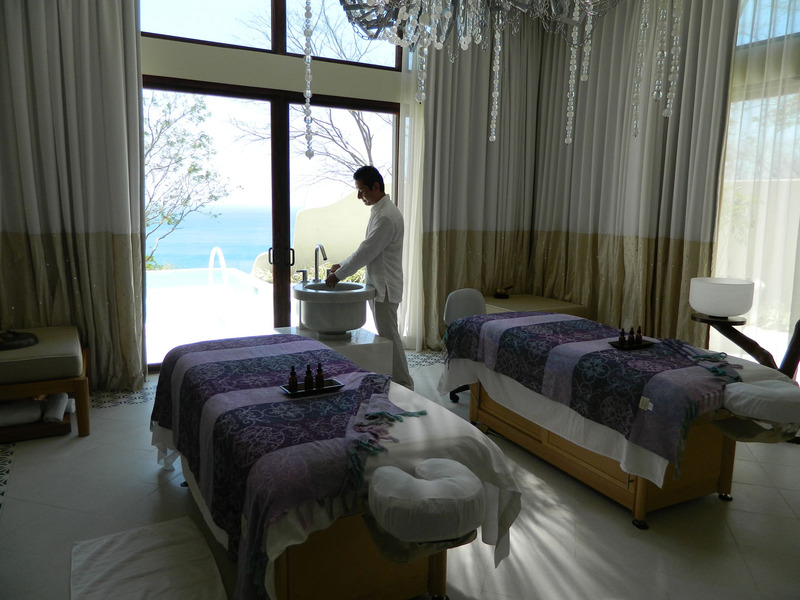
One day my singular late-afternoon activity was a rum-tasting — Flor de Cana, of course — where I couldn't make up my mind between the 7-year-old Gran Reserve or the 18-year-old Flor de Cana. The next day I organized my activities around a spa visit. Again it was difficult because I had to choose from among six different themed spas. I ended up choosing a sports massage at the Rainforest. My friend Debbie, the rappelling lady from Alberta, came down from the mountain and chose the aroma therapy at the healing spa.
WHEN YOU GO
There are direct flights to Nicaragua from a handful of cities in the U.S. Southeast. I flew United Airlines from Houston to Managua, about a three-hour flight: www.united.com.
My activities and guides were arranged by INTUR, the Nicaraguan Institute of Tourism: www.intur.gob.ni.
As noted, I stayed at the sumptuous Mukul Resort and Spa (www.mukulresort.com), but while traveling around the country I also resided at two finely restored properties, the colonial Plaza Colon Hotel (www.hotelplazacolon.com) in Granada and El Victoriano Hotel (www.hotelvictoriano.com), in San Juan del Sur.
Steve Bergsman is a freelance writer. To read features by other Creators Syndicate writers and cartoonists, visit the Creators Syndicate website at www.creators.com.







View Comments