The problem with "Mercy," the new high-concept action-trash movie from director Timur Bekmambetov, is that the concept and the action are too trashy even for a Bekmambetov project. Those who've been entertained by this Kazakh filmmaker in the past — probably by his 2008 hit "Wanted," with Angelina Jolie, although almost certainly not his uber-silly "Abraham Lincoln: Vampire Hunter" (2012) — may thrill at first to all the screens and smartphones and cop-cam footage on display here. But this customary Bekmambetovian tech overload doesn't really take us anywhere; we spend most of the movie watching the characters watching it all (on screens, smartphones, etc.) and wondering when it's all going to get cool — a question that persists after the lights come up.
The movie wastes its two stars - the likeable Chris Pratt and the flinty Rebecca Ferguson (of the "Mission: Impossible" and latter-day "Dune" films). This was inevitable, given the story's design, in which their characters spend most of the movie trying, along with us, to keep up with a criminal case that's being tried in a high-tech courtroom. (We're once again in a dystopian Los Angeles, by the way — everybody's favorite action-noir locale, already the killing floor in such past classics as "Blade Runner," "Minority Report" and "The Running Man.")
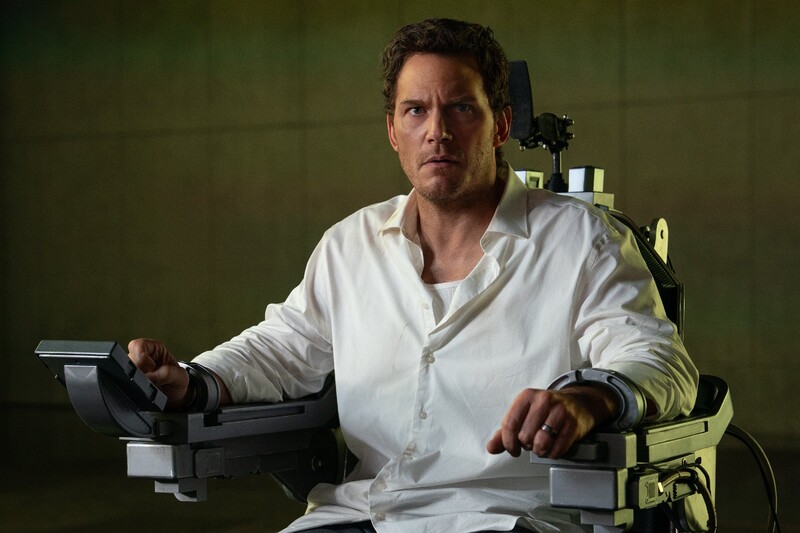
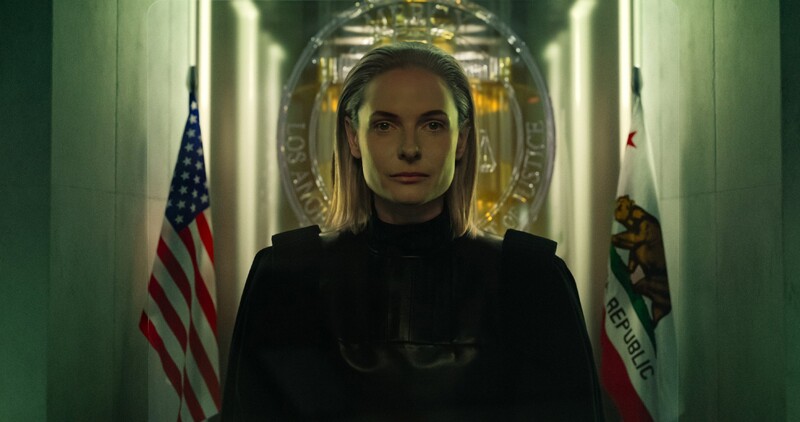
Pratt is Chris Raven, a detective in the LAPD Robbery-Homicide Division. As the movie opens, we see him bound in a computerized interrogation chair looking disoriented and desperate as a judge named Maddox (Ferguson) presses him for answers to many stern questions. Raven is charged with the murder of his wife, Nicole (Annabelle Wallis), and digital evidence keeps piling up. This is especially bad, because Raven's trial is taking place in the Mercy Court, a streamlined judicial assembly line in which defendants are considered guilty at the outset and judges are given 90 minutes to consider cases, render verdicts, and execute punishments. No more 20-year waits for convicted miscreants to ride the lightning; it's all very tidy. Especially since the judges are cold-eyed AI computer beings. (For this reason, Ferguson spends the entire movie staring straight into the camera as she murmurs lines whose only purpose is to hustle the story along to the next mildly surprising turn. Which, as I say, is a waste of a fine actor.)
Raven is an alcoholic hothead who was close to getting straight, but then started falling off the wagon. On the day of the murder, he'd driven off to work as usual, but then returned home later in the morning for reasons unknown. Raven himself is totally in the dark about what might have transpired; after stabbing his wife to death (as the cops see it), he made his way to a bar and got roaringly drunk. Now here he is in the Mercy Court, pleading with Judge Maddox to call up every shred of electronic evidence that might fend off a guilty verdict. For example, his wife had a secret burner phone, it turns out. Why? And his daughter (Kylie Rogers) made a problematic Instagram post. Raven's loyal partner, Jaq Diallo, will do anything she can to help, but things don't look good. And how does Maddox feel about all this? "I was not designed to feel," she says. "I comprehend."
Knotty plots are important in a movie like this. But in the aforementioned classics like "Blade Runner," "Minority Report" and "The Running Man," you had top-shelf narrative complications provided by the likes of Philip K. Dick and Stephen King — they were fun to figure out and they held up under subsequent contemplation. The twists and turns in "Mercy" are more humdrum. They might have been bought by the yard at the knotty plot store.
Photos courtesy of Amazon MGM Studios







View Comments