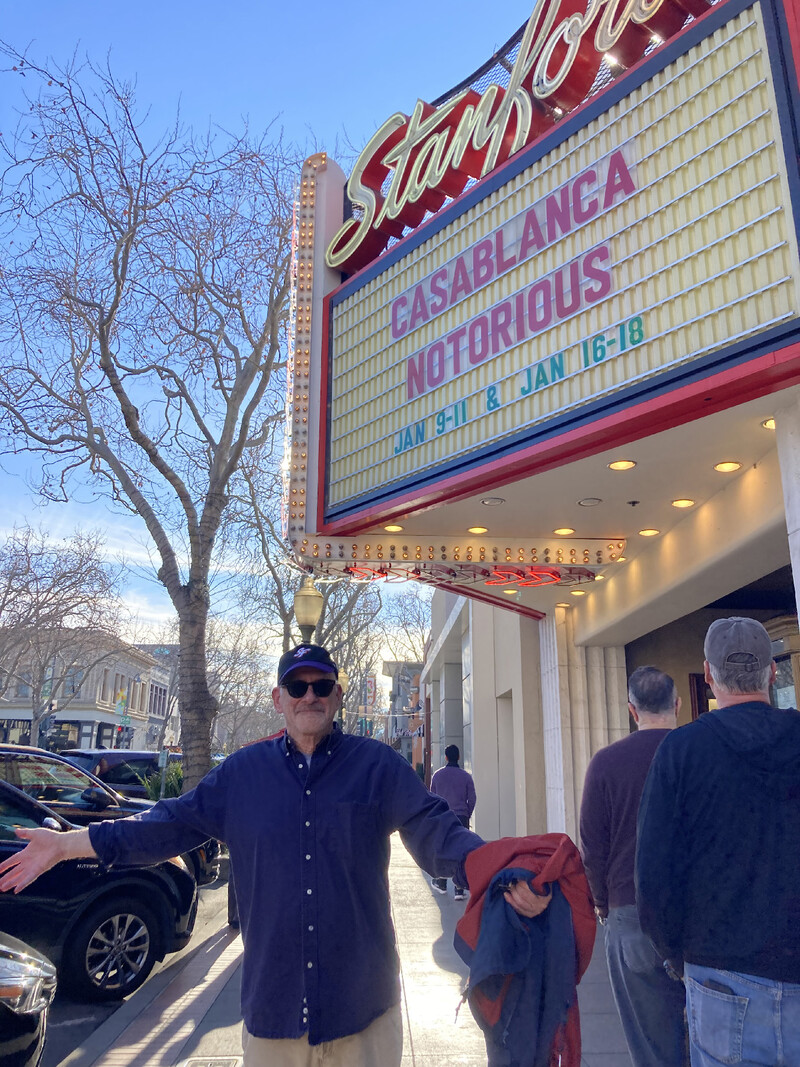
Sunday night I went to the local cinema to catch the 83-year-old film "Casablanca" starring screen legends Humphrey Bogart and Ingrid Bergman. I've seen it many times, but on this occasion, it seemed to be sending me a message across the decades.
The movie opens with a random roundup of the "usual suspects" in Casablanca, Morocco. Someone runs. The armed authorities shoot him in the back. It's as though what happens in an African city in 1941 foreshadows moments we are seeing in American cities today: armed authority, fear and the casual use of violence.
The film's protagonist is Rick Blaine, heartbroken by Ilsa Lund, who left him standing forlorn in a train station when the Nazis entered Paris the year before. Now he runs "Rick's Cafe Americain" in Casablanca where the struggle between fascism and freedom plays out in the streets every day. Although Rick has fought against the fascists in Ethiopia and Spain, he's now devastated, bitter and tired of supporting the losing side. "I stick my neck out for nobody," he says.
When Victor Laszlo, the renowned resistance leader, walks into his bar with Ilsa on his arm, Rick wonders why "of all the gin joints in all the towns in all the world, she walks into mine." He denies Laszlo the help he needs to escape the Nazis. Rick asks him: "Don't you sometimes wonder if it's worth all this? I mean what you're fighting for." Laszlo replies: "You might as well question why we breathe. If we stop breathing, we'll die. If we stop fighting our enemies, the world will die." And Rick, played by Bogart, who embodied world-weariness like no other actor ever, retorts: "Well, what of it? It'll be out of its misery."
Rick could have kept on living out the days of his self-centered, cynical life, but in the end he gives up everything, including Ilsa, to do what's right. He joins the fight against fascism with these legendary words spoken on the tarmac of Morocco's foggy airport: "I'm no good at being noble, but it doesn't take much to see that the problems of three little people don't amount to a hill of beans in this crazy world."
Here in the United States today, too many of us are Rick at the movie's outset. We are tending to ourselves and doing little or nothing to make the world a better place. We are not sticking our necks out.
My father fought in World War II for democracy and liberty against fascist aggression, oppression and murder. Who would fight today for what Trump's America stands for: rounding up innocent citizens, disregarding treaty commitments, ending foreign aid at the cost of hundreds of thousands of deaths, dismantling research universities, pardoning insurrectionists, steering money to the wealthy, corrupting the legal system, threatening media outlets and hastening climate change?
What will it take to awaken us Americans? In the most stirring scene of "Casablanca," we get a hint of where Rick's loyalties really lie when he allows his cafe's band to play the French national anthem to drown out the singing of German soldiers. To me "The Marseillaise" is the most stirring call to defiance of oppression ever. It calls for patriots to embrace their "day of glory" in resisting "tyranny's bloody flag."
If you need to get your juices flowing, if you wonder whether it's time to take a stand for liberty, democracy and morality, I suggest you watch "Casablanca." (It's streaming on most services.)
The film calls across the decades and tells us, "Enough is enough." It's time for Americans to embrace their day of glory and all this country has stood for and should stand for. It's time to campaign, vote, speak up and demonstrate.
"Casablanca" was my father's favorite movie. He himself had fought for democracy and liberty not because it was easy or profitable, but because they had to be defended. The film reminds us there comes a moment when choosing sides is not optional.
A renaissance man, Keith Raffel has served as the senior counsel to the Senate Intelligence Committee, started a successful internet software company, and had six books published including five novels and a collection of his columns. He currently spends the academic year as a resident scholar at Harvard. You can learn more about him at keithraffel.com. To read features by other Creators Syndicate writers and cartoonists, visit the Creators website at creators.com
DIST. BY CREATORS







View Comments