AUSTIN, Texas — My old man is one of the toughest sons of bitches God ever made. I say that after second thought, and I say it again after third thought.
My father is a throwback. He would have made a great 18th century sea captain. He has incredible courage, stamina and fortitude. And he is a stoic to the bone. I've known him for 53 years, and I've never heard him whine or complain about anything.
(I started this column at approximately 8 p.m. April 19, knowing that my father had advanced cancer and anticipating that sometime in the next six months, an obituary column would be required. I was planning to send him this column on the theory that he would like to know exactly what I thought of him. About 8:20, seven sentences into the column, I received a phone call informing me that my father had put a bullet through his brain. I am shocked but not surprised. And so I continue.)
James E. Ivins was a huge, rangy man who weighed 12 pounds when he was born and grew to 6-6 — which, in the 1930s, '40s and '50s, made him extraordinary. His hair was gray by the time he was 30, turned silver and then snow white, although he always weighed exactly what he did when he was on the crew at the University of Wisconsin. He also had cobalt-blue eyes, was extremely handsome and was an altogether extraordinary physical presence. To the best of my knowledge, he had no vanity whatever and only looked in a mirror for a specific purpose, such as to see if his tie was straight.
Because my father was a closed man emotionally, there are many things about him I do not know. His own father was something of a failure — in and out of jobs, haunted by bill collectors. My grandmother claimed that my father had been "the man" of their family since he was 5, and I have no reason to doubt her.
In a memoir he wrote, my father spoke of his father's last years, when my grandfather was enfeebled by a stroke and barely able to move. After recording his death, my father noted, "I always thought life short-changed him." And that is about as emotional as my father ever got.
My dad went to public schools in Chicago and received an excellent education there. He was proud that he had gone to school with, as he said, micks, wops, kikes and blacks, and all were fine with him. From his years at Senn High, he knew and loved Shakespeare. Whenever he went on a business trip, he would bring back a book for his children — something he had liked when he was a boy. So I grew up reading Sir Walter Scott, James Fenimore Cooper, Alexandre Dumas, Robert Louis Stevenson — the entire canon of those who believe in chivalry and honor.
My father went to college in the depths of the Depression on the all-family-pitch-in method. His Aunt Agnes McMahon, a schoolteacher, and his Uncle Frank Ivins, the Episcopal bishop of Milwaukee, helped out. Dad worked the entire time, but he also joined Kappa Sigma, and for all his life, that was a big deal for him. A fellow Kappa Sig was a brother, no matter the circumstances.
Jim Ivins lettered in crew several times and then worked his way through law school as a crew coach, along with a mad variety of other jobs. He had some good stories about the rough diamonds he trained to pull an oar, including the time his Poles, rowing against Culver Military Academy, broke the course record and then (as per my dad's lectures on good sportsmanship) said, "Jeez, youse guys, we're sorry we won." Until he was at least 83, my father continued to row a few times a week in his single shell.
While he was still in law school, Dad bought his first sailboat for $150; he called it "Slow Poke" and said it lived up to its name. He was never without a sailboat again until the last month of his life.
Before World War II, my father worked for the Securities and Exchange Commission, and those were among the best times of his life. My dad was a simple man in a lot of ways; he believed in good and bad and right and wrong, and when he was a G-man, he got to go after bad guys who were robbing widows and orphans. This was good.
After going to a lot of trouble (he claimed to be the oldest ensign and then the oldest lieutenant junior grade in history), he finally got into WWII. He spent most of the war in the Pacific, and I always thought my dad was sort of like Mr. Roberts, forever stuck in some backwater delivering toilet paper to the troops. But actually, he saw quite a bit of action — specifically at the Battle of Leyte Gulf, where (on account of being a gunnery officer) he stood next to the big guns for 48 hours and suffered traumatized eardrums, which led to his becoming progressively more deaf over the years.
My father always said of WWII: "To have a job worth doing, and to do it well, is the greatest satisfaction in life." In some ways, I think it was the best time of his life; his written account of Leyte Gulf is a masterpiece of sailorly concision.
Deafness is a particularly alienating affliction. Those of you who know the hearing-impaired know whereof I speak. You can have a serious one-to-one conversation with someone who is slightly deaf (always provided you e-nun-ci-ate clearly), but it is difficult for a hearing-impaired person to join in a group conversation or a family gathering.
My father, with a few beers taken, was a sociable character and always loved to sing (he was particularly good on "Me Father Was the Keeper of the Eddystone Light" and various sailors' ditties), but as his deafness progressed, it became harder and harder for him to socialize. I think he was very lonely.
Perhaps it was connected to the deafness, but my father's one great failing was his temper. The one emotion he was good at expressing was anger. He could erupt like Vesuvius. He never hit anyone in the family, but my God, he was terrifying. I believe that all the strength I have comes from learning how to stand up to him.
My father became a corporate attorney and a damn good one; he was general counsel for Tenneco for many years and later president of Tenneco Corp. He moved his family to Houston, moved up in the corporate world and bought a home in River Oaks, but if you ask me, he was not happy. My mother said he used to grind his teeth in his sleep and finally had to pay a lot in dental bills because of it.
My father believed in the Law and the Church as the two great pillars of civilization (this is from one of his famous lectures). He revered the law, but at least some of his duty at Tenneco was to find ways around it. I believe that is one reason he took early retirement, at 62. But this was a man who had worked all his life, and if he ever had "free time," he was to be found mowing the lawn, washing the car, cleaning the pool, painting the house. I think one reason he loved boats is because there is always something that needs doing on a boat.
Through all this, war and career and family, my old man's one great love was sailing. Like many sailors, he came from the Midwest and just searched it out. He did the Mackinac race about a zillion times, making a marvelous tale of his last Mackinac race, when he was far too old for it. He sailed the Gulf of Mexico, trans-Atlantic races, Buenos Aires to Rio, the Southern Circuit, the Chesapeake, the Bahamas.
He also loved trains, zoos, steak, a good martini, the novels of Patrick O'Brien, his old friends Webster and Granville, convertibles, and Big Band music. As a father, he was stern, distant and authoritarian — except with his only son, whom he cut a lot of slack. It was the only way he knew how to do it.
My father and I had many bitter quarrels about the civil-rights movement and the Vietnam War. But I also remember how he made wonderful breakfasts every Sunday and took us all on the Great American Vacation in the West. ("We're off, like a dirty shirt!") And as long as I live, I will be able to hear his great, rumbling, deep voice reading poetry to his children at bedtime: "By the shores of Gitchee Gumee, by the shining Big Sea Water ... " And he taught us all how to sail.
Although he did well by worldly standards, my daddy was never big rich — he never had a big boat of his own. He took his 38-footer down to the Bahamas for many years, but that was pleasure cruising. When he raced, it was always as navigator for someone else who had the big bucks and the big boat.
Helluva navigator, my dad. When everything else gave out — LORAN and short-wave and all the fancy electronic who-ha the boats have nowadays, Jim Ivins could still get out a brass sextant and hang off the bow and tell you where you were. And I know more than one skipper on the big-time racing circuit who will tell you they had given up, nothing left functioning, all hands thought they were dead, and they looked out, and there was Big Jim Ivins, licking salt off his cracked lips after 24 hours at the wheel, and there was no reason to give up — not with Big Jim on board.
So what am I supposed to tell you about Big Jim? That he slowly shrank from 6-6 to maybe 6-2? That he became slow and frail? That those huge hands of his that had spent a lifetime doing useful things, quickly and efficiently, finally shook so badly that he couldn't even carry a cup on a saucer? That he was getting weaker and weaker and his wife can't even figure out how he got to the backyard to kill himself?
Am I supposed to tell you that he was a great father and a loving human being? He wasn't. He was strong, and he was brave, and he did the best he could on the rest of it. He blew his brains out six hours ago, and I, as his child who most bitterly disagreed with him, tell you that this was a man.
***
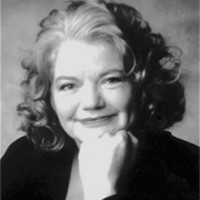
Molly Ivins is a columnist for the Fort Worth Star-Telegram.





View Comments