AUSTIN — The quadrennial assault by the media on the meaning of a noble, useful and important American political tradition is once more under way. This year, we find Steve Forbes, Pat Buchanan, Ross Perot (again) and even Phil Gramm (Lord save us) described as "populists." In the name of Sockless Jerry Simpson, I beg you to stop! Poor Dr. Charles Macune is spinning in his grave. The ghost of William Lamb is going to haunt all you careless, ignorant scribes who toss that word around like confetti.
Steve Forbes, a populist — great gravy, where do you think the progressive income tax came from in the first place? Steve Forbes would have been run out of any Farmers Alliance hall on a rail. If he'd dared to show his face at a People's Party convention, they would have lynched him. Have mercy.
The problem with trying to redeem populism — the most small-d democratic movement in American history, a rich strain of native American radicalism — from the political press corps is that reporters were all forced to read Richard Hofstadter in college.
And Hofstadter, an otherwise commendable historian, always mistook populism-in-decline for populism itself. In the words of The Economist, this led him to mistake populism for "a pathetic but also rather offensive group of economic illiterates and political nostrum-mongers, victims of the Agrarian Myth and propagators of xenophobia and racial prejudice."
How sad. In fact, populism spanned classes, races and sections of the nation in a way nothing else ever has. It included black sharecroppers, industrial workers and small-business men all over America at a time when both sectionalism and racism were viciously strong.
Of the two best contemporary historians of populism, I naturally prefer Lawrence Goodwyn of Duke University ("The Democratic Promise" and "The Populist Moment") because Goodwyn sees populism as the self-empowering fulfillment of real democracy that it was at its best. Michael Kazin's more recent book, "The Populist Persuasion," follows the right-wing legacy of conservative populism through Father Charles Coughlin, the radio demagogue of the 1930s, and others.
But what no one can deny is that populism, without benefit of Karl Marx, Vladimir Lenin or any other foreign taint, was a pure American response to the evils of capitalism.
The one indispensable element anyone needs to be described as a populist, whether of the right or left, is a grasp of the notion that we need some kind of democratic control over capitalism. A pure populist is one who advocates democratic control of capital itself through people's banks.
The populists had, and still have, no particular ideology; they learned by doing. They set up the first farmers cooperatives, marketing cooperatives, buying cooperatives and finally cooperative sources of capital.
Populism came out of the thin, stony soil of the Texas limestone hills that I can see from my window. Its history is marked with Texas place names: Waco, Bonham, Rockwall, Harrison County. Our landscape is everywhere marked with the remains of Alliance halls.
On June 9, 1888, the day they saved the Farmers Exchange, newspapers all over the state reported the masses of "rugged, honest faces," "grim, determined farmers," their "earnestness" as they gathered by the thousands, with the lines of wagons sometimes stretching out for miles. Two thousand in Fannin County, thousands more in Dallas, at more than 200 courthouses (there are 254 counties in Texas), the Alliancemen gathered.
You can hear them still in this state — have been able to for generations, in the words of Wright Patman, Sam Rayburn, Ralph Yarborough and Jim Hightower. You can hear them in the words of Tom Harkin of Iowa: "Liberalism to me is a philosophy that looks at people and says, 'Gosh, you're hurting. What kind of government program can we set up to ease your pain?' Populism sees someone hurting and says, 'What's causing that? How do we change the structure so that these people aren't hurt that way?'"
Populism was up-from-the-bottom politics, a system of alliances and sub-alliances and alliance halls where people met and talked over their problems and shared ideas and solutions. They took on the largest institutions of their day: the railroads and the banks. They allied with the Knights of Labor and fought "replacement workers" brought in to break strikes — tell THAT to Steve Forbes. They used the boycott and the strike and the ballot.
They were broken in the end, both by finance capitalism's use of the two-party system and by co-optation. Racism and sectionalism were fanned to destroy their unity. Their ideas lived on, and many prevailed under the Progressive banner. I still love their slogan: Raise less corn and more hell.
***
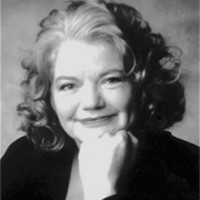
Molly Ivins is a columnist for the Fort Worth Star-Telegram.


View Comments