November first is the first day of Project FeederWatch. It is the largest and longest running citizen-science project. It began in Ontario in the mid-1970s. After running for 10 years in Canada, it was expanded to the United States with the help of Cornell University Laboratory of Ornithology.
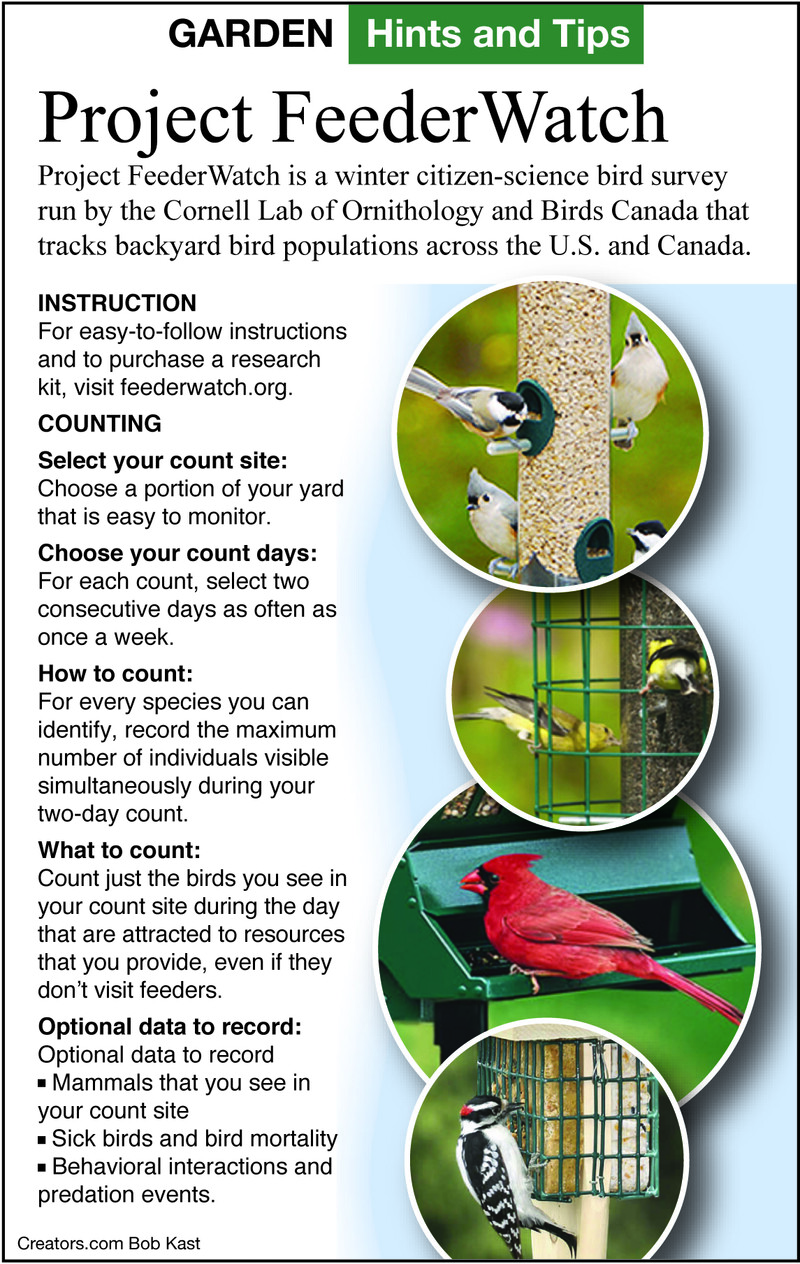
Project FeederWatch is a winter-long survey of birds that visit feeders in backyards, nature centers, community areas and other locales in North America. FeederWatch volunteers periodically count the highest numbers of each species they see at their feeders from November through April. The project helps scientists track the movements of winter bird populations and long-term trends in bird distribution and abundance.
All you have to do is count all the birds in your yard at one time, then report the numbers to the lab. The data collected shows which bird species visit feeders at thousands of locations across the continent every winter. The data also indicates how many individuals of each species are seen. This information can be used to measure changes in the distribution and abundance of bird species over time.
Each year, the population level and distribution of each species fluctuates. For example, if drought and forest fires reduce natural food sources, the birds may be forced out of the mountains to lower elevations, where they can find more food, including bird feeders.
If people did not keep track all over the country, we would not see weekly changes in distribution and abundance. This data is important because it provides information about bird population biology that cannot be detected by any other easy method.
Some of the scientific information that can be collected by using citizen-scientists is not just in the short term. The long-term trends in bird distribution and abundance as well as the timing and extent of winter irruptions of winter finches and other species can also be seen when the study is repeated each winter. Also, expansions or contractions in the winter ranges of feeder birds, the kinds of foods and environmental factors that attract birds, and how disease is spread among birds that visit feeders can be determined. FeederWatch data has been used to gauge the impact of West Nile virus on wild birds.
Learn more about the project at feederwatch.org, where you can see maps, trend graphs and other results generated from FeederWatch data.
Since the lab is a nonprofit organization, there is an $18 annual participation fee ($15 for members of the Lab of Ornithology) that covers your materials and newsletter subscription, staff support, website support and data analysis. First-time Feeder Watchers can participate at no cost. Just apply the discount code FIRSTPFW at check out. They also offer discounts and additional resources for educators.







View Comments