Q: I have some old peonies that flop over every spring, so I use a wire frame to keep them straight up. I saw some peonies in a landscape the other day that have very sturdy-looking stems that don't seem to need a frame. Any idea on what they are?
A: I don't know for sure what variety they are, but many newer hybrids on the market do have sturdier stems than the older heirloom varieties that get passed on to younger generations. I have a Coral Charm herbaceous peony that has great pink flowers held up high above the plant.
Peonies come in a wide variety of colors and sizes that live for a very long time. There are thousands of varieties in the 25 to 40 species, depending on who is doing the counting, that are divided into four main types: herbaceous, tree, woodland and intersectional. All four types are deer resistant. Herbaceous and tree peonies have several subtypes that vary by leaf shape and flower colors.
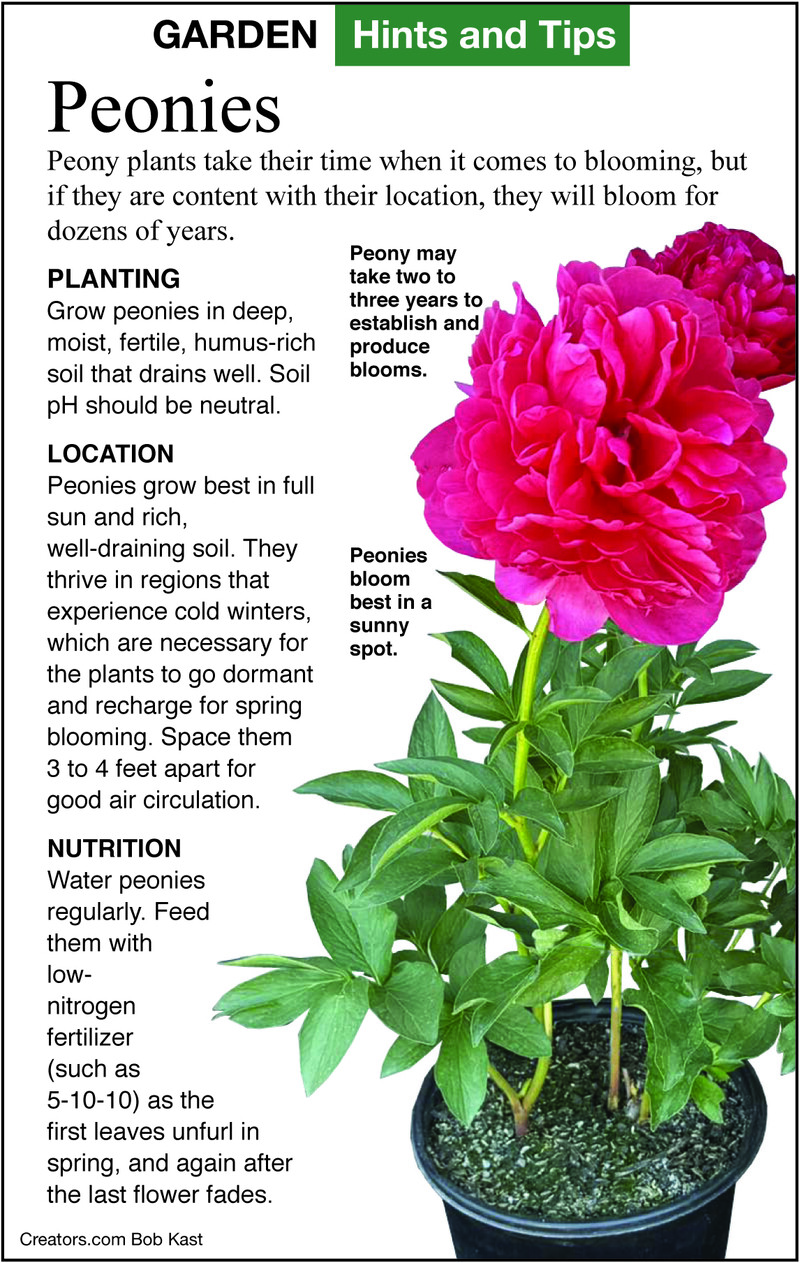
Herbaceous peonies are the common ones that everyone knows. Often planted in long rows as a summer hedge or as a base to the bare stems of a shrub hedge, they can make a great accent plant when planted by themselves. They die to the ground every fall when they go dormant. Five hours of sun is the minimum, and they prefer eight or more. They need a well-drained soil that has lots of organic matter. Flowers are red or white and every shade of pink in between. The 2- to 3-foot-tall flower stalks may have five or more flowers. These peonies grow best in hardiness zones 3-8.
Tree peonies are long-lived shrubs with woody stems that last for years. Some are as short as 3 feet, and some grow as large as 7 feet. Their red, pink, white or yellow flowers can be dinner plate-sized. They need partial sun, or morning sun and afternoon shade, and a well-drained, organic soil. Grown in zones 4-9, they don't need winter protection. In zones 2-3, they die to the ground like herbaceous peonies.
Woodland peonies are a species of peony that grows less than 2 feet tall. They grow best in shade. They bloom first, like many spring-blooming woodland flowers that get a head start before trees leaf out. Planted in a woodland, they can spread by seeds to form a tall ground cover. They grow in zones 3-8.
Intersectional peonies are hybrids between tree peonies and herbaceous peonies. They may be listed as Itoh hybrids. They have the best characteristics of both parents. Grow them in part sun with good soil. They have sturdy, short stems that don't flop. Each plant can have 50 dinner plate-sized flowers over a monthlong blooming period. Besides the normal pink, red and white flowers, there are yellow and gold ones. They are much more disease-resistant than most herbaceous peonies. The stems die back to the ground in the winter.
Peony bloom time varies with the variety and your location from mid-May to mid-June. By picking different varieties, peonies can bloom in your landscape for two months. In order of bloom: woodland, tree, herbaceous, and then intersectional varieties.
All forms of peonies can be planted in the fall, but they are often sold bare root in the spring through catalogs. Potted peonies can be planted at any time. Peony roots and rhizomes grow near the surface. Don't plant them very deep in the ground. Tree peonies are often grafted and may need the graft union planted as much as 6 inches underground. Planting instructions should come with any grafted tree peony.
One last note: Herbaceous peony flower buds have nectar glands that attract insects, especially ants. Ants come to the flower bud and collect nectar, but they are not necessary for opening the peony flower bud. The ants do no harm and are not attracted to houses that have peonies planted nearby.
Your local nursery should carry varieties appropriate for your area, but they may not have tree peonies and intersectional varieties. If they don't, try www.peonysenvy.com.
DIST. BY CREATORS.COM







View Comments