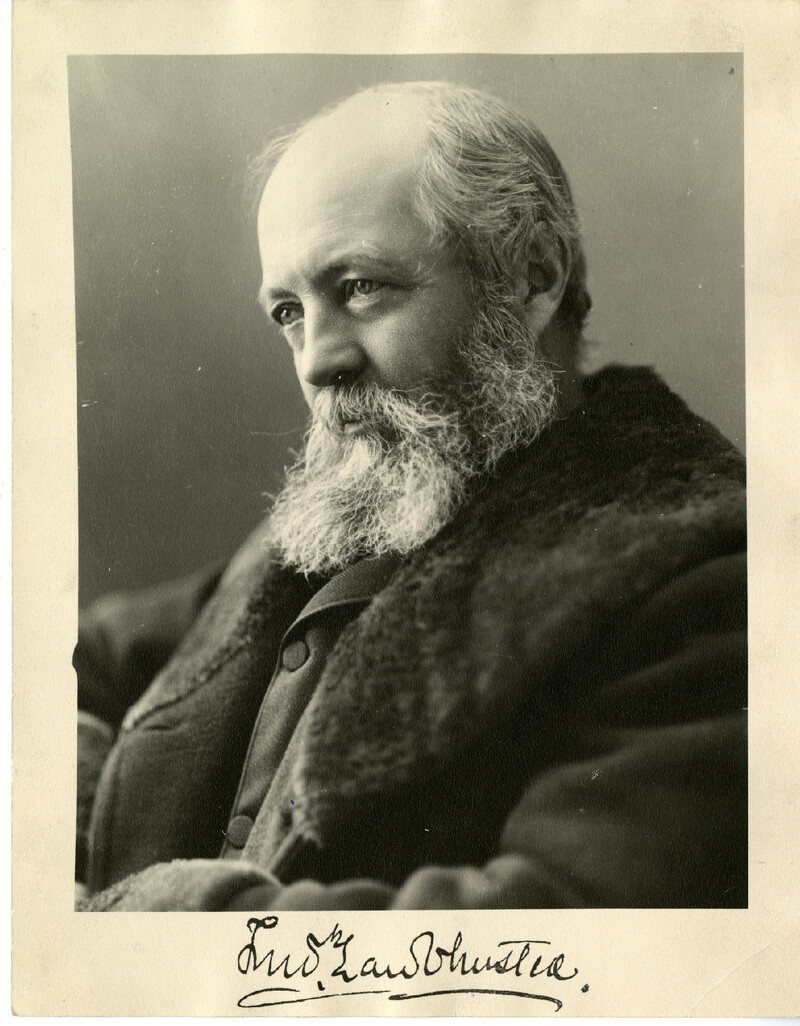
Frederick Law Olmsted is well known for pioneering landscape architecture. We know him as the man behind Central Park in New York City, which was his first major park project. He is also well known for his work on the U.S. Capitol grounds and the Biltmore Estate in Asheville, North Carolina. What many may not realize is that Olmsted was also a pioneering conservationist.
As we celebrate our nation's 250th anniversary, Olmsted deserves recognition for helping to shape America's relationship with public land. The Olmsted Network, a national organization dedicated to championing the work and design principles of Frederick Law Olmsted, has launched an interactive digital map that allows users to explore over 6,000 landscapes Olmsted and his successor firms were involved in.
This is especially important now since parks, wetlands and refuges are being chipped away at on every level and by every political party.
Throughout his career, Olmsted had influence on the first federally protected land (Yosemite), the country's first state park (Niagara Falls), the first wetlands restoration project (the Back Bay Fens in Boston, Massachusetts) and America's first managed forest, which then became the first forestry school (Biltmore Estate).
Growing American cities in the 1800s also recognized the community benefit of setting aside green space for their residents by creating public parks. Olmsted firmly believed these spaces should be accessible to everyone regardless of economic or social status. In the winter of 1858, when Central Park first opened in New York City, ice-skating on the lake was noted in every newspaper as a strikingly egalitarian activity. The New York Herald reported that the lake enjoyed visitors of "every age, and probably every country that constitutes our nationality."
Olmsted also envisioned park systems instead of stand-alone parks. The "parkway" is a term that Olmsted coined. These wide urban greenways allowed for different modes of transportation while connecting the parks. Parkways extended benefits of public green space throughout the city with tree-lined roadways and walkways. The lots along the parkways were desirable places to live and work. Property sales even helped pay for the project. It's a concept Olmsted sought to implement from the very beginning. He'd hoped to connect Prospect Park in Brooklyn to Central Park in Manhattan, and though there are two parkways in Brooklyn, they do not connect the parks.
Not every city Olmsted worked with could grasp what he envisioned. But four cities did: Rochester and Buffalo, New York; Boston, Massachusetts; and Louisville, Kentucky.
Today, much of what Olmsted worked to preserve has faced encroachment or existential threat. Whether that's President Donald Trump defunding the National Park Service and altering the U.S. Capitol grounds, former President Barack Obama taking 20 acres of Chicago's Jackson Park for his presidential library, Mayor Michelle Wu building a professional soccer stadium in Boston's Franklin Park or Louisville's Mayor Craig Greenberg who is comfortable with the University of Louisville absorbing historic park space for its own use. It all chips away at the landscapes originally set aside for public enjoyment.
In his extensive travels, Olmsted saw what was happening to the land outside his stagecoach window. He saw "big timber" clear-cutting the countryside in the name of manifest destiny. It's what pushed him to champion the preservation of places such as Yosemite and Niagara Falls. Now, it seems that America has to learn this lesson once again. The United States loses an average of 1 to 2 million hectares of tree cover annually and about 22,000 acres of wetlands each year.
Parks, whether national, state or local, are public, tax-supported spaces that protect nature while providing safe spaces for recreation. When we chip away at them, we also chip away at our communities' physical, social and emotional health.
As America marks 250 years, we have to remember that our greatest inheritance is not just the land itself, but the foresight to protect it. Olmsted understood this. So did the presidents, governors and local leaders who had the foresight to set aside this land for the public good, even when development promised quicker returns. Once public landscapes are lost, they are rarely reclaimed. Today's elected officials should be judged not only by what they build, but by what they choose to protect for future generations.
Do you know anyone who's doing cool things to make the world a better place? I want to know. Send me an email at [email protected]. Also, stay in the loop by signing up for her weekly newsletter at WriterBonnie.com. To find out more about Bonnie Jean Feldkamp and read features by other Creators Syndicate writers and cartoonists, visit the Creators Syndicate website at www.creators.com.






View Comments