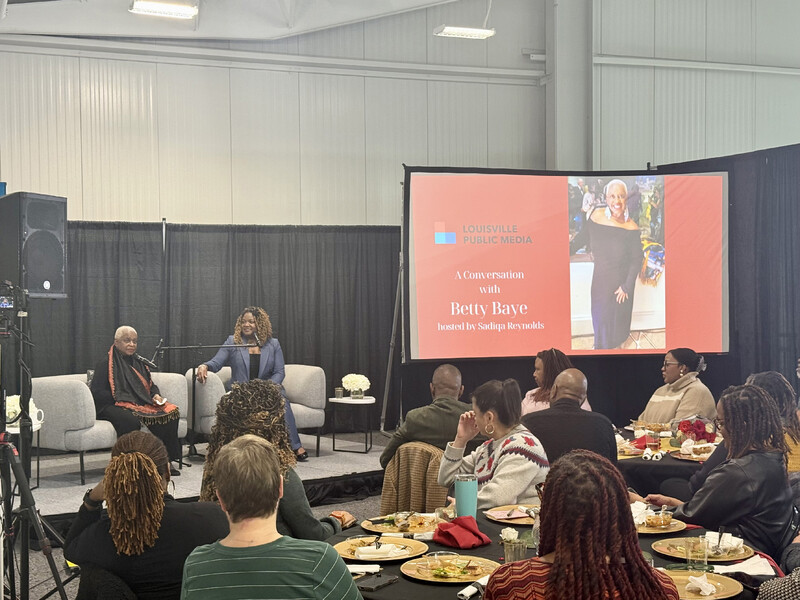
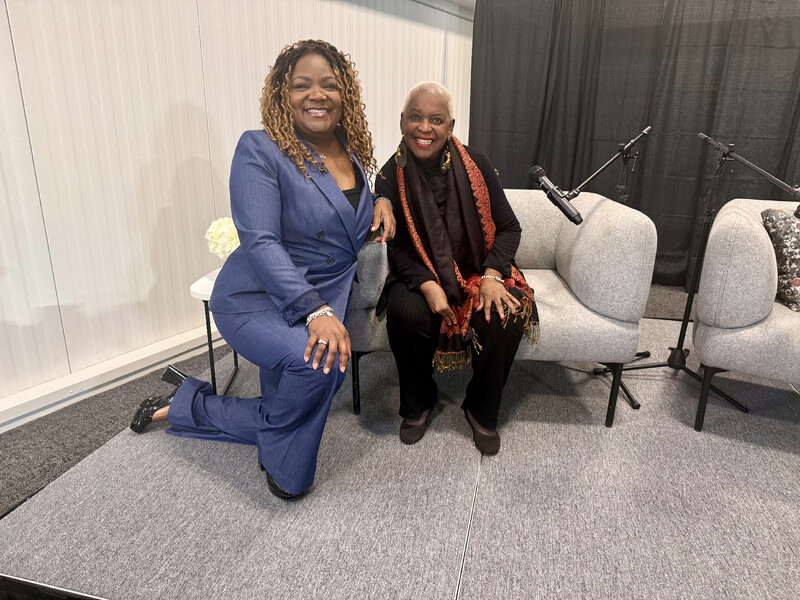
I had just sat down with my notes for writing this column when the news came through that journalists Don Lemon and Georgia Fort had been arrested in Minnesota. My notes were from a luncheon I had attended the previous day. National Association of Black Journalists hall of fame columnist Betty Winston Bayé was the featured speaker, and the event raised $2,000 for the Sadiqa Reynolds Scholarship for Mental Health Resilience.
Bayé's insights and experiences all at once felt more resonant and urgently needed.
Before Bayé was a journalist, she was a secretary and stenographer who applied her skills to the Civil Rights Movement. Bayé joined the Student Nonviolent Coordinating Committee, and she worked for the National Committee of Black Churchmen. In 1970, the NCBC penned the Black Declaration of Independence to protest against systemic racism and injustice. Betty Bayé proudly told the luncheon crowd, "I typed the first copy of that."
Bayé told us the story of how her father lugged a "big clunker" of a typewriter on the New York subway and then carried it four blocks so she could have it when she was learning to type and studying stenography in high school. She credits her father for teaching her that "if your initials are on it, then you're a part of it." It's what she grew to love about the Civil Rights Movement. Every part in the movement mattered and so many women gave themselves to the movement even though they did not get the credit. "You may feel like you're a scrub in the forest," Bayé said, "but the person on top appreciates you, appreciates what you do."
In today's digital world, where everyone wants to be TikTok famous or some sort of social media influencer, we have to remind ourselves that it's not about vanity or attention. Some of the most important work is done behind the scenes, quiet and steady, during hard days.
"I didn't want to be the star," Bayé said, "but I knew that I could back up some people, because I could type... so, I did a lot of typing in my day."
It wasn't until her last semester of college that a professor encouraged her to consider journalism. Bayé remembers loving to read newspapers with her dad, but she said, "journalism was not something that I dreamed about." She earned her bachelor's degree in communications from Hunter College, and she knew that she wanted to tell people's stories.
Bayé applied to Columbia University's Graduate School of Journalism where she earned her master's degree. She moved to Louisville, Kentucky, in 1984 to join The Courier Journal, where for 27 years she wrote the stories of the city as a reporter, assistant metro editor, editorial writer and columnist. She considered her column "a love letter to Black people." During that time she was also awarded a prestigious Nieman Fellowship at Harvard University in 1990-91.
This April, Betty Bayé will turn 80. She had a front row seat to the Civil Rights Movement as a young person and now, as she watches the Trump administration terrorize our communities, Bayé said, "The world is seeing us naked, seeing this country, naked." And though some people don't want to accept that this is who we are, Bayé said: "Yeah. This is who we are. This is what we did, this is what we've done. And so yes, this is who we are."
She also sees a reckoning coming. "I don't know how it's going to be," Bayé said, "but I think the United States is going to learn something."
Trump is teaching America a hard lesson, whether we like it or not. He's reminding us that the struggle is not over. American people have a lot of work to do if we are ever going to live up to the ideals of freedom that so many of us believe to be foundational. As for the work of the Civil Rights Movement, Bayé said, "it's gonna have to be done all over again."
In some ways, we are lucky this is happening now while many of our elders who lived during the Civil Rights Movement are still here. However, Bayé said, "Those of us of a certain age, we can't march with y'all, but we want to encourage you to be the voices for liberation."
Democracy may feel increasingly fragile, but our elders' stories and the wisdom they hold are a gift. It's not just about journalists being arrested. They were arrested in the 1950s and '60s covering protests then as well. The work of our elders reminds us what is possible, and we must be willing to pick up their torch and carry it forward. Our ancestors are rooting for us and our elders are asking us to decide our roles in history. So, where are you going to write your initials?
Do you know anyone who's doing cool things to make the world a better place? I want to know. Send me an email at [email protected]. Also, stay in the loop by signing up for her weekly newsletter at WriterBonnie.com. To find out more about Bonnie Jean Feldkamp and read features by other Creators Syndicate writers and cartoonists, visit the Creators Syndicate website at www.creators.com.




View Comments