SAN DIEGO — Seven days a week, I juggle competing obligations to work and family. Yet I recently got an urgent call telling me to drop everything and focus on an important task.
My assignment was to watch a "Saturday Night Live" sketch on caregiving for aging parents and how division of labor plays out with the children.
Those of us in the game know this issue is complicated. But the SNL sketch — "Sister"— kept things simple: Sisters get the shaft, while brothers get to go windsurfing.
It won't surprise you to hear that the call came from my own sister. She thought the skit — which happened to be written by three men — was spot-on.
She wasn't the only one. In its first five days online, "Sister" achieved 85.5 million views on YouTube and social media.
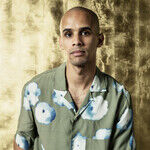
The skit is a fake advertisement for a product that will solve the elderly care problem. Comedian John Mulaney plays the son of a widower, who is out of ideas about how to care for his aging father. That is, until he hears about the perfect remedy.
"'Sister' is a live-in, 24/7 elder care provider that is completely free and also your sister," Mulaney says in the ad. "Now I don't have to worry about Dad getting the care and attention he needs, because my sister will do it and I can get back to my life and the stuff I like to do."
For many Americans, the joke hit close to home. Every family has a story. And we're not going to run out of stories anytime soon.
The rebellious generation that, in the 1960s, advised their cohort to not trust anyone over 30 is now pushing 80. Between 1946 and 1964, the baby boom produced approximately 76 million births. About 65 million are still alive. Those people are now between 62 and 80 years old, and many of them will soon need to be cared for.
According to studies, more than 60% of family caregivers are women. The average daughter gives about twice as many hours of care to elderly parents as the average son. Sons do less when they have a sister, but daughters do more when they have a brother.
Stanford researchers made the following observation in a piece they wrote on dementia for JAMA Neurology: "The best long-term care insurance in our country is a conscientious daughter."
Fair enough. The research is convincing, and there is truth in the SNL sketch. I'm grateful for the national conversation.
But real life is often where research goes to die. I have a memory, now almost 30 years old, of my aunt in a hospital crying at my grandfather's deathbed because she wasn't an attentive daughter. She left home for college and never looked back. When my grandparents needed help, they turned to her brother and her sister, my uncle and my mom. And in the end, my aunt got the message: It was her loss.
That is one of the things that's missing from the sketch. The narrative is all about the relationship between sisters and brothers. What about the relationship between caregivers and their parents?
Why do we complain about taking care of our parents at the end of their lives, when they spent most of their lives taking care of us?
I'm walking it like I talk it. With the help of two professional caregivers who alternate shifts, my brother, sister and I share the responsibility of providing care for our mother, who has dementia.
At 59, I never imagined that I'd be spending 10 nights a month sleeping at Mom's house, away from my wife and kids. But I find it satisfying.
My brother is closest to my mom, and so it's no surprise that he puts in most of the time and effort. There is no sketch about him.
I can't speak for my siblings. But I do it because it's the right thing to do, because I owe this woman everything, and because we promised my father — who passed away last year — that we'd take care of Mom. My dad asked for nothing else, and he would accept nothing less. He's not here, but the old man still calls the shots.
Besides, I'm modeling this behavior. And one day, when I'm gone, I'll expect my children to take care of their mother — without any bickering about who's doing more, and who's not doing enough.
I'm no sociologist. I'm just a regular guy trying to do right by the people I love. And, I hope, that's good enough.
To find out more about Ruben Navarrette and read features by other Creators Syndicate writers and cartoonists, visit the Creators Syndicate website at www.creators.com.
Photo credit: micheile henderson at Unsplash






View Comments