Millions of voters from Iowa to New Hampshire to Alabama to Missouri have gone to the polls or caucuses since January to choose between Sens. Hillary Clinton and Barack Obama for the Democratic nominee for president. And with the race so close, it looks as if for the first time, the primaries in May and June will have a huge say in who the nominee will be.
Yet it increasingly appears that 796 powerful Democrats could very well be the deciding factor in determining who goes up against Sen. John McCain in the November election.
Unlike the Republicans, the Democrats don't believe in winner-take-all primaries and caucuses. For them, it's proportional. That means if you win certain areas, you walk away with delegates. That's why Clinton won California and took home a large number of delegates, but Obama got his own chunk for winning various congressional districts.
But it's those pesky superdelegates who are looming large over the Democratic National Convention because neither Clinton nor Obama appears likely to grab the 2,025 delegates needed to secure the nomination. So that means the superdelegates, comprising roughly 20 percent of all Democratic delegates, will break the logjam.
While Democrats such as party Chairman Howard Dean are fretting about this razor-thin difference between Obama and Clinton, I frankly think it shows that Democrats have two folks locked in a fierce battle, and the voters are making tough choices. They don't have a dog in this hunt other than whom they want to see in the White House. You don't have voters cutting backroom deals in exchange for their votes, and in exchange for their votes, they aren't asking candidates for the moon.
Oh, so not the case for party leaders.
These superdelegates — a combination of members of Congress, former members of Congress, governors, mayors, former presidents, former vice presidents and other key Democrats — can do as they wish. They are bound by no rules or precedent, just whatever tickles their fancies or ignites their souls.
The Democratic Party instituted this weird system — I think it sounds more like the Politburo during the days of the Soviet Union — in order to maintain control over their voting process. They didn't want to see a fractured party and have the drama play out on TV, so they created a system that would give party leaders control over the system. A lot of folks likely thought this was a fail-safe system, never to be used, but just like those nuclear code sequences, they are there if you need them.
It appears the Dems are very close to choosing the nuclear option. And just like there is no winner in a nuclear war, there will be no winner if the superdelegates cut a deal and choose the Democratic nominee.
Such a sequence would be a slap in the face to the voters. Democrats should feel comfortable that they rose up early or late to go out to the polls in the heat, cold or rain to make their voices heard. Instead, in one swoop, all of the months of studying, listening and arguing will be for naught.
Because we have this archaic system, a word of wisdom to these superdelegates: Don't go against the wishes of the voters. This campaign is too important for your egos to get in the way.
Instead of cutting their own deals, all of the superdelegates should study how their constituents voted and use that as a barometer. Sen. Barbara Boxer of California said she would vote for the candidate who won the popular vote in her state. That means Sen. Clinton will pick that one up.
In an interview on my station — WVON in Chicago — I asked Rep. Maxine Waters, who endorsed Sen. Hillary Clinton, on Super Tuesday whether she would vote for Obama if her congressional district backed him.
She first said she wouldn't discuss the issue on the radio; then said that a lot of her constituents often disagree with her decisions; and then said she would consider negotiating for certain things with the candidates before deciding. Waters was a bit testy with my question (go to my blog on Essence.com and listen to the full interview) but was noncommittal over what she would do.
In my humble opinion, governors should cast votes for the candidates who won their states; former members of Congress should vote along the same lines as their former constituents; and all other party leaders should base their votes on who won the most states. That's the best way to showcase broad-based support.
These scenarios are clearly up for discussion and debate. But in an unfair — and undemocratic — system, there has to be some sanity. And allowing superdelegates to do as they wish isn't good for the Democratic Party, and it surely isn't right for America.
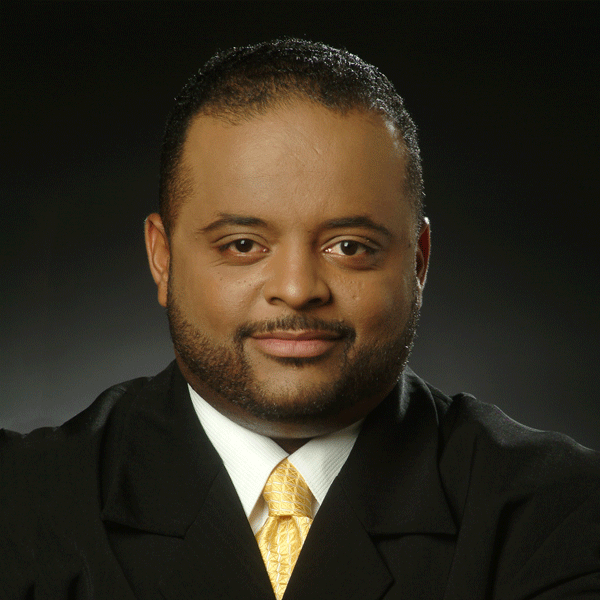
Roland S. Martin is an award-winning CNN contributor and the author of "Listening to the Spirit Within: 50 Perspectives on Faith." Please visit his Web site at www.RolandSMartin.com. To find out more about Roland S. Martin and read his past columns, visit the Creators Syndicate Web page at www.creators.com.






View Comments