When Barack Obama won the Democratic nomination, many had high hopes that his breakthrough would move American social consciousness forward into a post-racial era. Many thought the time had come when candidates would be judged by their qualifications and dedication to our country, not by their race.
To see why it is impossible for Obama to play this transcending role, read his autobiography, "Dreams From My Father: A Story of Race and Inheritance." His Dreams are obsessed with race and race conflict.
This book is an extraordinary 442 pages that appear to be written by an experienced novelist who knows how to tell a compelling story laced with minute detail about everything from clothes to odors, fictional characters and invented conversations. It is complete with the colloquialisms, ungrammatical English and four-letter words that the author thinks are appropriate to the people he quotes.
Obama describes how he deliberately separated himself from his multiracial heritage in order to give himself a 100 percent black persona, different and alienated from the white world around him. Obama writes that the book is "a record of a personal, interior journey" to establish himself as "a black American."
With his new all-black identity, Obama stews about injustices that he never personally experienced and feeds his warped worldview by withdrawing into a "smaller and smaller coil of rage." He lives with a "nightmare vision" of black powerlessness.
Obama says that the hate doesn't go away. "It formed a counter-narrative buried deep within each person and at the center of which stood white people — some cruel, some ignorant, sometimes a single face, sometimes just a faceless image of a system claiming power over our lives."
Obama's worldview sees U.S. history as a consistent tale of oppressors and oppressed. He objects to the public schools because black kids are learning "someone else's history. Someone else's culture."
He even criticizes his white grandparents, who worked hard to give him a privileged life. Their motives are a mystery to Obama because they came from the "landlocked center" of the United States, which, he asserts, is full of "suspicion and the potential for unblinking cruelty."
Obama grew up in Hawaii, the exemplar of a melting pot of races, yet he sees it as a place of "aborted treaties and crippling diseases brought by the missionaries." Although his mixed race was not a handicap in Hawaii, he whined that "we were always playing on the white man's court ... by the white man's rules."
One day his grandmother, while waiting for a bus to take her to work, was accosted by a panhandler. She gave him a dollar, but he aggressively demanded more — and she was scared because he looked like he might hit her.
When Obama learned that the panhandler was black, he said the news hit him "like a fist in my stomach." Obama objected to the fact that his grandmother was "scared of a black man," and his resentment at her (not at the panhandler) was such a big deal that he referred to this incident repeatedly.
Obama immersed himself in the writings of radical blacks: Richard Wright, W.E.B. DuBois, Ralph Ellison, James Baldwin and Langston Hughes. Obama's favorite became Malcolm X.
Obama scarcely knew his father, yet he wrote: "It was into my father's image, the black man, son of Africa, that I'd packed all the attributes I sought in myself, the attributes of Martin and Malcolm, DuBois and Mandela."
Obama described his happiness in going to Kenya: "For the first time in my life, I felt the comfort, the firmness of identity that a name might provide." He felt he "belonged" and had come home. Apparently, the only other place he felt at home was in Rev. Jeremiah Wright's church in Chicago.
Obama rejects racial integration because it is "a one-way street" with blacks being "assimilated into the dominant culture, not the other way around." Does he think America would be a better country if whites were assimilated into African culture?
There is absolutely nothing in this book that expresses pride in or love of or appreciation of America. In 442 pages of introspection extending over his life as a teen, undergraduate and law student at prestigious institutions, community organizer and working adult, he doesn't say anything positive about American government, culture, society, freedom or opportunity.
Obama's refusal to wear an American flag pin on his lapel sounded too trivial for a campaign issue. But since there is nothing in his book about respect for the flag, or the republic for which it stands, maybe the flag-pin flap does indicate his disdain for patriotism.
In his autobiography, Obama accepts the view that "black people have reason to hate." His later book is called "The Audacity of Hope," but his autobiography, which he has never disavowed, should be titled "The Audacity of Hate."
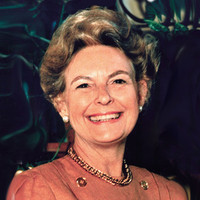
Phyllis Schlafly is a lawyer, conservative political analyst and the author of the newly revised and expanded "Supremacists." She can be contacted by e-mail at [email protected]. To find out more about Phyllis Schlafly and read features by other Creators Syndicate writers and cartoonists, visit the Creators Syndicate website at www.creators.com.





View Comments