MANILA, Philippines — There was a time when American military leaders worried about whether wobbly allies would rally to us when it came time to stand up to the Soviets. Now it's our allies who worry about us.
After a month in the Western Pacific — most of it spent in Korea and the Philippines while shooting documentaries for our FOX News "War Stories" series — it appears that some of our closest allies are increasingly anxious about American resolve. While in Manila, an old comrade in arms — we both served in Vietnam — put it succinctly: "To your best friends in this part of the world, it looks as though you are tearing yourselves to pieces, repeating what we watched you do over Vietnam. It hurt all of us for 30 years."
Echoes of this concern were heard repeatedly in off-the-record conversations with active and retired military officers and senior government officials. Shortly after Joint Chiefs Chairman Peter Pace was sacked, a senior Philippine military officer asked me bluntly, "Do the politicians in Washington know that changing generals won't stop the Islamic jihadis from trying to kill you?"
It's a fair question, and one for which the only reasonable answer is: "apparently not." English language newspapers here quoted Senate Majority Leader Harry Reid describing Gen. Pace as "incompetent" and highlighted proclamations by House Speaker Nancy Pelosi and Reid declaring that Gen. David Petraeus' troop surge in Iraq is a "failure."
Shortly after I completed an on-camera interview with Philippine President Gloria Macapagal Arroyo, a member of the Manila press corps showed me a wire service report about a letter that Reid and Pelosi had sent to President Bush, in which the two Democrats pledged, "we intend to again send you legislation that would limit the U.S. mission in Iraq, begin the phased redeployment of U.S. forces, and bring the war to a responsible end." The reporter then asked, "Does this mean U.S. troops will leave here as well?" I could only respond: "I hope not."
Here in the Philippines, where U.S. Special Operations troops have been quietly helping the government wage a successful campaign against the Abu Sayyaf and Jemaah Islamiyah terrorist organizations, there should be no doubt about U.S. resolve. However, as so often happens with sophisticated allies, leaders here are looking beyond the immediate situation — and hedging their bets.
While I was in the field with U.S. and Philippine special operations units, President Arroyo closed a deal for significant military-to-military aid and cooperation with Australia. Officially, U.S. diplomats and military officers describe the Australian assistance as "helpful" and "appreciated," but privately they acknowledge that Australian deliveries of military aid come faster, cheaper and with fewer restrictions. The U.S.-trained Philippine Counter-Terror Force, their equivalent of our Delta Force, is now equipped with Australian-provided weapons, night vision equipment and communications gear. When I inquired why, I was privately told by a senior officer: "It's less complicated to deal with Canberra than Washington."
One of my old Filipino colleagues summed up their concerns: "Today we are doing well against the extremists here. But that won't matter much if the Iranians end up with nuclear weapons." When he pressed me about what the United States was doing to prevent such a dire outcome, I replied that "Secretary of State Rice insists that diplomacy will work." My response was received with a grimace, a shake of the head and the gloomy prediction: "If the Ayatollahs get a bomb, all of us will be in very serious trouble very quickly."
America's wavering response to Islamic terror — both conventional and nuclear — isn't the only concern among our Asian allies, Chinese economic expansionism is as well. "Has anyone in Washington noticed that Beijing is paying cash for everything here that isn't bolted down?" asked a Philippine officer who has been to the U.S. for military schooling — and who has relatives in America. "The Chinese are buying up businesses, oil leases, real estate, mineral concessions and agro-companies like there is no tomorrow," he added. "Filipinos love America — but money talks. American investors are being replaced here by the Chinese. They are not our friends or yours, as you should know from what they are doing in Sudan and Afghanistan, but no one in the U.S. seems to be taking notice." Unspoken, but clearly implied was the recognition that Beijing's purchasing power also buys political influence.
These concerns of steadfast allies in the global war on terror need to be heeded at home. Since Sept. 11, 2001, U.S. aid, both civil and military, has helped the Filipinos prevent Islamic radicals from turning the southern islands of their archipelago into another Afghanistan. Yet, despite the successes here, many in Asia are worried about waning U.S. resolve. A Philippine officer who had served in Vietnam, Iraq and Afghanistan put it succinctly: "If America fails to deal with these matters, our dreams for the future will be nightmares."
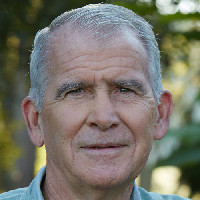
Oliver North is the host of "War Stories" on the FOX News Channel. To find out more about Oliver North, and read features by other Creators Syndicate writers and cartoonists, visit the Creators Syndicate Web page at www.creators.com.




View Comments