The urban parades honoring St. Patrick reflect a long-ago America when ethnics filled the older cities, and the Irish ruled the ethnics. The chief power rivalry in the early 20th century was between the Irish and the WASP establishment, with supporting roles by Italians, Jews and other products of then-recent immigration. African-Americans were generally left out, and Latinos were few.
No one better mastered those politics than Frank Skeffington, mayor of a Boston-like city and hero of "The Last Hurrah." Of course, Skeffington wasn't a real person, though readers of Edwin O'Connor's 1956 novel can easily forget that — and note that he was closely modeled on the late Boston Mayor James Michael Curley.
Those who know Skeffington through the movie based on the book sensed the flavor, thanks to Spencer Tracy's charming performance. But they didn't get the game.
The game was to take care of the ward. The late Tip O'Neill, the U.S. House speaker from Boston and a Democrat, natch, slightly updated that concept in his oft-quoted remark, "All politics is local."
Skeffington knew which groups lived where, whom they listened to and their idiosyncrasies. No one could accomplish more at a wake than he.
In those days, urbanites looked to the city for most of their social services. Thus, Skeffington didn't concern himself with just paving streets, but also with supplying a variety of benefits, from dentures to jobs. These were retail politics on (what we would now call) the bodega level.
"Well, what can we do for your today, Mrs. Santagata?" Skeffington asks the widow, whose late husband, he notes, is much missed at the Sons of Italy lodge. Her son was having trouble with a teacher, and so Skeffington orders a letter to Danny O'Brien at the School Committee with instructions to move the boy to another class.
"All successful political activity was based on quid pro quo," Skeffington explains to his nephew. That is, the politician wins a constituent's support by giving something personal in return. The old guard called that buying votes.
Politicians who truly know their voters also understand when they can safely deny a request. "Being mayor involves knowing what each group really wants," Skeffington says. "There's a considerable difference between what they say they want and what they'll really settle for."
A mayor so intimately involved in the day-to-day affairs of the people has to play priest, shrink, enforcer and godfather. And he has to be nobody's fool in sizing up both individuals and the direction of things.
As Skeffington engages in his last hurrah — his final campaign — he coldly observes how ward politics had spiritually weakened the minor politicians, city workers and others who clung to him. "Their total dependence on favor from above," he says, "had not left them with any great courage."
Who ultimately did in Skeffington's career? Not his mayoral opponent, but Franklin Roosevelt and the New Deal, explains one of Skeffington's sharp-eyed allies. "What Roosevelt did was to take the handouts out of the local hands," Jack Mangan tells the nephew. "A few little things like Social Security, unemployment insurance and the like — that's what shifted the gears, sport."
Many city politicians still deliver jobs and favors, but few of them operate at the "boss" level. And many cities and towns have turned their mayors into ribbon-cutters, leaving ordinary governance to professional managers.
Do we miss the intimacy of ward politics? Not entirely. They could be nice or nasty, honest or corrupt. It depended on the personalities. But we free-floating citizens of cyberspace have lost something — the comfort and camaraderie of being rooted to our ward — as the green-clad marchers remind us.
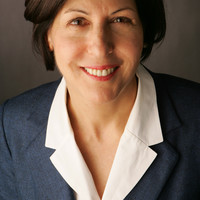
To find out more about Froma Harrop, and read features by other Creators Syndicate writers and cartoonists, visit the Creators Syndicate web page at www.creators.com.




View Comments