creators.com opinion web
Liberal Opinion Conservative Opinion
Connie Schultz icon
Connie Schultz
28 Oct 2009
Pay No Attention to the Wrinkles

Last summer, I was at a reception in Washington, D.C., when a woman in her early 40s leaned in to whisper … Read More.

25 Oct 2009
Suddenly We Care About Others' Paid Sick Leave

In a perfect world, no working American would get sick with the H1N1 virus. Alas, perfection eludes us. In a … Read More.

21 Oct 2009
Nice To Know We Still Can Be Duped

Well, how stupid were we ? Makes the cheeks burn just thinking about it. There we were Oct. 15, millions of … Read More.

A Normal Death

Most of us have grappled with the death riddle.

Do we want to die suddenly, without anxiety or dread, with no chance to say goodbye? Or do we want time between the devastating news and our last breath so that we might ease the fears of those we love, and make peace with those we wish we'd loved more?

Our little game is premised on the assumption that we choose when and how we will die. This is not always so. Newspapers and nightly broadcasts are full of stories about people who had no such choice. But the march of medical advances and a progressive hospice movement allow the majority of Americans to have some control over, if not exactly when, at least how they will succumb.

Survivors mourn in ways that are handed down from family to family, one generation to the next. The rituals of death and dying in this country are as varied as the roots of our people, but they share a common tether to something larger than ourselves and a yearning to harness our grief.

Most of us hope for a natural unfolding to our lives, right up to the end. Whether we die suddenly or slowly, we want our lives to end as they began, out of our control but not beyond our understanding.

In Iraq, though, a natural death has become so rare that it is considered a divine gift. As National Public Radio's Rachel Martin reported from Baghdad earlier this week, death by violence has become so commonplace that when a 75-year-old grandmother died there recently of heart failure, her family responded with quiet celebration.

"She died at home, surrounded by her six daughters and my two brothers," one of the daughters told Martin. "We washed her body and gave her a decent burial. She died with dignity, at home."

These days in Iraq, death is usually sudden, and violent. A roadside bomb explodes, a suicide bomber blows himself up, an assassin takes aim, and dozens are dead, often evaporated. Sectarian attacks wipe out entire streets without warning.

Relatives routinely find loved ones dead — or parts of them — on the road. Atrocities abound. Minutes before writing this, I learned on Thursday that 20 men were found beheaded southeast of Baghdad.

"Grief is everywhere in Iraq," Martin said in her report. "Broken glass and rubble from car bombs litter neighborhoods. Black triangle death notices hang in doorways. Every day, mosques are filled with mourners killed in sectarian violence."

She described women hysterically crying, men rocking back and forth. "There's a lot of pain here."

Listening to her report forced me to consider yet another difference between life here and life in Iraq. In death, as in daily life, Iraqi citizens suffer in ways most of us cannot imagine.

Losing a loved one is always hard, often harder than we think we can bear. But for most Americans, we find signs that life will go on in the daily rituals that endure and sustain us. We push the cart around the same grocery store, nod hello to the same mail carrier, navigate the same route to work every day.

In Iraq, uncertainty has seeped into every breath of the day. Anyone can die at any time. Death follows death follows death, day after day, without reprieve.

And so the riddle whittles down to the grimmest of options with every shared meal, every rushed errand, every embrace: Will I see you later? Will I see you tonight? Will I see you ever again?

Martin said violent death has become so commonplace in Iraq that most can no longer bear to speak its name. There is the grief that follows loss, but there is also the grief that precedes it, the kind that hovers, waiting to be called. They are never far apart.

A 75-year-old grandmother died of natural causes last week.

Days later, her 14-year-old neighbor was shot dead as he studied.

Grief hovers, waiting for who is next.

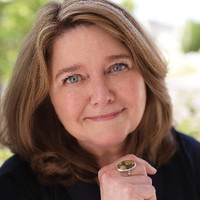
Connie Schultz is a Pulitzer Prize-winning columnist for The Plain Dealer and the author of two books from Random House: "Life Happens" and "… And His Lovely Wife." To find out more about Connie Schultz (cschultz@plaind.com) and read her past columns, please visit the Creators Syndicate Web page at www.creators.com.

COPYRIGHT 2007 CREATORS SYNDICATE INC.


AddThis Social Bookmark Button
More
Connie Schultz
Oct. `09
Su Mo Tu We Th Fr Sa
27 28 29 30 1 2 3
4 5 6 7 8 9 10
11 12 13 14 15 16 17
18 19 20 21 22 23 24
25 26 27 28 29 30 31
About the author About the author
Write the author Write the author
Printer friendly format Printer friendly format
Email to friend Email to friend
View by Month
Author’s Podcast
Deb Saunders
Debra J. SaundersUpdated 8 Nov 2009
Steve Chapman
Steve ChapmanUpdated 8 Nov 2009
diane dimond
Diane DimondUpdated 7 Nov 2009

22 Jun 2008 Staff Infections of the Campaign Kind

23 Jul 2008 Customers Have a Bottom Line, Too

19 Oct 2007 When Silence Is Not Golden