Dear James: My kitchen cabinets are original and solid, but I want something different, hopefully on a budget. Is it possible to just paint old cabinets instead of replacing the fronts? — Ryan M.
Dear Ryan: Any older kitchen could probably use a little updating and a new, modern color is an excellent, budget-minded way to start. Painting the existing cabinetry is a great way to make an old kitchen look and feel new again with the least investment. Another option is just replacing the fronts.
If your old wood cabinets are still in good condition, you can easily save them with just a coat of paint and some new hardware. If you just can't part with your current cabinet handles, don't worry, those can also be painted to complement the cabinets.
The type of paint you choose is a very important part of this project. Kitchen cabinets go through a lot in a day and need to have a tough exterior coating. The most durable type of paint is epoxy-modified alkyd paint that is mostly available in spray cans. The color variations are limited and it may take some skill to spray the paint evenly.
If this is your first or second time painting, use a primer, split coat and final gloss oil-based coat process instead of spraying. Gloss oil-based paint is a good choice because you can mix in modern colors, it is easy to apply and it dries fairly fast.
It will probably take you close to 20 hours to give your kitchen its new decor. This includes cabinets, drawers, preparation time, disassemble and reassemble time. Before you can start, you need to take off all the metal hardware and wash the cabinet's surface well with soap and water. Dry the cabinets; don't just let them air dry.
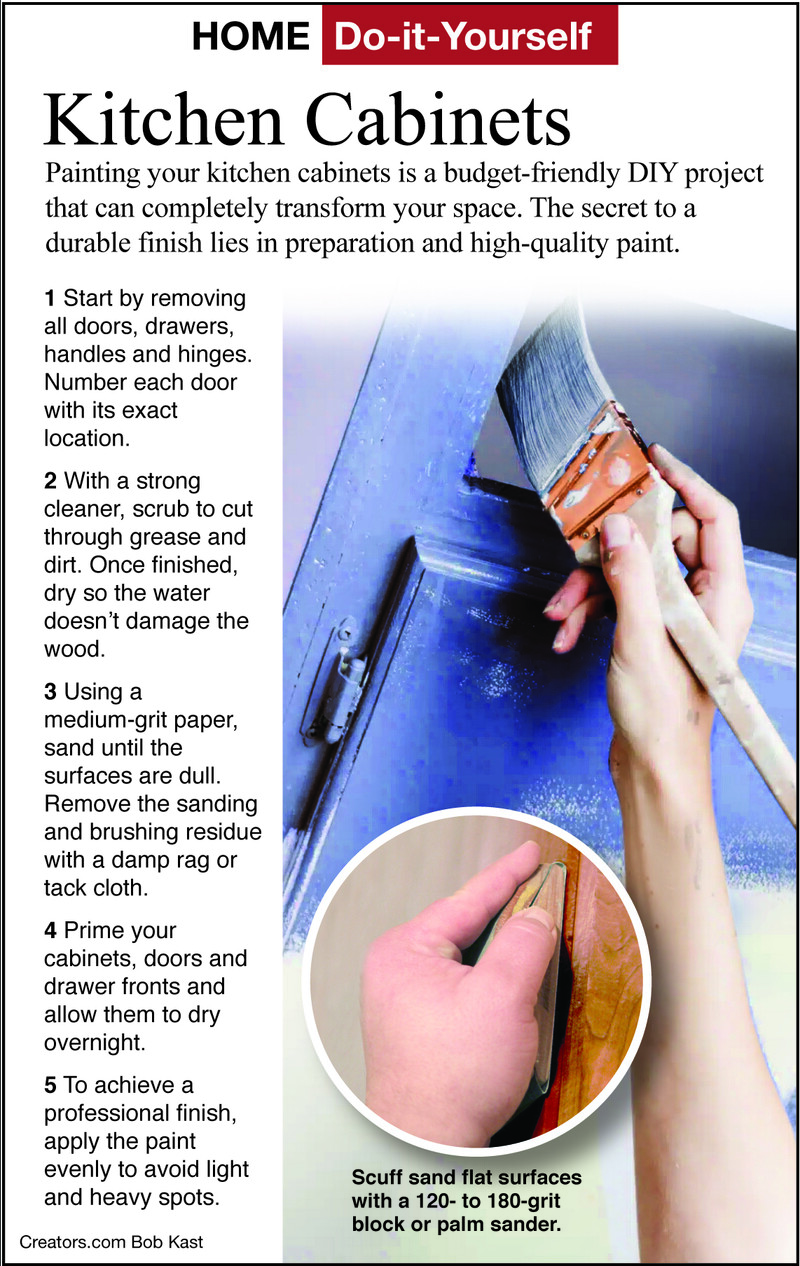
Next, you need to prepare the surface. Every part that is going to be painted needs to be sanded with 100-grit sandpaper. If you have trouble sanding some of detailed areas, use a sanding sponge. After you have the doors prepared for painting, vacuum them and wipe them with a tack cloth. Apply the first primer coat. When they are dry, sand them again, this time using fine sandpaper, until the surfaces feel smooth.
Repeat vacuuming and use the tack cloth again. Next, apply a second split (half primer and half final paint) coat and check for any rough spots. After you have sanded down any rough areas you may have missed before, apply the finish gloss coating.
A common mistake painters make can result in brush marks on the surface. Make sure to always paint from the unpainted area to the just painted area and to lift up the brush while your hand is still moving.
If you decide to get new hardware for your cabinets, take accurate measurements so the original holes don't show after the new handles are installed. If you would like to keep the original ones, you can always find paint just a shade or two darker than the cabinet color and paint just the handles.







View Comments