Whenever somebody tries to ban talk of politics at get-togethers, it's all I can do to suppress a groan.
What could be better fodder for lively discussion than our relationship with our country?
Granted, these are often difficult conversations, but why wouldn't they be? Most of us have conflicted affection for America. How better to hash out our theories than to put to words what we're thinking and then let others have at it?
Sometimes, we can change someone else's mind. Other times, they change ours. Every time, we have the chance to consider another viewpoint, and that's the only way to inch closer to common ground, where the real work of democracy takes root.
Most of us aren't that good at keeping our thoughts to ourselves anyway. Just because we don't say what's on our minds doesn't mean others can't take one look at us and know that something's up. We seep out, and then the problem becomes one of interpretation. If the only signs we give off are wrinkled brows and an affinity for the non sequitur, then the people we're trying hard not to offend are free to insult us with their wrong assumptions. Then we simmer with resentment, which is no good for the arteries, not to mention what it does to our faces over time.
When it comes to politics, too many suppressed thoughts aren't good for the country, either, especially right now.
Last week, I was part of a radio discussion about politics, race and gender on WCPN, a public radio station in Cleveland. A young African-American female caller named Sheila described how conflicted she had felt during the presidential primary. Her struggle was not over whom to support, but how much to show it.
"I feel like I've had to censor myself … or contain my excitement about Barack Obama being an African-American," she said.
It helped that he won. "I feel a sigh of relief to say I'm really proud, and I want to embrace that," she said.
Later that same day, I got an e-mail from Mary, a longtime activist who is devastated by Hillary Clinton's loss. She had listened to the show and wanted to share a few of her own thoughts.
"This is risky, as until now I have refrained from words on the end of this campaign," her letter began. She mentioned how hard it is, as a feminist, not to feel Hillary's loss as a setback for women. The show's discussion had stoked hope, but then Sheila called.
"I crashed again when the gentle African American woman caller talked about her emotional reluctance to openly embrace Barack Obama," Mary wrote. "And then he won and now she feels like America has finally embraced — or at least not rejected — a black leader. It washed over me again — that's how I feel — like once again America did reject women."
Now, there are those who roll their eyes and dismiss the Marys and the Sheilas of the world as overwrought hand-wringers.
"Get over yourself," they might say.
Translation: Shut up already.
That doesn't help Mary or Sheila or any of the other Americans right now who either are excited or deflated by the presidential race and feel they have to navigate on tiptoe. One African-American friend who quietly supported Clinton told me that when she drops off her sons at school, many of the white mothers who not so quietly supported Clinton now avoid her. Those women not only make the wrong assumption about my friend's support but also her willingness to talk about how they feel.
This is the same story in a lot of friendships and families right now. The good news is that so many are engaged in the political process. The not-so-good news is that fear of discord is dividing too many people who have so much in common.
In other words, this silent treatment ain't working.
The worst part of a tough conversation is usually the anxiety leading up to it. Once you start talking, you usually end up wondering what took you so long. That's true in love, and it's just as true in politics.
And the next time someone insists that politics has no place at the dinner table or anywhere else you've gathered with friends or family, maybe your best response is to quote the late Rev. William Sloane Coffin, who said that we should carry on the same lovers' quarrel with our country that God carries on with the whole world.
Guaranteed icebreaker that one.
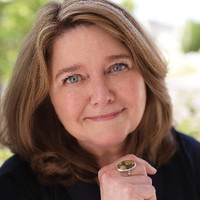
Connie Schultz is a Pulitzer Prize-winning columnist for The Plain Dealer in Cleveland and the author of two books from Random House: "Life Happens" and "… and His Lovely Wife." To find out more about Connie Schultz ([email protected]) and read her past columns, please visit the Creators Syndicate Web page at www.creators.com.






View Comments