Banning a Word To Heal a WoundWhenever I hear the word "retarded," my mind's eye focuses on a single image: Uncle Francis. All these years later, I still can see my mother's only brother, her eldest sibling, humming and playing with his little toy cars at my grandmother's house, where he lived until the year he died. In my earliest memories, he is already in his 30s, but with the mental reach of an 8-year-old. That's how Mom put it when I was 8. "Uncle Francis looks like a man, but he is retarded," she said. "His mind is your age. He thinks like you do." This was mostly wishful thinking on Mom's part, because it was clear even then that her beloved Franny didn't share my understanding of the world. He would sit next to me on the couch and hold my hand when we watched TV, his every reaction mimicking mine. He laughed when I did, and he took his cues of empathy from me, too. "Oh-h-h-," I would say, and he would follow with his own sorrowful echo. Uncle Francis' tears were his own whenever he felt excluded, so he was a constant companion to my sister Leslie and me whenever we visited our grandmother. We always called him "Uncle," at Grandma's insistence. We gave him privacy when he washed up at the sink and shaved, and we never, ever made fun of him. He was a grown man, after all. He had a job assembling crafts, and he proudly tucked his lunch pail under his arm and boarded the bus each weekday for years. Grandma always wrote, "Love, Uncle Francis," on his birthday cards to us, and he is prominent in hundreds of family photos, his eyes as large and dark as coat buttons. It wasn't until years later that I learned the rest of the story about Uncle Francis. My grandmother was a troubled woman in young adulthood, and she lost custody of her three daughters, including my mother. (My mother's paternal grandparents raised her at a time when divorce was rare.) The county let my grandmother keep the retarded boy. Nobody else wanted him anyway. She took care of him until Alzheimer's stole her memory. He died in 1998, at 64, in the same nursing home where my grandmother died a few months later. Memories of Uncle Francis poured over me when I learned that finally, Ohio is poised to join more than 40 other states in banning the word "retardation" from state and county agencies that serve those with developmental disabilities.
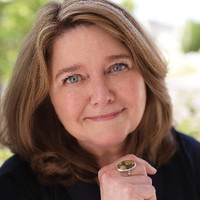
Stewart told me the testimony of adults with developmental disabilities dramatically illustrated the need for change. "They pay taxes. They are highly functional," he said. "And they know what that word 'retarded' means. Many of them experienced the most derogatory sense of that word when they were young." If you know something about you is different, you also know when someone is using that difference as an excuse to hurt you. "There was a time when the word 'retarded' was considered acceptable," he said. "I think we all recognize that language changes over time. Words that didn't used to be seen as offensive now are. It was only recently that 'imbecile,' 'drunkard' and 'lunatic' were taken out of language in the Ohio code. … It's time to eliminate 'retardation,' too. It won't change everybody's mind, and it won't stop everyone from using the word in a derogatory way, but it's a start." It's a good start — and way overdue. And what took us so long? I'd be quicker to lunge at the Legislature if I weren't so embarrassed that it took me longer than it should have to recognize the injustice. As my 21-year-old daughter pointed out to me this week, calling someone a "re-e-e-tard" is still common among her peers — and always intended to deride. It's a hurtful term, and it often wounds people who are not the intended targets. Whenever I hear someone deride another as retarded — I heard it at a recent Cleveland Indians ballgame and saw it in the headline on a blog — the sting is quick and personal. For me, the word "retarded" conjures up images of a gentle man who liked to hum and play on the floor with his little cars and whose face always beamed at the sight of me. For me, "retarded" is the man I called "Uncle." Connie Schultz is a Pulitzer Prize-winning columnist for The Plain Dealer in Cleveland and the author of two books from Random House: "Life Happens" and "… and His Lovely Wife." To find out more about Connie Schultz (cschultz@plaind.com) and read her past columns, please visit the Creators Syndicate Web page at www.creators.com. COPYRIGHT 2009 CREATORS SYNDICATE INC.
|
![]() |
|
||||||||||||||||||||||||||||||||||||||||||||||||||||||||||||||||||||||||||||||||||||||||||||||||||||||


![]()
|
![]()
|