The Supreme Court's decision this week in the New Haven firefighters case may cause problems for its newest prospective member, Judge Sonia Sotomayor. The court found in favor of a group of white and Hispanic firefighters who were denied promotions despite having passed the city's promotion exams with flying colors. The city threw out the test results because no black firefighters scored high enough to win promotions, and Judge Sotomayor sided with the city when the case came to her on the Second Circuit.
Appellate judges often get reversed by the Supreme Court, but this reversal could prove more troublesome to Sotomayor. She has made it clear in a series of speeches over the years that she considers her own ethnic identity crucial to how she decides cases. No fewer than a half-dozen times, Sotomayor has uttered some variation of her now infamous remarks, delivered in a 2001 speech at the University of California at Berkeley, "that a wise Latina woman with the richness of her experiences would more often than not reach a better conclusion than a white male who hasn't lived that life." Her comments were no mere gaffe but a studied description of her views on the importance of race and ethnicity to her role as a judge.
In the same Berkeley speech, Sotomayor decried the "underrepresentation" of Hispanics on the bench: "we have only 10 out of 147 active Circuit Court judges and 30 out of 587 active district court judges. Those numbers are grossly below our proportion of the population." But as Ed Whelan, president of the Ethics and Public Policy Center in Washington, noted recently on National Review Online, even if you want to play the quota game, Sotomayor's objections are dicey. Federal judges are lawyers (with rare historical exceptions on the Supreme Court), and only 3.4 percent were Hispanics in 2000, according to the American Bar Association. Yet Hispanics make up about 5 percent of district court judges and more than 6 percent of appellate judges.
Sotomayor's insistence that population numbers be the reference point, not those actually qualified to assume the job, is a clue to just how committed to quotas she is. For years, affirmative action proponents have claimed that they are not advocating quotas. But their reticence has more to do with public relations than policy. The whole idea that some racial or ethnic groups are "underrepresented" in employment or education implies that proportional representation is the goal. And if there are "underrepresented" groups, there must also be "overrepresented" groups.
In this game, if there are too few blacks and Hispanics who are lawyers or engineers or doctors, there must be too many whites or Asians or Jews who occupy those positions. And who decides how many is too many? Does race or ethnicity entitle someone to representation in every field and at every level? Clearly the city of New Haven thought so, and it appears Judge Sotomayor agreed.
The Senate Judiciary Committee takes up Sotomayor's nomination July 13. The committee should press her on her views about proportional representation — and not let her get away with the usual demurral on quotas. Do our civil rights laws guarantee equal opportunity or equal results? If the former, how does she justify throwing out test results that don't happen to conform to her idea of what the racial makeup of the officer ranks in a fire department should be? If test results consistently thwart promotion of minorities, should we abandon testing altogether? What are the limits of her own preference for groupthink? Should we be interested in promoting individual rights or group rights, especially when the latter interferes with the former?
Every one of the New Haven firefighters who wanted to be promoted to lieutenant or captain took the identical tests and had access to the same study materials provided by the department. The exam had been meticulously designed to test the actual skills and knowledge required on the job and to have no cultural biases. Some firefighters succeeded and others failed, based not on their race or ethnicity but on their effort and abilities.
During the original debate over the Civil Rights Act of 1964, proponents argued that it would never be used to require racial preferences or proportional representation. Americans deserve to know whether Judge Sotomayor agrees.
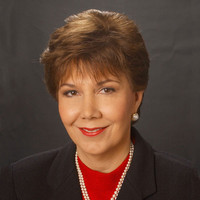
Linda Chavez is the author of "An Unlikely Conservative: The Transformation of an Ex-Liberal." To find out more about Linda Chavez, visit the Creators Syndicate web page at www.creators.com.


View Comments